Themeattics

The Official Website of Tom Keaten

Reflect upon your present blessings – of which every man has many – not on your past misfortunes, of which all men have some.

Charles Dickens, A Christmas Carol and Other Christmas Writings

Hello my friends, and welcome back from another lap around the sun. Been quite a year, hasn’t it? I don’t know about you, but Kanye making Alex Jones seem like the rational one wasn’t on my 2022 Bingo card. There’s so much I could bring up from looking back, but in the end that’s never really what this site has been about. So, instead, I’ll take a brief tour of how badly I failed those 11 goals I wrote about 11 weeks ago and then lay out my plans for the next year.

First, the damage:

  1. Hit 185lbs
    • Hah. This was a cute one. Not only did I not hit this, I’m certainly heavier than I was then. Let’s just say I let the Holidays happen – my birthday, Thanksgiving, a cruise, and Christmas into New Years? Woof. Discipline wasn’t there, and this poor goal took two in the back of the head.
  2. 20 pull-ups without break.
    • Done. In fact, I did this early enough to change it into something new. Having hit my 60push/20pull goal, I decided to push myself on what numbers I could hit following P90X3’s “The Challenge” program. That’s 8 rounds of pull ups interwoven with 8 rounds of pull ups (2 sets each of 4 different types for both things) in 30 minutes. Technically a little less than that – there’s a 3-ish minute burnout that’s all you can do of 1 pull and 3 push. The “challenge” of it is that you pick one pull number and one push number and use that number for all 8 rounds. I closed the year on 33push/10pull with 10 sets in the burnout, for a total of 294push/90pull in 30m. Pretty damn happy with that.
    • Oh, an important point here – this was my max, before I let myself fall apart on the food end. I’m not there anymore.
  3. Weekly family night
    • LEGO Masters and movie nights have been great. Looking forward to continuing and growing this next year – but more on that later.
  4. Eliminate some debt
    • The windows are OURS now.
  5. Eliminate unnecessary things
    • I said this wasn’t a quantifiable goal, and it certainly lived up to that. We did a good enough job of donating and eliminating things for me to consider this a win, but there’s so, so much more to go.
  6. Lector
    • I’m on the roles, but unfortunately didn’t get on before the schedules for the end of the year were done. Still a win, and I’ll be in the rotation next year.
  7. Daily rosary
    • Spotty at best. Definitely dropped the ball on this one.
  8. Quarterly confession
    • I guess this was kind of cheating, given there was only one quarter to go, but a win is a win.
  9. Residuum v2.5
    • Unfortunately, I didn’t get enough feedback to push this one through to completion. I’d like to take the easy way out and say that means this wasn’t really a failure, but I know I didn’t give the search for readers enough effort. That’s on me.
  10. Catalyst
    • I’m not sure why I made this goal as large as I did (Finishing the entire outline and having several chapters done), but I failed to reach that mark by a long shot.
  11. Celestial
    • Wooo, I managed to do something! Let’s ignore the fact that a new character came out and I climbed that last bit of rank off of people who were trying him out – a win is a win! [Insert Ric Flair Woo here]

7/11 ain’t bad, I suppose. The four I missed were some of if not the most important ones, but hey, that’s about par isn’t it? I’m actually alright with how that turned out for the most part, writing withstanding.

But enough about the past, 2023 looms large and I’ve got myself hyped up something fierce. Ready to get this kicked off with a bang. With a full year to look forward to instead of 11 weeks, I wanted to set some concrete yet broader goals. Ambitious, yes, but doable. I had my reservations about my 11 week setup. Not so, for these. I’m ready. This is going to be a hell of a year.

  1. Complete “75 Hard”
    • A coworker / boss of mine mentioned this in chat earlier this month to see if anyone wanted to start with him. I had no idea what it was so I checked it out and decided, why yes, I am enough of a masochist for this sort of thing. But, uh… I also wanted to be a pig over the last half of the month, so I pushed it to start on the 1st. Seems like just the kind of New Year’s Resolution idea that most people would try and abandon, but that ain’t me. Not this year, chief.
    • What is 75 Hard, exactly? Well, for the next 75 consecutive days I’ll need to do the following – 2 separate 45m workouts (one of which must be outdoors), read 10 pages of non-fiction, drink a gallon of water, follow a strict meal plan of my of my own choosing (No snacking outside that plan), and no alcohol. Oh, and if I fail to do any of the noted items, the timer starts over. No pressure. About to whip my ass back into shape.
  2. Complete “Exodus 90”
    • Maybe 75 Hard isn’t as intimidating because I’ve already done a round of Exodus 90 in the past and am planning to do one again this year. This one here is a beast, but in a vastly different way. Where 75 Hard is about tuning your time to better yourself in a physical way, Exodus 90 is about doing the same in a spiritual way, often times with the denial of self. There’s certainly overlap between the two and (I didn’t think about this until right this moment) it would have been a lot easier to just do them both at the same time, but neither of these programs are about ease. In fact, 2023 isn’t about ease. It’s about results.
    • Exodus 90 is a fully 90 days focused on growing faith and asceticism. It’s supposed to be done with a fraternity, so I’ll need to find / start one before I can begin, and after that I’ll have to do the following: An hour of prayer a day, only take cold showers, exercise daily, sleep at least 7 hours, no alcohol, no snacks, no desserts, no sweet drinks, no video games, no tv or movies, no non-essential purchases, only listen to music that lifts the soul to God, only use a computer for essential tasks, only use a phone for essential communication, fast on Wednesdays and Fridays, check in daily with your fraternity partner, and have a full fraternity weekly meeting. It’s a huge list and a monster to adhere to, but it certainly did its job to cut out parts of my life that needed cutting the last time. Every so often we need a re-trimming.
  3. A LEGO a week
    • This might come out of left field after those last couple, but we have a metric load of LEGO in this house and most of it has been blown apart over the years and haphazardly reassembled, if at all. I want to build every plan we have to see what we’re missing. This works on both a “we need to better organize / eliminate things” basis and as a way to just spend more time with the kiddos.
  4. Follow a budget
    • I have a lot of financial goals. A lot. Instead of listing them (And, well, as much as I love you guys, internet randos probably don’t need to know my every financial move) I figured I’d come up with something all-inclusive. We’ve picked up YNAB (YouNeedABudget) and, provided we actually stick to this, it’ll pretty much handle all of those financial goals in one fell swoop. YNAB turns your cards and accounts into imitations of debit accounts, so as long as you’re assigning things where they should be you’ll know you have that money to spend and if you can’t assign it, well, guess what, you can’t afford that thing right now. Simple enough concept. It’s not the most intuitive thing to use, but so far I love it and hope it’ll do the trick.
  5. Attend a Deaconate meeting
    • Becoming a Deacon has been on the back of my mind for a while now. I figure the next rational step is to talk to one about what this entails and then attend one of the initial exploratory / discernment meetings. I’ll need to get a schedule for those and see when makes the most sense.
  6. Submit Residuum to agents
    • As a single line this could easily be marked off, but that would be against the spirit of things. What this single goal stands in for is an entire process – receiving enough reviews of the alpha version, rewriting as necessary for the beta, sending and receiving enough beta reviews, doing one last edit pass, and then submitting. So, uh… again, anybody out there feels like giving a read and feedback, that’d be p.r.e.t.t.y. great.
  7. Complete first draft of Catalyst
    • Pretty self explanatory here, but there are minor sub goals of finishing the outline in January, finding an as-we-go critique group like I had last time, and maybe getting it done with enough time to start the send-out-for-review process.
  8. Never miss a week of ThemeAttic posting
    • That’s right, 52 whole-ass articles, rain or shine. I’ve already put together a document with 52 ideas to pull from when I sit down to write. If I was smart I’d take a day and write some out in the almost certain case where I’ll run into an issue and not have time some week, but… well, maybe another day. This has been long enough already and I’ve got things to prep for tonight.
  9. Turn the garage into a functional woodworking space
    • I’ve been putting this off for too long. I love creating things, and I’ve got a ton of materials and equipment that I’ve inherited, so I need to start building (ha-ha) that skill set. It’d be icing on the cake if I could build some people presents this year.

So there we have it. Big goals for what is bound to be a big year. I hope each and every one of you join me in aiming high and practicing the discipline to follow through. Better yourselves to better the world, yeah?

Now if only I can figure out how I’m going to make the right sized header image when everything I used to do that was on the computer that died…

It is the nature of the thing that matters. Not its form.

Kratos, God of War: Ragnarok

Unless you’re not a gamer or have been living under a rock for the past month, you’re likely already inundated with reviews and takes on God of War: Ragnarok. The latest installment of the God of War series is a direct sequel to the 2018 title, which was a departure in style from the original PS2+ series in gameplay but following the same narrative.

There’s a lot to say about every aspect of the series, but this being a site on writing, I figure I’ll keep my focus mostly there and briefly get the rest out of the way. I’ve played every game in the series, and I have to admit that I prefer the older gameplay to the modern, but that’s about all I can favor.

God of War began as a pretty simple tale. Kratos, a Spartan finding himself near death, pledges his life to Ares, the God of War, and is given the power to save his life. Afterward, that power consumes him and Ares uses him as a tool of bloodshed, ultimately leading to Kratos murdering his own family, breaking that fugue state, and pledging revenge on Ares. Kratos succeeds, killing Ares and taking his role as the God of War. This leads to a domino effect of betrayal and violence that ends up destroying the entire Greek Pantheon over the subsequent games, which destroys Greece.

In the gap between the older games and the 2018 revisit, Kratos finds himself entering Norse mythology. He has withdrawn from the world to live a simple life where he can no longer be used as a monster against the gods. He found a new wife and they have a child, Atreus. That game begins after his wife’s death and the whole thing is centered around him carrying out a promise he made to her of how she wanted her ashes disposed. Granted, a lot happens over the course of that promise, but that is the focus and where things end – given what the past games were, it’s a much smaller story with less spectacle. More grounded, if killing gods and speaking with giant snakes and carrying around a living, disembodied head can fit your definition of grounded.

Ragnarok is, on it’s face, a bigger story than 2018. It’s about prophecy and, of course, the end of the world – Ragnarok, in Norse mythology. Beyond that, however, it’s about fatherhood. Repentance. Growth. Forgiveness.

It seems a lot of modern continuations of stories are embarrassed of what they were. They avoid what started them, sidestep what they might consider problematic, or try to elevate new, “better” characters by denigrating the ones we came to love. This certainly could have been something they did with Kratos, and I’d be lying if I said I wasn’t worried they’d do just that. The Kratos we were introduced to and lived with for so many years was a monster. He didn’t kill to survive or make things better, he murdered as vengeance, so full of wrath that nothing was allowed to survive. He butchered civilians to revitalize himself, gouged out the eyes of gods, ripped them apart, and even when faced with the knowledge that what he was doing was ruining the world he inhabited, he didn’t stop. He had been wronged, and he would not stop paying back that wrong until everyone responsible was dead.

And then they were. Did that make anything better? No. No, and over the hundreds (a thousand?) years he spent wandering alone after destroying Greece he came to realize just how damaging vengeance was. This is where we meet up with him in the modern games. He’s older. Subdued. Still every bit as brusque and pointed as before, but now that sternness is directed at raising a son capable of surviving a world brutal enough to have created the man Kratos was.

2018 was focused on that aspect. Focused on the struggle for Kratos to build Atreus into a man capable of standing on his own, all the while trying his damnedest not to fall back into his old ways when the Norse gods begin to interfere with his once-peaceful life. There are steps forward and back, but gods die and Kratos finds himself right back in the path of danger, and his son on that same path. In saving people he cares about, Kratos turns them into enemies.

Ragnarok brings that focus back to the forefront. Four years have passed since the end of the last game. Atreus is a teenager now. He is capable and proactive, but that comes with an overconfidence and a need to be done with hiding. The events of the last game have brought about a perpetual winter that is fabled to lead to Ragnarok, and Atreus wants to get out there and get involved preventing the end of the world. He has learned of his destiny and wishes to be the champion he is fabled to be. Kratos believes they are not yet ready to face what lies before them and does what he can to keep his boy restrained. He fails, and Atreus’ growing powers break their protection.

Atreus feels he is being overlooked and no one listens. Kratos worries that his son is running headlong into becoming what he once was. Odin, the master manipulator, is overtly working to recruit the boy under his wing by playing on his need to be taken seriously. These three make the primary push and pull of the game – have you been lied to about what Odin is up to? Is Odin not as bad as the stories say? Does Atreus have what it takes to ride the line and not give in to his own grandeur? Can Kratos keep his boy from the darkness that consumed him? Who is in the right? And how can Ragnarok be prevented?

This story is really a masterpiece. Every previous game is treated with such care – you feel Kratos’ growth as a person, the pain he feels in knowing what he wrought in his youth, the worry over his son and the people he cares about. Atreus’ need to save his father and the world is palpable. Every side character is unique, loved, and developed. Some that seemed to be nothing but tension-breakers and relief in 2018 and this game become the most well-developed characters in media. I want to go into more so, so badly, but I don’t want to spoil anything!

There are callbacks to every past game. Payoffs to things from decades ago. There are falls and redemptions as well as beautiful lessons on growth and how to treat others. Remarkable character arcs. And, wait for it, they actually make sense! The characters’ motivations and personalities drive the story as they should. Not to mention how far technology has come – you can pick up shifts in conversation from the body language and facial expressions of the characters. It’s a feat, really.

I really just can’t express how much love went into this damn thing. I want to vent about all of it with someone that’s played, but apparently I’m the only one of my friends who’s had the privilege so far. Hoping that changes. Maybe now that it’s won most everything at the Game Awards, they can pick it up. Most everything but Game of the Year, which went to Elden Ring.

Perfectly balanced, as all things should be.

I am glad you are here with me. Here at the end of all things, Sam.

J.R.R. Tolkien, The Return of the King

A friend mine recently share a statistic with me: one in seven men and one in ten women report having not a single close friend. This was up from one in FIFTY for men and one in A HUNDRED for women in this same study thirty years ago. A staggering, depressing set of numbers to be sure, but I found I wasn’t surprised by it. Not in the least.

I don’t think it’s a stretch for me to say that humanity hasn’t yet come to terms with the existence of the internet. We are experiencing a paradigm shift far beyond the creation of the printing press and the industrial age – maybe more than both combined. The summation of human history has done nothing to prepare us for living in a world where everything is available at our fingertips at a moment’s notice. Every secret, every thought, every whim at the snap of our fingers.

What do these two things have to do with one another? Well, we humans sure do love a bit of affirmation in our lives, don’t we? Some recognition of our work, our ideas, our very being. We love to know we aren’t alone, that there are other people out there who share our values. It makes us feel valid. Makes us feel like we belong somewhere. That we have a community. Friends.

And, to a degree, that’s true. From my own experience I know it was that way in the pre-internet age. But there was one thing then that made it hold more weight. We were confined. At a glance, I know that seems like a drawback. I suppose in many cases it is, but I can’t help but notice how tremendously things have shifted once we, as a species, became trans-borders. Became anonymous. Our smallest desires, our tiniest wants, became things we could search out and find like-minded companions.

Again, that can be a wonderful thing. A bunch of nerds like myself can find other people to play obscure games and delve into strategies. Artists can build communities. Lonely people in small towns can find some people to listen and share parts of their lives. That said, when we find ourselves without limit, we can easily start moving our goal posts.

Find a community who likes fighting games? Great. What’s your stance on hormone therapy? How’s that for whiplash? Hope you answered correctly, or you might find yourself out of that group you thought you had a shared interest with. You see, when you have access to anyone, anywhere, whenever, you can fool yourself into thinking these people are nothing but means to satisfy you. They’re nameless. Faceless. Empty culture-bots that you connect the idea of friendship with but will abandon at the drop of a hat for the next one that is even more a reflection of your own beliefs.

This even seems to bear out in social media with people we know in some passing way in the real world. We tailor our lives to meet some idealistic standard hoping for the dopamine hit of acceptance and envy, never sharing the reality and weight of things that build true friendships. Not the hardships, not the trials. We paint rosy images that mean nothing.

Is it a wonder we’re losing our grip on what it means to be a friend? We’re losing the notion of what it is to be human – or, at least, what it means for everyone else to be. This shift of treating people as dopamine dispensers has got to stop, it’s driving us crazy. Be present in the world. The real one. Talk with the people there. Get close to them, even if you have differences in opinion. Help them out. Have fun.

Things are nice, sure. Connecting over desires or hobbies or beliefs, all great. Nothing’s going to replace the importance of human contact, though. The rise in depression seems to show that pretty clearly. Life’s good, my friends. Do what you can to prove that to those around you.

But it’s hard for a man to give up all his pleasures, even when they don’t pleasure him no more.

Stephen King / Richard Bachman, Thinner

Short post as I’ve been out most of the weekend and the time I did have it seems I used poorly. Story of my life, really, but a good motivator to look back at a topic I’ve visited before, and one that just so happens to coincide with the last post.

I want to do too much. To be good – no, more than just good – at far, far too many things. I want to be worthy of the love my Creator. I want to raise my children to be better than I am in every sense of the word. I want to be an author. I want to design games and systems. I want to learn to play the cello, compete and win in trivial games, have lasting and meaningful friendships.

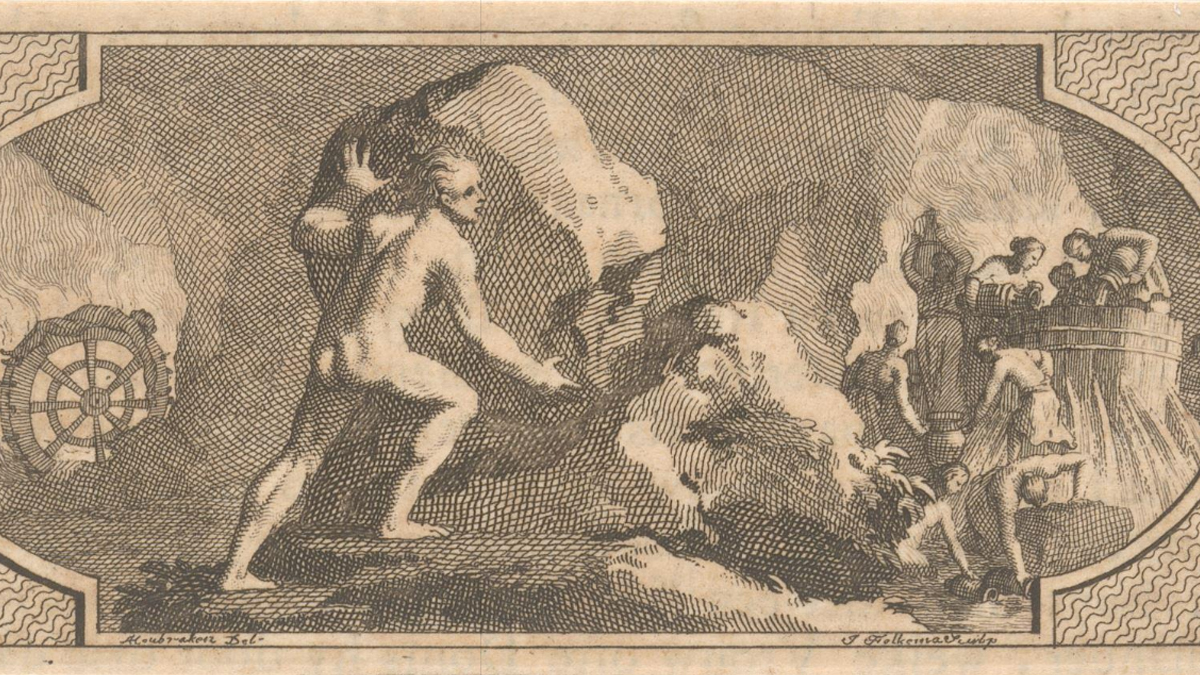
The list could go on ad-infinitum, and while I know on a logical level that this is all too much, that there’s simply not enough time in the day, I can’t seem to let any of these dreams go. I understand that for each one I keep, the chance any of them sees realization becomes that much more improbable, but I don’t seem to have the discipline or realism to accept that fact. Worst of all, the prolonged doldrums this causes makes me frustrated and pushes everything back further. Extreme Sisyphus syndrome. Feels like I need to recruit some people to slap me around any time I get off-task of the big-ticket items. In fact, I should probably recruit the missus for just that. I’m sure she’d oblige.

I know I just put up those 11 goals last post, and I have no intention of hitting the breaks on any of them (In fact, some are done), but I think it’s a good time to start thinning things out. I’ve gone on too long letting myself be blown about in the whims of fancy, chasing dreams in the most roundabout way possible. Can’t cross the finish line if I keep changing the track. Things need to get cut. Focused. Thinner.

And before you say it, yes, I know. Pretty words. They don’t mean shit without results. I’m with you there. Frustration is borne from treading water, and I’ve grown weary of the headaches that come with getting nowhere. I want to feel progress again. Accomplishment. All that comes with making better use of the time I do have. Earning what little bits of pure entertainment I have instead of running to them and away from difficulties.

So, once again, here’s to the close of the year. May we all find it and chart a clear course. I plan its eulogy to be grand.

Do or do not. There is no try.

Yoda, The Empire Strikes Back

I’ve come to accept the fact that none of my ambitions get done if I’m not tracking them, and even then it’s difficult to keep on task if I’m not having someone keep me accountable. I have terrible discipline – something I’m pretty sure I’ve covered ad nauseum by now. That’s fine. Well, “fine.” I understand it, I live with it, whatever. All that means is every so often I sit down, pull up a doc, and get to work planning.

Which is just what I did for the last part of the year. And now I get to pester the lot of you with it and hope that I can inspire a bit of a year-closing push for everyone reading. Let’s consider it an End-Year’s Resolution.

Now, I did end up making a more forward-thinking list when I went through the process. I started at lifetime goals – the things I want to have done or be doing by my own personal End of Days. Obviously, these are more nebulous and harder to pin down, but they make a good baseline to build actionable items as I go. I went with five (I’ll go into these in some other article – this one isn’t about the big picture) and split them into 6 timings. A twenty-five-year plan, a ten, five, three, one, and end-of-year.

Figuring out goals for that far away isn’t exactly a science, and it will certainly change over time, but it helps to work backwards for me and think about what I might need then to plan how to get there now. For example, in a few years’ time there’s going to be another driver in the house, then another, then another. Best to start setting money aside now in preparation.

So, shut up Tom, this was supposed to be about this year, right? Right. Why don’t we get on that, then. In no particular order:

  1. Hit 185lbs
    • I haven’t been reliably sub-195 in AGES, and it’s been a battle to get there. This one is pretty damn ambitious, knowing how hard I seem to elastic-band back to it and, frankly, how much I like food. But, hey, it’s me. Why make things easy? There are 11 weeks left, that’s not even a pound a week! So… so simple…
    • Currently at 193.
  2. 20 pull-ups without break.
    • I had this combined with a 60 push-ups without break goal, but that one I already managed to hit, which felt fantastic. Now I’m just seeing how far I can push it by the end of the year. Pull-ups have been a bigger challenge, though, and part of it might be how much I hate the bar I’m using. Either way, on Saturday/Sunday I do one or two sessions of each to see where my number falls.
    • Currently at 18.
  3. Weekly family night
    • Life’s become very, VERY busy. With sports, dance, after-school events, household things to handle, my own personal goals to accomplish, and so on, I’ve felt that our time together has suffered. Sure, we spend time together in most of what I mentioned above, but not as a full family unit. So, I want to have one night a week where we do just that. Hang out, watch a movie, play a game, etc. I wish it could be a specific day each week, but I’m not stupid enough to think I can block time like that anymore.
    • Plan to start this week. One will be easy, though – the difficulty is making this happen EVERY week.
  4. Eliminate some debt
    • There’s little in my personal life I hate more than owing people money. Having to pay for what I can just own outright (And with interest, no less!) drives me nuts. Don’t get me started on the subscription economy. Anyway, our smallest loan currently is for the windows we replaced when we bought our new home.
    • I’ve already paid all the extra I need to make sure this is done. Our last payment is scheduled for December.
  5. Eliminate unnecessary things
    • Of any goal I have for the end of the year, this one is the most nebulous. We have, well… a lot of stuff. Stuff is the best word I can give it. We’ve got instruments and Legos and nerf guns and tabletop games and clothes and boxes and and and. Everywhere I go there’s just more stuff. It’s gotta go. However, since this isn’t a quantifiable goal, it really just hinges on me being satisfied that enough useless junk has been tossed.
    • And we’re almost there. Yesterday was a major purge of the garage that led to a lot of donations, and I’ve got plans in place for that same sort of thing inside. Speaking of which, if you want some second-hand tabletop games, let me know and I’ll see what we can work out.
  6. Lector
    • For reasons I don’t quite know, my name fell off the list of lectors for Sunday mass. I need to get back on, I really enjoy being able to participate so directly. Plus, I think it’s a good thing for the kiddos to see.
    • The next training to get on the roles is set for this Wednesday, so I’ll be there and then I can have this one checked off.
  7. Daily rosary
    • I’d be a liar if I said my prayer life has been less than stellar of late. That needs fixing. As wonderful as it’s been listening to the Bible in a Year podcast, that’s just the first step. I need to keep working on my personal relationship with God.
    • Since we already do one every week on Sunday, might as well make this the day I start.
  8. Quarterly confession
    • Speaking of that personal relationship with God – it’s been a hot minute since I’ve been to confession. That has to change.
    • I need to check into when a good time would be for the whole family to go, and we can make a time of it.
  9. Residuum v2.5
    • I have been miserably lax on trying to get my first novel published. We all know the story by now, I’ve got a problem with rejection and failure, so I allow things to sit and rot instead of facing them head on. It’s like I expect some magic to descend and ordain the book published and put into stores. I got fed up with myself enough to get over this stupid idea. Aside from family night (And does that really count?) it’s the only goal I have that relies on other people. I try very hard not to make goals like that, but no novel is ready for publishing without having eyes from others on it. I need to know where things are missed, what can be improved, and what just flat out doesn’t work. Then I can refine.
    • Not much time left here. My original goal was to get a certain number of reviews AND have my edits done for version 2.5 by the end of the year. Now, I’ll be lucky to get that number of reviews by then. That hasn’t changed the goal, though. Maybe people will turn around reviews quickly and I can push full steam ahead. We’ll see! Either way, I’m not dropping this ball again.
  10. Catalyst
    • My next novel had a fantastic showing with some people in a writer’s group where we exchanged chapters for review as we wrote. All until I hit a snag and their questions brought out a glaring problem in the narrative that couldn’t be ignored and was so foundational, I had to drop the whole damn project and go back to the drawing board. That’s where I am now.
    • When I set a goal for this, I considered doing another NaNoWriMo for the book, but I simply don’t have the time in my day to devote to one thing like this. Not at the expense of ignoring all the rest. So, the new plan is to have the book well and truly outlined by the end of either October or November, and the first few chapters done by the end of the year. Turns out this goal might be more nebulous than I’d like, so I might spend some time trying to pin it down.
  11. Celestial
    • Hey, remember how I’m a huge nerd? Remember how I’ve been sucked into fighting games? Or how I really, really gravitate towards improvement in general? WELL, a friend and I are both gunning to reach the top “rank” of Guilty Gear -Strive- by the end of the year. A little healthy competition and trash talk never hurt anything, right?
    • I’m currently one step away, but it’s a hell of a step. To reach that “rank” (I use quotes because it’s actually a floor of a tower, it’s a weird system), I need to qualify for a trial wherein I match up against people either already in that rank or people also trying out for it and win 5 of 6 games. Lose 2 games and I’m booted out and have to re-qualify again, which is a pain in and of itself. So, yeah. I’m skirting the edges, but it’s rough.

And there we go. 11 goals, 11 weeks. Nice how that lined up, I suppose. Will be fun to check back in with you at the close of the year and see how this panned out.

As always, cheers to you readers. Go make goals and crush them. Make the world a better place by making something of yourselves.

Closure. I keep hearing that word. … As soon as a show has a sense of closure, it gives you an excuse to forget you’ve seen the damn thing.

David Lynch

I’m a sucker for a wide range of storytelling, not the least of which are those that lean heavily into mystery, subtlety, and ambiguity. There are countless examples of these in everything from TV to movies to novels to games, and I could have picked up the torch on this topic for any of those, but I recently had the pleasure of playing a game on the recommendation of a friend of mine and it sparked something in me that had needed to be put to the page.

Returnal is a PS5 exclusive title released in early 2021 to… well, I don’t know what sort of fanfare. I’m not looking things up when I write these, so we’ll have to just kind of take thing as they are. Regardless, I hadn’t really heard much about it, but I didn’t have the system then so that might have added to the problem. Either way, I’d recently fallen in love with Hades and subsequently roguelike / roguelite titles in general, so with a gorgeous, 3rd-person bullet-hell roguelike in the mix it was hard to say no.

Now, I’ll admit, I didn’t latch onto it at first. Possibly because I was (And continue to be) pretty bad at it and getting a grasp on the core systems while trying to understand the flow was giving me a lot of trouble, but I also felt that I was totally in the dark on the what-or-why of the story behind the game. That’s not always a make or break for me – there are plenty of games, and even genres, where the story is irrelevant to the fun – but in this case it didn’t feel right. The atmosphere was so good, so oppressive and foreboding, that I knew there had to be something lurking behind the scenes to grab onto and the short little cutscenes and discovered mission logs weren’t it.

Until, that is, I found the house.

Now, for those of you that know nothing about this game, I’ll try to keep things spoiler free. The house is where most of the “true” world building happens. You exit the frantic, bullet-hell third-person game and enter a first-person exploration mode delving into your character’s past in a world that shouldn’t exist. From that moment on I was absolutely hooked. I think the session I first discovered the house ended up being more than six hours of playing in one sitting, running me until nearly three in the morning. I couldn’t put it down – the game had clicked and I wanted nothing more than to keep upgrading to keep progressing to keep discovering. I was digging through a tremendously built mystery that continued to dole out minor details at the end of a fishing line, yanking it further away just as you thought you’d found the next big discovery.

Here I am, an addict Jonesing for my next fix of story. I needed to know more, and the game was good to oblige at just the right times. I craved the closure of things as I got nearer to the end – or, maybe not closure, per se, but truth. You see, the story you do receive is clouded in mystery. What is the world you’re on? How is the house there? What aspects of your character’s past are bleeding into reality and how are all the events of the game related?

Well, it turns out that you’ll never really know. So much is left open to interpretation or just fully unexplained, that I’m sure I could look around online and find dozens of competing theories as to what all the little aspects of the world imply. This is an intentional design, of course, but I found it immensely frustrating. I beat the first “cycle,” found an “end” that brought me into a second cycle, then finished that only to find I needed to gather broken pieces of my past to discover the “truth.” Which was, again, another layer of unanswered questions.

Storytelling is a matter of personal preference, and I’m certain there are people out there who enjoy this kind of persistent ambiguity, but it really turned things sour for me. With so much promise built up through the game’s masterful execution, it felt like a complete fumble at the end, and I started to ask myself why, when there’s another recent game that absolutely ADORES ambiguity, yet is a masterpiece of storytelling despite it.

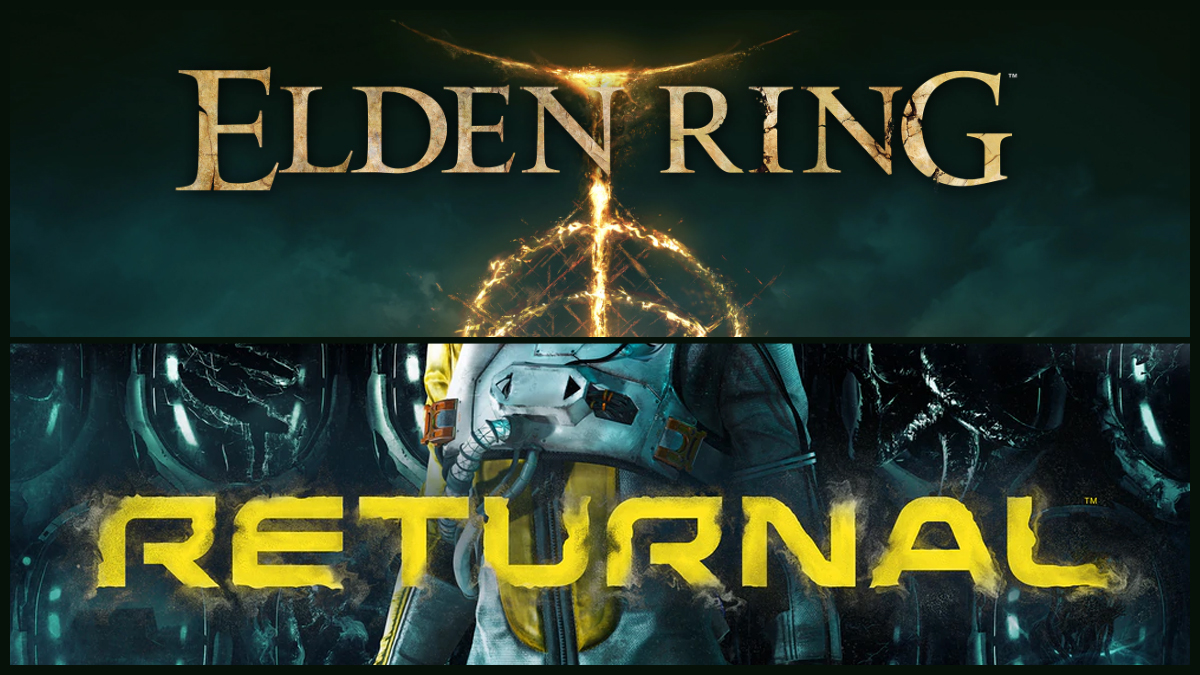
That, of course, is Elden Ring.

Elden Ring, and by extension every game in the Souls series, takes pride in telling you next to nothing. The few cutscenes you get are out of context and sometimes absurd on their own. You can run your way through the game barely understanding what you’re doing besides “I have to beat the bosses so that I can get to the end and win.” The story – the true story, with all its intricacies and world building – is hidden behind secret quests and item descriptions and other obtuse barriers. It’s a story you have to hunt for, and even when you do, you’ll practically need to treat it as a full-time position in order to understand it.

So why does it work when Returnal falls short?

I think the answer is two-fold. One, the central story is treated differently. Elden Ring’s main story is an easy thread to follow. Like I said, you barely need to understand anything of the frills to know that you are a Tarnished on a quest to save the Lands Between and claim the title of Elden Lord. You’re told this often enough by every major, required encounter that it’s burned into your brain. Understood, boss. On it. Whereas in Returnal, the story is essentially that you’re trying to discover the story. You’re doing what you’re doing to find out why you’re doing it.

Two, when you actually put forth the effort to delve into that story, the games treat you considerably differently. Elden Ring gives you answers. It’s damn hard to put it all together, but when you do you end up with videos like this masterpiece, a thirty-minute dive into the pain and darkness that drove certain characters to the places they ended up in society and why you, as the player, may have chosen to side with them at the cost of everything the world held dear. It pieces together several quest lines, lore from small chats with otherwise unimposing NPCs, events from seemingly unrelated lines, and documented lore from item descriptions. It’s a mess, but when it comes together it is simply, beautifully, jaw dropping in its narrative. As opposed to Returnal which will just give you more questions that you can guess at.

To be fair, I think I do understand the overarching idea of Returnal. It’s a story of grief, and how running from it is a never-ending cycle that can’t be stopped, no matter how hard we try. I get that impression, and many of the reveals continued to push me in that direction, but with nothing concrete it’s hard to say. It’s also hard to say what, if anything, the specific gameplay loop and things we encounter have anything to do with it. Are they real, or just figments of our imagination? If the former, why are they imposing this relived cycle? If the latter, why has the protagonist chosen these representations to punish herself?

Skating the line of ambiguity is extremely challenging. Too much, and you risk losing the audience’s attention and pulling them out of the story. Too little, and you risk creating an exposition-laden monster that’s boring and trite. There’s a sweet spot, and that spot will end up different for everyone. Films like The Witch absolutely floored me with their execution of ambiguity and atmosphere, but I know other people who couldn’t stand it. As a creator, it’s up to us to create something satisfying, skirting these lines as skillfully as we can, to reach the audience that resonates with us. That’s always the quest – firing our arrow around the obstacles in hopes of landing a bull’s eye.

What about you? What stories absolutely grabbed you with their use of subtlety, or vice versa? I’d love to get to know more about my audience, however meagre it might be. You guys rock, and thanks again for reading.

We’re totally guilty of doing too much at once, all while trying to manage the noise in our heads that says we’re not doing enough.

Vanessa Autrey, The Art of Balancing Burnout

Well, hello there, friends and readers. It’s been a bit, hasn’t it? Sorry about that – after I finished up the No King in Israel series, I intended to take a short break to gather some ideas for new articles, take a breather, and ultimately do some refocusing on my goals in general. Those things certainly did happen, but as part of that I got involved in some pretty demanding writing groups which, coupled with a whole hell of a lot of life things going on, ended up pushing everything on the backburner. I did my best to trek along but came to the realization that something had to give. And it did, so here I am again.

To be more specific on the writing front, I found a Discord server of published and aspiring writers and joined with the initial intent to trade finished manuscripts so that I could get more eyes on Residuum. That bore little fruit but did get some bites and I’ve been reading/critiquing what was sent my way in exchange. The critique process is slow for me, and demands a good amount of time, but I know I need readers to help me figure out where my story falls short so I’m glad for the opportunity. However, after talking with people on that server we ended up starting a “competitive accountability” session – essentially, we were to start a new work, write a certain number of chapters in a set time, post them up, read and critique every submission entered, and rank the submissions. This was a fantastic process, and one I’d started up with these people while I was still going through my post series on the site.

Those of you that know me can probably already see the issue, however. I’m not exactly a fast writer. I mull over most of my sentences, and it takes me a while to get my creative engine up and running. So, when needing to deliver four chapters a month while working a standard nine-to-five, meeting contracted writing deadlines, writing articles here, critique reading, and trying to actually be a husband and father, well… there’s just not enough time in the day.

I loathe backing out on something I’ve committed to, but I realized it had to be done. As awesome as the group was, being forced to churn out that much, especially at the complexity of story in Catalyst, was making me dread writing. My days essentially consisted of waking up, working out, going to work, getting home, writing, going to sleep. Rinse and repeat ad nauseam. My family was suffering for it, and I found myself getting annoyed when I had to go out and do anything, as it was taking away from my “productive” time. Pretty awful way to go about life, if I’m being honest.

So, I told the Competitive Accountability group that I had to drop this past week. I’m still committed to reading their submissions and critiquing, as I figure it’s the least I can do, but that freed up time is invaluable. I’ll be using it to ensure I meet contract deadlines, tighten up the story and outline of Catalyst based on their feedback, and, well, be there for my family. A much better deal all around.

Oh, and get back to writing here. As much as I was complaining earlier about being a slow, plodding writer, this site has helped turn that around. I used to be so much worse. Plus, the other half of why I started this was to try and build some kind of foundation of followers so that, in the event I finally get something published, I’ll have a base of people wanting to give that a read. I feel I’ve spent most of my time here just working to get the other aspects going and ignoring that, but that needs to change. Residuum is close to ready, and with feedback from a few more readers I’ll be set to do another edit pass and polish things off. I want people invested. Not just in that story, but in what I put out as an author. I’ll be brainstorming some ways to do that through here.

One that keeps bouncing around is adding video/audio to these. The era of blogging (or whatever this is) was over before I bothered to get into it. It’s all about building a base from relationships, and those relationships are hard to start without a real voice. I’m not exactly thrilled to go that route, but it might be a necessity.

But, if it is, I guess I’ll have to start replacing this eleven-year-old computer, huh? Oh, boy.

Anyway, glad to be back. Glad to have the time to be back. It’s nice to join the human race again.

I don’t care what you think unless it is about me.

Kurt Cobain

Here we are, at the end of our long journey together. It’s been… fun? Educational? Hopefully at least thought provoking? Either way, I want to thank those of you who have stuck it out along the way. The goal of this process was to bring a bit of introspection into each of our lives an help understand how we can best tailor ourselves to become the change that the world needs.

But, of course, there are dangers there as well. Kind of a running theme, no?

In the second bit of prime irony from these articles, this seventh and final entry will be focused on Pride and just so happens to fall on the last weekend of our newly vaunted monthly celebration. I didn’t plan it out that way, but I’ll take the assist where I can.

I’ve alluded to Pride in practically every post before this. There’s a simple reason for that. Pride, dubbed the Queen of all sin by St. Gregory the Great, is the progenitor of sin. In order to recognize that, we first have to understand what is meant by Pride.

People often argue that it can’t be all that bad – after all, they take pride in their children when they succeed, or take pride in their community when it pulls together to support a cause. And, yes, those things are a form of pride. Pride, the progenitor, is better understood as narcissism. An inordinate focus on self and elevating oneself above all else. How, then, do these examples fall under that blanket?

Because the pride we take in the growth of our children or the banding together of the community or even something as detached as our city’s national teams winning championships due to some connection we feel to those things. We cast ourselves into them, feel we are reflected in them in some way. We look at our children succeed and think, “I did that,” or our community outreach and think, “I’m a part of that,” or even the team’s lifting of the trophy and thing, “I supported that.”

Now, don’t take this to mean those things are innately bad. Pride is a perfect example of “All things in moderation.” Appreciating our efforts is valid, so long as we don’t allow it to consume us. Where Pride begins its insidious nature is when it starts to take that appreciation away from others.

I can be proud of my children, but I must also recognize their accomplishments aren’t my doing. I played a part, of course, but so did their mother, their grandparents, their school, their friends and teachers and church. And, importantly, themselves. Each of those things deserves its own credit. I’m just a part of their story.

That last line, there. That’s the big one. Pride exposes its true nature when you start to treat the world as a part of your story, instead of the other way around. When everyone else must fit into your casting. How does this trickle down so as to make it the Queen of all sin? Well, let’s look.

The siblings Gluttony, Lust, and Avarice come about when one believes their own comfort and desires trump those of others. Sloth falls into that same bracket. Wrath appears when people do not fit into the parts of our story where we wish them to fill. Envy, from the idea that what another has would be better served as yours instead. When I am the focus of my world, the humanity of everyone else begins to fade. Everything becomes about me. Again I find myself thinking back to my article on the Marquis de Sade, something I’ve both referenced and considered a lot since creating it. He really was the personification of this ideal, the embodiment of Pride, and his ideals have slowly begun to permeate society.

It’s been a part of this process to look inward and expose parts of myself that are damaged by these sins. With Pride, I find that difficult. Not because I don’t have it – if only I was so clean – but because it’s everywhere. It’s in how I spend my time. It’s in my writing of these articles, hoping that I’ve found a way to influence someone to become a better version of themselves. For them, sure, but I can’t deny the ego boost that would likely come from it. That shouldn’t be what it’s about, and I like to think it isn’t, but I can still feel that pull. Worshipping oneself is just so damn easy. It’s the only viewpoint we have, after all. Talk about an unreliable narrator problem.

The only way to combat Pride is with Humility. I’ve already covered this above, but just to drive home the point, if we offer up credit to others for things in which we play a part, it becomes that much more difficult to believe the world revolves around us. And it doesn’t. I like to think that we all know this, even if we’ve buried that idea somewhere deep in our psyche. If we approach everything in our lives with an eye on Humility, well, that would essentially build the Christian utopia. You might recall my thoughts on utopias, so you’ll know I don’t expect anything like this to happen, ever, but that doesn’t mean we shouldn’t work towards it.

I can’t help but feel I’m falling short in this particular article. There’s so much driven by Pride, and its pull is so pernicious, I could harp on its influence forever. But I think, perhaps, this post has gone on long enough. So instead, I’ll thank you all again. I hope any of this has been a help, and I hope the next time you feel the draw to any of the Seven, you’ll take a moment to step away, take a breath, and consider that the world is filled with stories. Each one is as important as the next, and only one of them is yours. My hope is that yours is a tale that brightens each page in every story in which it appears.

Be good to one another, friends. These days, we sure need it.

Some people talk about other people’s failures with so much pleasure that you would swear they are talking about their own successes.

Mokokoma Mokhonoana

Five down, two to go. And the two we have left are doozies (Huh, that’s actually a word and that’s how you spell it, how about that?).

I considered the first five of the Deadly Sins – Gluttony, Avarice, Lust, Acedia, and Wrath – something I call “effect sins.” This isn’t from any particular philosophy I’ve read, just my own, possibly misguided ideas surrounding the seven, but it helped me understand what I was dealing with. Those five sins concern outcomes. Things that we do or feel or want. They have motivations, but those motivations are more surface level and take a back seat to the fundamental action of the sin itself. Why we over consume is less relevant to Gluttony than the fact that we do, for instance.

The final two sins are what I consider “cause sins.” These are the big ones. Yes, our lives would improve dramatically if we did all that we could to rid ourselves of the actions and mindsets that make up the first five, but in a certain sense it’s a bit like going to the doctor and focusing on combatting the symptoms. If I’m in crippling pain, of course I want that pain dealt with, but I also need to find the source of that pain and deal with it, or all the medication in the world won’t matter.

So, let’s talk about Envy.

Right off the bat, I want to make it clear what we’re dealing with. There’s a lot of conflation between Envy and jealousy. It’s understandable why, but these are two distinct things, even if we’ve come to use them interchangeably over time. Jealousy is concerned with losing something one has to someone else – it wants back what belonged to it. Envy begins with no ownership. It sees what others have and wants to strip it from them. Sometimes to gain it, yes, but often simply so the other person will no longer have it.

Clear enough? I hope so. I’ve had talks with religious and irreligious alike who bring up the verses on God being a “Jealous God” as an argument against a great deal of Christian belief, but those arguments rely on the same sort of mis-defining. Understanding that these verses simply say God sees us being taken by other things and wants us back hopefully add a new understanding to those. That said, let me not fall down that rabbit hole. I’m not here to get into the religious side, even if this whole series is named from a Bible verse and is about the Sins. I can’t emphasize enough how much I believe that, even if one does not believe, their lives and society as a whole would benefit from treating each of these seven as aspects of personal and societal degradation.

Well, that was a long preamble. What of Envy, then? As a causal sin, we can see it lurking in the background of much that came before it. We can hear it used as a prime motivator across the political spectrum. Listen to discourse these days, how much of it is dictated by the idea that “these people have X, and they shouldn’t?” There’s that word again, that pernicious word – should. A weapon in and of itself, and one used to bludgeon others when it should be focused inward. The only person who knows what he or she should be doing is that person. Elon Musk shouldn’t have that much money, he should do [insert thing I want here]. Bernie Sanders shouldn’t own three houses, he should have used that money for [insert thing here]. There are certainly altruistic ideas that come along with statements like these. We think this wealth to be a waste, and perhaps it is, but we have to realize one thing. It was never ours. We need to recognize that the outcome we’re after can be distilled simply to “You shouldn’t have that.”

Envy is powerful. The political angle is easy enough to see, but it has spawned its own media complex as well. How much of reality TV is based around the concept of showing you people who live incredibly lavish lifestyles and painting them as the absolute worst? What do you think that’s designed to get out of you? There’s a particular kind of loathing that comes with long-term exposure to Envy, and that loathing is all too easy to capitalize on. It’s a loathing that manages to make itself seem righteous. After all, we know what they “should” be doing. Seeing them not makes our own failings that much more acceptable. But that’s a point for next week. Hopefully I, uh, remember to get to it.

So, how do we combat this natural drive within ourselves? The corresponding Virtue for Envy is Kindness, and I have to admit on initial pass that seemed to be… let’s say a little lackluster. Why was being nice any sort of meaningful action to prevent something as powerful as Envy? Well, like much of this process, it takes a bit of digging and introspection. What is required for one to be truly kind? Being kind implies you are taking the best course for your subject, doing what he or she needs. We can’t know what that course is without first understanding that person, and to understand them requires a great deal of empathy. We need to understand the situations that brought the person to that place. We need to understand their drive, their wants. I’d say it’s pretty difficult to find we want to take things away from someone once we get to know them on that level.

On top of that, and on a more basic level, Kindness necessitates we have a positive outlook on things. We must believe that any situation can improve if we try, or there would be no point to being kind. And maintaining a positive outlook just makes it harder to want to take things from people. Joyful people don’t tend to wish ill on others, as a rule of thumb.

To circle back to an earlier point, I am a highly political, deeply religious person. I know well how easy it is to give in to our darker natures and the difficulty in rising above them. If we want, we can fund lifetimes-worth of content to spur our Envy of others, or our Wrath toward them, or any and every other negative thing that can pull us down. It’s an active fight to stay above the filth, and at times it can be disheartening to watch us go for each other’s throats over and over again. The world is a brutal place, driven in large part by what we have already discussed through these past six weeks. But driven even more by what we’ll cover next.

Next week, let’s talk Pride.

Isn’t it funny. I’m enjoying my hatred so much more than I ever enjoyed love.

Janet Fitch, White Oleander

Wrath. Unlike some of our previous expositions, everyone understands this one from the onset. We all have an image of Wrath, an anecdote or association that we can conjure at hearing the word. And, also unlike some of the earlier sins, this one is likely correct. There’s no deeper meaning at the core, no subtleties or clarifications to make in its definition. Which, frankly, is appropriate. Of any of the Deadly Sins, Wrath is the most direct. The most violent. It also happens to be one of the few not focused on the self.

The defining characteristic of Wrath is its lack of control. Anger, while not an emotion we should strive for, is perfectly human and natural. Unavoidable, really. We get angry over all sorts of ridiculous things, from getting cut off in traffic to enduring bad TV. It’s how we respond to these events that changes things. That moves that anger from an emotion to an action.

I’ll admit, again, that I’m struggling a bit on this article. Not because I’m a generally chill guy and don’t relate to this one, but because the problems of Wrath are so self-evident. It’s a bit like trying to explain why it’s bad to steal – that thing isn’t yours, so you can’t take it. Well… lashing out at people is bad, don’t do it, mmkay?

Still, I suppose this hasn’t stopped the world from wallowing in Wrath. Generational warfare still permeates the Middle East. Gang wars continue more or less everywhere around the globe. And here in our little perceived empire of Western moralism, we’ve taken our Wrath to the digital space.

Sure, there are plenty of places we can look to see Wrath in action in the physical world in the West. Riots, shootings, domestic violence – you name it, people will do it. But, again, we see the Wrath in these. We understand their repugnance. No need to beat a dead horse there.

Have you been on Twitter lately? And by lately I mean in the past, what, five year? More? Has there ever been a cesspit of more self-righteous indignation and outright hatred? Pure anonymity, exemption from real consequence, and expose to all facets of human expression and experience has proved a prime cocktail for diving headlong into Wrath. There must be something cathartic about it, something that gives the impression we’re doing the “right thing” in spewing vitriol at one another to proved points and “own” the other side of whatever excuse of an argument we think we’re in.

But arguments are gone. Debate is gone. In good part because we lack a particular virtue – Patience. Patience is the perfect foil for Wrath and gives us an interesting insight into the problems of our discourse. Enduring a slight, forgiving it, showing mercy; these are all components of the virtue of Patience. How often do we see these things on social media? Or on media in general, these days? There a lot of forgiving going around lately? Do we see a lot of mercy over mistakes or people brushing off perceived slights?

Hell, no. We can barely talk to each other without stepping on broken glass to try and avoid one word that the other person will latch onto to fuel their indignation. We’re always on edge, looking for a slight that we can feed our Wrath. Because, in the end, it’s easier not to listen, not to give our opponents the benefit of humanity. After all, if they’re monsters it’s easy to direct our Wrath at them. No, not easy – it’s just. We get to turn our vice into a virtue and trick ourselves into believing we’re in the right.

Patience, then. Take a breath. Listen to one another. Try to understand instead of casting intent. Don’t assume. Forgive. With true Patience, we can build stable communities. Give people a place to go, to feel heard and loved. I promise, it will work wonders. There will always be evil out there, but we don’t have to assume it of others. We can endure those things, come together, and mourn them.

Be kind to one another out there, my friends. Pay it forward. I know it can be difficult and it’s easy to become jaded, but we can’t expect things to change for the better around us. We have to do our part, and as always, the only thing we can truly change is us.