Themeattics

The Official Website of Tom Keaten

Habit rules the unreflecting herd.

William Wordsworth

It’s becoming increasingly difficult to find cover images for these articles, I’ve gotta say.

But enough of that, let’s talk improving. This Lent, as part of my desire to grow in my faith I’ve taken to ending my day with a bit of self-reflection. What did I do, how did it improve or hinder my relationship with myself / others / God, how can I work on succeeding in those places where I failed and improving those places where I did alright? You know, that sort of thing. Really basic stuff in the grand scheme of things. It’s something I’ve done on and off in the past to varied levels of success, but this time I opted to add a little something extra to the mix that’s helped quite a bit. I started writing things down.

That, too, should seem like an obvious thing to do. I don’t know why it never struck me before, but I guess this is another step along the path of continually proving the adage “what is measured is improved” correct. Oddly enough, I got the idea from professional fighting game players. I’m on a bit of a content tear trying to improve at the genre since I find the raw competition and demands of it so much fun, and one thing I noticed almost without fail was that these guys are all actively, constantly reviewing what they’ve done and noting where they find flaws. Be it matchups, their own character’s performance, how other players utilize tools differently, or some other obscure topic, they’re always writing it down to research / test later. And, I mean, of course they are. With so much to keep in mind after hours of competition, how would you remember it all without having a point of reference?

Now extrapolate that over the whole day. I remember doing this before. I’d lay down at the end of the day, try and think about the places I’d dropped the ball, come up with one or two and just think to myself – alright, let’s just be better there tomorrow. Okay, hoss, good luck there. The next day comes and starts busy, every plan falls apart and I repeat the same cycle. Nothing progresses.

Not anymore. Now I’ve got something on hand to make a quick little note of when I notice myself slipping, outright failing, or rising to the challenge. It doesn’t take much, just a couple of seconds here and there, and having that list on hand at the day’s end is unbelievably worthwhile. I do a little bit of organization and start the next day with big-picture notes on what to watch out for and how to get ahead of the game. It’s almost a personal cheat-sheet at attacking my problems and I wish I’d started this up years ago.

You’d imagine it’s disheartening to look at a day’s worth of failures. I’d be lying if I said it isn’t, at times, but that’s why I think it’s important for people to put on their successes as well. Something to focus on keeping up rather than shutting down. We can only dog ourselves so much, in the end. Remember, none of us are or ever will be perfect, but the goal is to keep striving. That said, for weirdos like myself, I thrive on seeing where I’ve screwed up. A never-ending pool of places to improve is like catnip. If only I had the time or wherewithal to handle it all.

So, give it a go. Keep a little pad of paper on you, have a running list on your phone; whatever method you choose, just do it. Keep it up for a month and see how it treats you. Track that progress. You might be surprised what you learn about yourself. It’s easy to pass through life without really considering the things you do that set you back because they’re habits. Can’t really get away with not noticing when you’re taking an active role in doing just that.

— — —

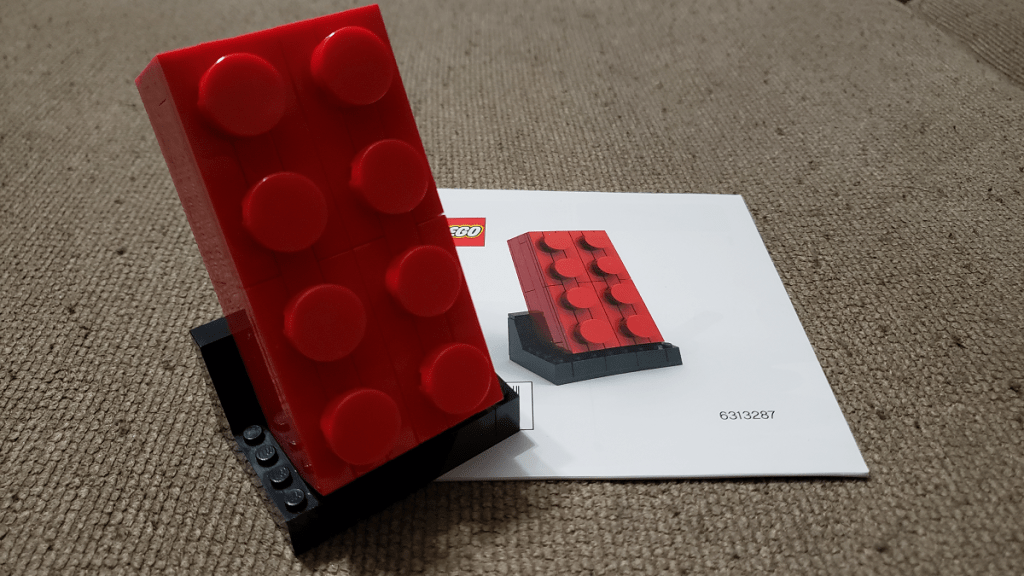
Part of the purpose of this whole LEGO exercise was to find things I didn’t even know we had and be sure all of the parts of that thing were present and accounted for. Which has, naturally, become a chore, particularly where the minifigs are concerned. But, every so often I dig through the box of plans and find something like this little adidas shoe set. Why do we have this? Where did it come from? Who knows! But hey, a set is a set.

We want it all, and we can borrow to get it all, before we can afford it all.

Dave Ramsey, Financial Peace Revisited

Ah, finances. Everybody’s favorite home subject, no? Well, until we manage to tech ourselves into a post-scarcity reality, our material wellbeing is something we’ve all got to be concerned with. Such is life.

A little while back a friend of mine clued me in to a budgeting app they’ve really been… I was going to say “enjoying”, but I don’t think that’s ever the right word when it comes to budgeting. Let’s say “utilizing to great effect.” I heard it through but was satisfied with (And, let’s face it, a little overproud) my makeshift Excel spreadsheet so I mostly discounted what they were saying. Some time down the line I heard about it again and ended up trying out the free trial but found it a little complicated and didn’t quite understand the point. Or, rather, didn’t know how I’d end up fitting it into the way we were living.

That last part there was the issue. Thing is, this tool didn’t fit into the way we were living, and that was because the way we were living was all jacked up. After I spent some time with the app I talked with the missus and we decided we’d give it a shot, and this year – really this month – we’re truly going to begin putting it into effect.

YouNeedABudget (YNAB) is, at its essence, a way to digitize an older cash-only mindset. A mindset that’s seen somewhat modernized by Dave Ramsey, where you never spend money you don’t have. Don’t go into debt, budget everything you plan to buy. It’s a simple idea but, especially in the world today, incredibly challenging. With everything done via credit card, money can seem like some abstract reality that we barely interact with, but I can tell you first hand that financial uncertainty is one of the most stressful things you can impose on yourself.

The idea itself is simple. Make categories for what you spend monthly. Tuition, car payments, mortgage, groceries, gas, electricity, personal spending, etc. Go as in depth as you possibly can. Then, you can set up each of these categories with types and targets.

Let’s say you have a yearly subscription to something and you know exactly when and how much that will be. Set the dollar amount of that yearly sub and YNAB will break down how much you need to budget for it per month. Or maybe you want to save up for a cruise but aren’t quite sure when or how much it’ll be. Make a category, set a monthly amount you want to budget, and it’ll track how much is reserved for that plan as time goes on. Simple, yes?

Well, here comes the important part. YNAB lets you link your finances to track them. You can (and will) link your bank and credit cards to the account. When you get paid, it’ll pull in as money you can assign to these categories. When you charge something, those transactions will show up for you to label which category they came from. Think of the categories as little envelopes that have whatever you budgeted from them as cash inside.

And now the last, most important step. Don’t spend anything if you don’t have the money in that category. If it’s important, move money from other categories to the one you need and then spend it. But don’t go negative. Don’t use what you don’t have.

That’s the main focus of YNAB. Clear visibility is one thing, but the confidence to know that what you’re spending is already covered, consciously, by you, is such a weight off your shoulders. Trust me.

I am a stress bot when it comes to money. I hate spending. Hate it. Using YNAB has changed that because I know, without a doubt, that we’ve already set that money aside for this thing. It’s planned, it’s ready to go. It’s serving its purpose. That peace is something I can’t put a price tag on. YNAB does – it’s a subscription service – but it’s one of the few things I don’t regret paying for. It absolutely has made life better and, should we be able to keep with it, will continue to do just that. I highly recommend you give it a shot. It will be confusing to start, I can promise you that, but it will also be worth it.

— — —

This week I declared war against the color red.

Words are, of course, the most powerful drug used by mankind.

Rudyard Kipling

This is another post that’s been due for quite a while. I’ve brushed up against the topic or outright used it as part of the discourse a lot, but haven’t made something specifically focused on it yet for reasons I can’t quite pin down.

Words have to mean something, guys. I know, I know, language is a fluid thing. Words can and do have multiple definitions and those definitions shift over time, but I can’t help but feel that we’ve entered a new arena of late. So much discourse, whether it be political or cultural, centers around definitions that don’t seem to be shared between parties. We make up labels or terms that manage to have some cohesive narrative around them for a bout a week, then they get sucked into their respective wheelhouses online and come back out bastardized to whichever way best suits the using party. The end result is that we either just talk past one another or, far worse, we dull the effect of important distinctions.

Let’s take a couple of real-world examples over the past few years, yes? Some things we’ve seen permeating discourse both online and in the “real” world, as if those things aren’t now irrevocably intertwined. In escalating order, let’s go with woke, socialist, and racist. Nothing too spicy, no?

I don’t really feel like any of these need the baseline definitions explained, but for the sake of it I feel like I should. That way there’s no confusion. Woke gained traction as a way for people to identify their ideology as being aware of social ills. It meant that they weren’t asleep anymore, they saw what was going on. Pretty benign, and got to the point effectively. But, like all good things, the internet got a hold of it and opposing parties adopted it as a means of degradation. It then morphed into a way to attack something as being purely ideologically driven. Media that was made to explicitly drive a message over being for entertainment bore the brunt of this label and, over time, that became the more used version. Now, we’ve gone past that to the point where it seems like if anything has any left-leaning thought at all, it’s given the label and ignored by large swathes of the right. A gay person exists? Woke trash, don’t watch it. It used to be a decent way to understand a criticism. No more. With such a washed out definition it now effectively means nothing.

Socialism, now. As a political / economic philosophy, Socialism has a pretty specific definition, geared toward social means of ownership and distribution. It’s been a well-covered topic for generations, but let’s not think the speed of internet discourse can’t ruin that as well. Sit down some of the less informed people on the right end of the political spectrum and you’ll find them labeling everything as socialist. Any government aid plan, any government… well, anything, practically. For these people, socialist has become a word that more or less means “the government is involved and I don’t like it.” Which is, obviously, useless. There’s no attempt to explain why, or what, or how the thing they’re labeling as such deserves the label. One side just starts booing and the other side rolls their eyes and dismisses it.

This is, sadly, much the same for racist. I can’t tell you how many things I’ve seen labeled racist. Team names, brand icons, immigration policy, diseases, industries, governments, religions… you name it, it’s been called racist. Things against specific countries are called racist – a country isn’t even a race! This has become the left’s version of “I don’t like it,” along with the other hit singles, -ists, -isms, -phobes. They’re all the same thing – this thing/person is bad and should be seen as such. These labels, if taken in their original definitions, are damning. That’s why they’re used. No one wants to be seen as one of those things, it’s a serious indictment of character. So, in a lot of cases, the tag worked. It got action, changed people’s opinions of people or things. But, that label morphed into what it is now and it’s lost its power. People don’t believe it any more. Not the original definition, at least. They just know whomever is using it doesn’t like what they’re using it against. Nothing more. It’s why we’ve seen the transition to new and even more, ah, exciting accusations like white nationalist. Same accusation, just a new skin.

In every case, these dilutions serve only to make our discourse worse. The true definitions had meaning to them. They had weight, they had purpose, they had a collective understanding that we could talk to one another about. Now, we don’t know what we’re hearing. They’re so diluted, in fact, a lot of people just disregard the point entirely. We’ve entered a Boy Who Cried Wolf era. It’s miserable here, I hate it. I don’t know how we’re supposed to have any pertinent conversations with those on other ideological ends if we can’t even share the same language, and it only seems to be getting worse as we isolate ourselves in our ever-smaller online worlds.

We aren’t meant to be islands, and we certainly aren’t meant to exist in opaque ideological bubbles. It’s damaging to the path of human race as a whole. We are geared to treat those who we don’t understand and who oppose our ideals as adversaries, and God knows what we’re capable of doing to adversaries.

— — —

Yeah, alright, this isn’t a “LEGO,” per se, but it’ll do. I’ll allow it. I am, truth be told, starting to wonder if this whole little goal / experiment is too taxing, though. Right now I have 13 plans strewn out across the floor, all of them held up in some way shape or form by being unable to find the right piece. It’s annoyingly frustrating and probably (definitely) not the best use of my time. But… I’m not wanting to let it go. Not yet. I started it for a reason, after all. Need to see it through.

Why can’t we be friends?

War, Why Can’t We Be Friends?

True to form, I had a mapped topic for this week’s article but am tossing that out after having a quick Discord call this morning between some like-minded authors. This is the group of people I was in the competitive accountability group with last year. The head of it, James Krake (Amazon, Royal Road), put together the idea that, instead of a bunch of us trying to submit 4 chapters of varying lengths a month to then have to review everyone else’s while still writing out own, we should roam around like a pack of wolves finding short story publishing runs and submit to those. Find a small collection looking for submissions, make a story for it, shop it through the group for polish, and submit. A small group takeover of one publication a month.

I am a hundred percent on board with this plan and am already trying to dredge up some ideas for the first submission. It’s due March 31st, and I’ll probably go more into what that was when the time’s past, likely depending on whether any of our group gets picked up by it or not.

Regardless, this take is a very interesting one, and it’s one that got me thinking. I’ve been slow on the take of deciding whether I should go for the traditional publishing or self publishing route. Leaning traditional, of course, since I’ve wanted to be on a store shelf for decades. However, having this call really made some things click for me. I’ve been treating the writing world as a binary one. Either I’m shopping major or independent publishing houses via agents and editors, or I’m amping my production up to build a back catalog and preparing for the world of higher-frequency self-publishing. It’s always been one or the other in my mind. At the same time, I’ve been doing things like this site and trying to bolster my social media presence and inventing other plans to grow a market in the eventuality that I get an agent interested.

Know what would really help get an agent’s attention? Actual sales of other works. A record of success. Proving myself out via the product and not some abstract, “Oh, look here I have a Twitter following” pile of garbage. In other words – why should I not be looking to do smaller self-publishing stories as part of the run-up to get picked up? If anything, it seems stupid not to do this. All production is practice, after all, and if I want to slowly chip away at the imposter syndrome I certainly do/will have at being a “published” author, the best way to do that is to keep being published. To get my name out, to see it in print – somewhere, anywhere – and know that, yes, I’ve finally done something worth being picked up.

Also, point of clarity, I am miserable at keeping my stories short. If nothing else, this process should help me tighten up my storytelling. That’s worth it on its own.

Now, to make it clear, this in no way removes my primary goal of major publishing of novels. In fact, I’ll be working on both things simultaneously. I’ve started up a new Beeminder for Catalyst already. Since I’m rusty as all get out, it’s set for time instead of words. In time I expect to close it out and make another for words, but that’s good enough for now. I’m putting my daily time there first, then focusing my attention on the first of these short stories, its working title being Knowledge is Power.

I hope to share more about this all with you soon. In the meantime, Dwellers, get creating.

— — —

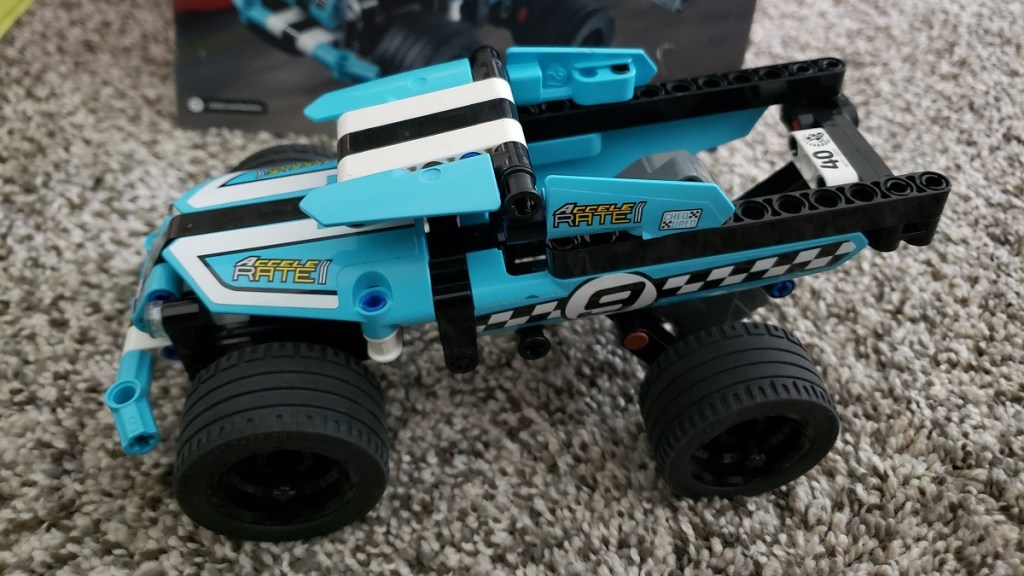
Technic? Yeah, we got those. This one isn’t really going to help in the grand process of cleaning up the LEGO mess we have as there aren’t many Technic sets in the list, but again, everything counts. Slow and steady, yadda yadda. You should see the upstairs right now, it’s an absolute disaster of halfway completed sets missing a piece here and there with piles and buckets and bins and boxes of bricks refusing to give up the goods. Kind of a nightmare, really. Ready for some breakthroughs to happen, for sure.

Truth without love is brutality, and love without truth is hypocrisy.

Warren Wiersbe, On Being a Leader for God

My sister-in-law got married this past weekend and I’d be remiss not to first give her a more public congratulations and prayers for a wonderful new life. Her husband’s a great dude and getting to meet his family was a treat. Very happy for the both of them, and for my in-laws in general to have something so great to celebrate. Love you guys, and don’t worry, I remember the vows we all made as well. You can’t escape us, muahaha.

Being there, though, brought me back to a topic I’d thought to write a while ago. Something that stemmed from another wedding that really sidelined me and felt like something of a microcosm of the world at large. Not sure why it took me so long to get to writing about it, but I guess some things just boost off of others.

The ceremony in question was standard – something we’d all recognize as an American wedding. Everything you’d expect. The presider was giving his blessing and made what I expect most people would see as an innocuous statement: “God is love. And love is God.”

Those last three words caught me. It seemed, oddly, to encapsulate something I think we here in the West are struggling with – or, at least, something we seem to keep butting heads with one another about.

We seem to have developed a worship of the idea of love. That there is nothing more important. And, if we had the same concept of love, I’d be inclined to agree. But I think that, like a lot of things these days, we use the same words without having the same definitions. Love to me is something very specific. Something that draws one closer to the life they were intended to live, with an eye toward the Creator. It’s oriented toward God, always, as He is, in fact love. To love is to know God, after all. Stop me if you’ve heard that one before.

Now, some of you reading this might think that’s the stupidest definition of love you’ve ever heard. Love is a devotion to someone, perhaps. One that lasts until death. Or maybe it’s putting others before yourself. Or… I don’t know, pick something. Come up with your own if none of those fit the bill.

I don’t claim to know what the presider had in his heart when he said that, though, and that’s the point. With such varied definitions, love cannot be God. God is not a transitive property. We shouldn’t worship devotion or self-sacrifice. Human compulsions to human things are prone to corruption, always. It’s our nature. Muddying the waters is fraught with disaster.

Anyway, I’ll keep this one short. I could soapbox on this for a while, but I’d much rather treat this piece as a conversation starter. Not that I have much of an audience for that, but hey, who knows. What say you?

— — —

Side note, I’m writing this in the airport in Portland, Maine while waiting for the rest of my family to get in. If it’s possible, this is even more off-the-cuff than normal. I pre-loaded the images a couple of days ago, am putting this together in Word as I have no internet access, and will be transferring it over and giving it the formatting pass once we end up in the hotel tonight or maybe early morning tomorrow. I meant what I said. An article (and LEGO) a week or bust.

And about the LEGO – this week was a mess. It was short, there was a late work night, a 4am flight, and a whole mess of planning and house things to be done for the family before I was gone. I tried – stupidly, I might add – to get a bigger one done. Almost. Maybe I can finish that next week (which is still a short one since I don’t get back into town til midday Monday). Either way, here’s a weird set. These are replicas from the LEGO House.

You have power over your mind – not outside events. Realize this, and you will find strength.

Marcus Aurelius, Meditations

Damn, half way already? I feel like I blinked I January’s finished. Things need to slow down a little, here. Not that they will. They never do. I hopped on Facebook to get ready to share this post when I finish and was met with a memory photo of Andrew from four years ago, sporting his glasses for the first time with his school uniform on. That one hit me. Not really sure why – maybe because he’s the youngest, and in that picture he looked like it, where now he’s just another grown kiddo. Regardless, time really books it, doesn’t it? Next year, Luke will be the age I was when my family moved from New York to Texas and I met my best friend. It’s weird to think about. I still have so many vivid memories from the years he’s already been through. They’re all becoming the people they’ll grow up to be all around me, and I’m along for the ride, hoping I have done and continue to do my best to light their path by example and advice. Time will tell, I suppose. Always does.

Hoo, that was a tangent. Sorry about that, haven’t been pulled off-topic like that in a hot minute. Anyway, about 75 Hard. In case you’ve forgotten the rules (Which, if you aren’t participating, you likely have in these past 5 or 6 weeks), here they are:

  • Two separate 45 minute work outs, one of which must be outside.
  • Drink a gallon of water.
  • Read 10 pages of non-fiction.
  • Maintain a meal plan of my choosing.
  • Take a progress photo.

That’s all daily, naturally, for 75 days. Today marks day 35, so not quite half way, but I’m only writing one article a week and on the weekend, so that was going to be the case one way or another. How have those days been treating me?

Let’s take this in reverse order. I’ve said for a while, and now really understand, how important it is to track things you want to improve. There are quotes floating around out there about the fact that if you can’t measure something, you can’t fully understand it and therefore can’t improve it. That’s not exactly true – can’t exactly measure writing quality, but it can definitely be understood and improved – but for quantitative and visual things there’s a ring of truth in it. For a long time I’d been relying on the scale as my measuring and growing pretty frustrated at the lack of movement. I dropped 8lbs in the first week of starting the program and have since not really moved. It was pretty disheartening. I say was because, thankfully, the guy that made the program likely thought that through with the progress picture. At a glance I can see that, while I haven’t been dropping weight, I’ve been replacing fat with muscle pretty consistently. So, while I still hop on that scale every morning, it’s not a driving force for me anymore. Improving is – I’ll touch on that in the last point.

Meal plans are hard. Maybe not for some people, but I have awful discipline when it comes to food. It’s good. I like it. I also – I don’t know if I’ve mentioned this before, and it’s really kind of weird – can’t feel the difference in being full and being hungry. It’s the same feeling to me. The decision to start and stop eating is just that – a decision. It sucks, but it is what it is. But, that weirdness is just what makes having a meal plan so important, particularly one that’s formed around portions. I’ve been using the Lifesum app to track my calories up to this point, and it’s been effective if not a little annoying. Anything pre-packaged is easy enough, I just scan the bar code and enter the servings, but when my super-awesome wife makes dinner, I have no idea how to track any of it and end up guessing. Not ideal. I’m thinking of changing over to Beachbody’s container system, but that poses its own challenges on how to treat combined foods. Sadly, there’s no silver bullet. In any case, gaining some discipline by sticking to a plan and tracking is an overall good, and I’m glad I’m doing it.

The non-fiction requirement is a bit of a double-edged sword. I am not a non-fiction reader. I tend to find it dull and unengaging, but on the plus side, only requiring 10 pages is a quick session so I don’t lose the plot as I sit down to read. I opted for a couple of books on writing, one covering the post-draft process through post-publication and the other on engaging readers, and have just finished the first one as of today. It was… fine. There were a lot of sections that had literally nothing to do with me, so there was time I spent gaining nothing, but it is what it is. Learning about the things that exist for people that aren’t like me can provide certain takeaways, I suppose. I’m hoping the next will be a little better – Kurt Vonnegut is tied to it, so it should at least be interesting. In the end, I wish I’d had a better idea of things outside writing that I wanted to learn about. The schism that split the Catholics and the Eastern Orthodox in 1054, for instance. Oh well, I can just do that later.

I’ve fully adapted to the gallon challenge. No, not the one I did with chocolate milk in high school on a mission trip that ended up with it all right back in the toilet (Still cold on the way back up, by the way). I thought this would be a problem as I was pretty bad about my water intake, but other than having to pee like a hundred times at work it’s been easy enough. In a normal person without my hungry/full issue, I can see it also being a big help in dieting by filling you up with water and not leaving a ton of room for anything else. That sounds nice.

Ah, the two workouts. My nemesis. I’ve been working out in the morning before work, but for the longest time I’d been keeping it at 30m. Bumping up to 45 here wasn’t bad, I just picked one of Beachbody’s programs that are 45m and ran with that. It’s hard and the coach is great. Big fan. Program is called 645, if you’re wondering. Not the hardest of their set by far, but still enough of a challenge when I pick the right weights. No, that part’s all well and good. The problem is the 2nd, outdoor workout.

First thing’s first, I’m glad I started this in the winter. The idea of an outdoor summer workout in Houston is peak misery for me. I did Crossfit. Once. It was enough (Also, the notion of flailing kipping “pull ups” drove me crazy). My struggles are in two points. One, I just don’t really know what to do, and that leads me to either going on a walk/run, a bike ride, boxing in the garage with our bag, or some combination of the three. Just going between those things has become stale, and I tend to not want to give it my all because I’m bored. Not great. Two, I am a gross human. I sweat a lot and from everything. A 45m work out is not really 45m, it’s about an hour once I’ve showered and dressed. So now that’s two hours of my day locked up into this stuff, one after work when EVERYTHING ELSE is going on. It’s really a pain in the ass, but that’s by design. Still, design or not, I miss that hour.

On the plus side, however, this outdoor workout is the perfect place to get in my daily listens to the Bible in a Year and Catechism in a Year podcasts from Fr. Mike Schmitz. So, being bored with the workout itself actually gives me better opportunity to absorb those, which is nice. I’d be lying if I said I didn’t enjoy having a little time in the cool dark, just listening to the Word and hearing more ideas on my faith.

And, as I mentioned back in the progress pic portion, having both of these gives me a few places to track progress. Weight tracking sheets for the first workout, time tracking / distance tracking / how-long-I-need-a-break tracking for the second. I’m a stickler for competition, and the best way of being healthy about competition-for-growth is to compete against the you from yesterday. I take those opportunities where I can get them.

So, for all the little annoyances, I’d say it’s going well and doing what it’s meant to do. Glad I did it, and glad I did it now. Five-plus weeks to go. We got this.

— — —

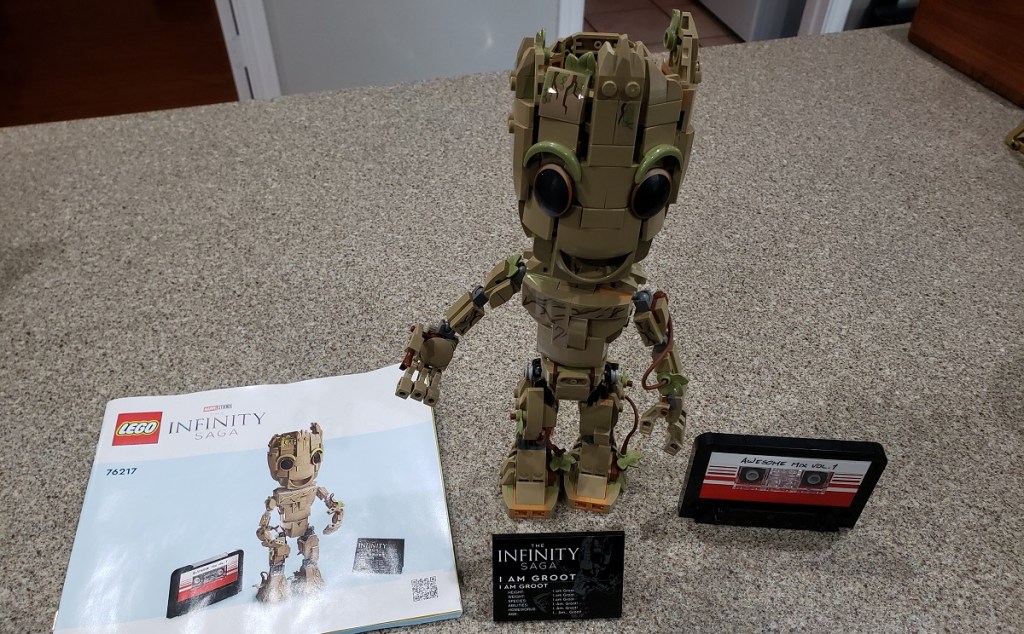
The Three Skies article made me realize all these build sections should absolutely come at the end, and probably with a small separation, so that’s the format from now on. As much as I’d love 52 weeks of a build up top, it detracts from the article a bit in my humble opinion. Anyway – apparently, the last few years have been full of Marvel LEGOs. I had no idea we had so many. Guess another benefit of this whole process is figuring out what we have in the first place.

Off-topic end note: my inner editor loathes that I’ve been switching between numbers and the alphanumerics. Pain.

Behold, the ripening of another world.

– Unknown, Three Skies

Well, Dwellers, I guess I can call myself a “published” author now.

I can’t decide if the air quotes are necessary or not. As of January 24th, 2023, I officially have something paid for that’s out in public circulation. Those of you that have been following me for a bit may remember that I was working on doing the story for a heretofore unnamed game that a friend of mine’s studio was putting together. I had (have) a project page about it and everything. That game, Three Skies, is finally out in the wild.

I took a bit to decide what, exactly, I wanted to write about here regarding the launch and decided that, in order to keep things on brand, I’d spend most of the time going over what it was like working through this sort of project – the utter difference in style, delivering on deadlines, creating what is ultimately someone else’s vision. And I will do that, but I’d be remiss not to do a brief shill for the game itself.

Three Skies is a fantasy take on a Pokémon style of game. You control an Empath – someone who has no powers on his or her own, but by utilizing conduits of energy can bolster the power of the people that join up with them. A calamity has befallen the continent where you begin and you’re doing what you can to find out both why it occurred and what can be done to stop something like it from happening again. This mission takes you all over the continent and embroils you in deeper mysteries as well as local issues, helping you to build your team and begin to set things right in ways you hadn’t planned. Check it out at playthreeskies.com to get more.

Writing the story, or maybe it’s better called the script, was a wholly different experience than what I’m used to. First and foremost, as a novelist I am only really ever beholden to myself and what I want to do. The direction I want to take, the beats I want to hit, the twists and turns I want to weave. That was thrown out the window on day one. I’d talked with the creator a bit on his leadup to starting and had all sorts of ideas on what sort of world seemed cool to me, but aside from scoring one major win (Which I won’t discuss due to spoiler reasons), essentially none of my original ideas passed first muster.

As I most recently mentioned in my Dwellers post, I’m a huge fan of eldritch / cosmic horror themes. I’m also a stickler for inventing new things – unfamiliar lore, more outlandish ideas, so on and so forth. That wasn’t what he was after. I get why, of course. Weird concepts are harder to sell. They’re a challenge to get in that first foothold. Also, he’s really got a thing for more traditional beats. He wanted more of a high-fantasy setting than I was intending. Elves, dwarves, and the like. Not generally my bag, but it’s also not my baby, so that’s quite alright. I mean, I say that, but it took me… a good bit of time to convince myself that it was what it was. I tried to steer things more my way (selfishly, I might add) for a while before accepting the state of things and working. As I said, this was his brain child. It’s success will be his direction, his design. In the end, I’m just there to put a nice coat of paint on it.

And I want that to be a damn good coat. So, I got to work. Biographies, zone descriptions, foundations of new religions and histories of nations, character interactions and quips. From front to back, Season 1 clocks in at just under 152k words. The vast majority of that comes from the main story itself, and 100% of that story is done in dialog. That was the second challenge, and probably the biggest. We’ve all read novels – painting a scene has always seemed fundamental to telling a story. Laying out the location, the ambiance, the sights and sounds and smells. That stuff wasn’t mine anymore. I could (and did) talk with the creator on what I was envisioning when writing scenes and we’d have our back and forths there, then he’d bring his final decisions to the artists, they’d put something together, and I’d make adjustments to what I wrote based on what they came back with.

I’d be lying if I said that process wasn’t a little frustrating, but on a logical level I know it’s the right way to do things. I can’t be in charge of that sort of thing – it’s a collaboration. The creator has an art direction in mind and it’s my job to make things work in that setting. Those constraints ended up being interesting to work inside – guard rails that helped me pain inside the lines. And let me tell you, without guard rails I am absolutely prone to run wild. This no doubt helped me keep things on track for the designer’s vision.

The third challenge came around the one of the core concepts of the game. I mentioned it’s a Pokémon-style game, so there’s a lot of hero collecting going on. Unlike Pokémon, however, all of these characters you’re recruiting are just that – characters. They aren’t animals that say their name and that’s all. They have backstories. Personalities. To this point, the creator wanted almost every single obtainable character to be included in the story in some manner. With ~80 characters, this was… daunting. I obviously couldn’t give each the care I’d normally give in a novel, so it was on me to try and inject as much personality as possible in extremely limited windows. I feel I did an alright job with that most of the time, but I certainly could have done better. It’s one of the spots I think was my weakest, and it bugs me that I couldn’t get things as polished as I would like.

Sorry if that all sounded like a bunch of complaining, but I wanted to get the difficulties out of the way first. I mean this in no uncertain terms – I loved that I had this opportunity. I loved that I got to make a story – a real one – and put it into a genre and medium where I tend to find them lacking at best. I’ve got more planned – much, much more – for its future and want desperately to see it succeed so that we can continue the journey of this new Empath. I loved growing my skillset by being forced to think and work out of the box. And, despite me droning on about constraints, I did get to build religions whole-cloth with little knuckle-slapping when I got out of hand. I did get out of hand every so often, though. Believe that.

I am excited for people to get through some of the reveals, to learn things as the characters do. I hope that I’ve made characters that people can relate to, that I’ve made a world that’s compelling. One familiar enough to ease into but different enough to intrigue. This began as something wildly outside my wheelhouse that came with a great deal of stress but ended up as something close to my heart. It’s not my baby, but I’d like to think of it as at least a nephew. One I’m proud to have as part of the family.

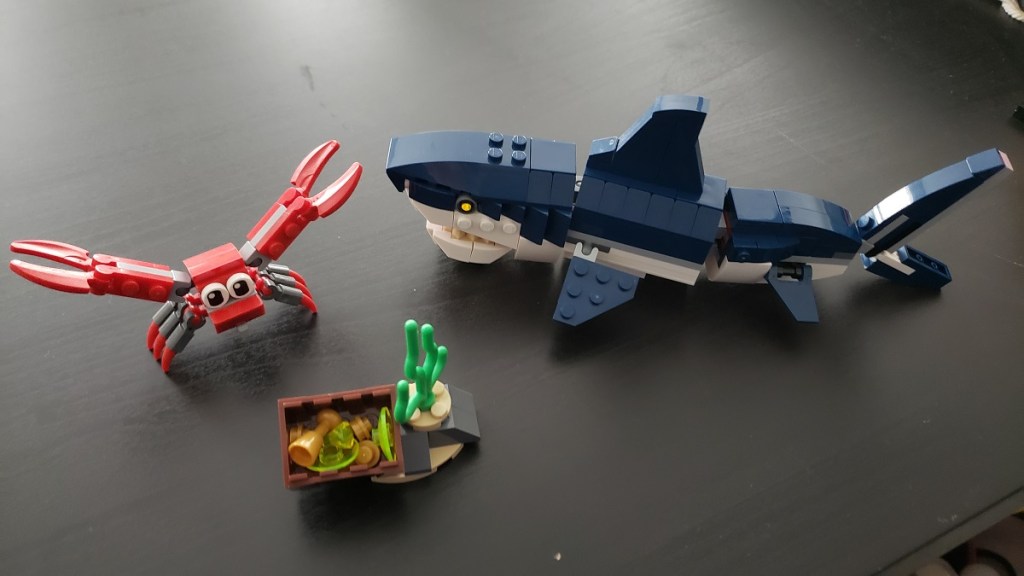
And now, for the weekly LEGO. Look at this crab, how top tier is that? These came from a 3-in-1 set, where there are 3 different books for 3 different builds you can make using the same pieces. I opted for the biggest one since that’s most in keeping with why I’m doing this in the first place.

Thank you again, Dwellers, for bearing with me all this time. I do hope you’ll give Three Skies a try. Everyone involved has put a lot of love into it, and will continue to do so for as long as it lives. It’s all of our duties to give the players the best experience in every way possible.

Once exposed, a secret loses all its power.

Ann Aguirre, Grimspace

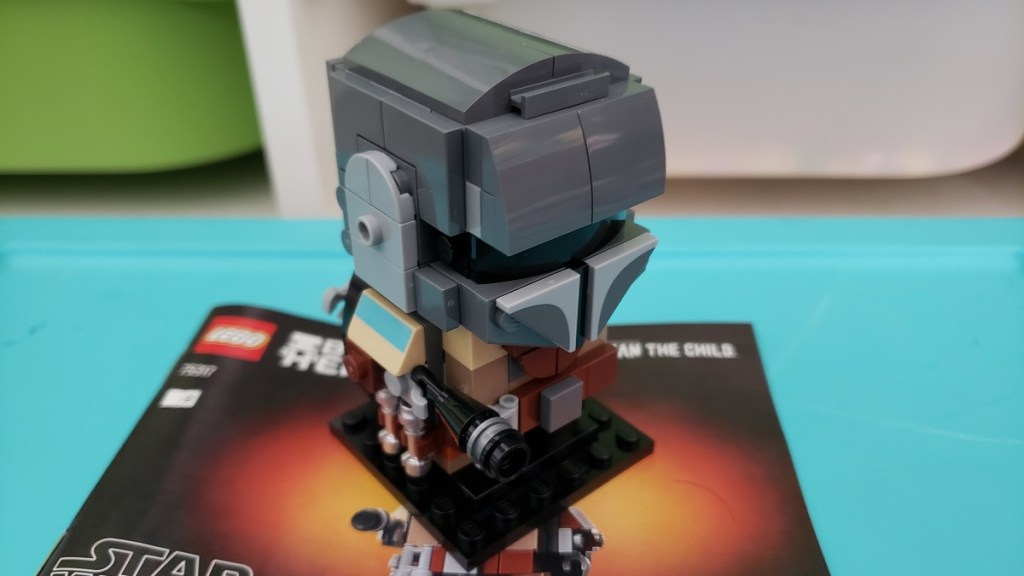
Part 2 of the Mando grouping is done. I think next week I’ll try and do a little more to get ahead of things, especially with how busy my next few weeks are going to be. In fact, I might pre-write a few articles. Not high on my list of priorities, if I’m being honest, but better ahead than scrambling, no?

I’ve gone through a bit of a doldrums in my entertainment lately. Obviously, good stories are and always will be my prime motivators, and in prodding around with a lot of recent stuff I’ve just found so much of it is simply… lacking. There’s so much talent in acting, such grand cinematography and outlandish graphic work, but it seems like the consideration of a good story is lacking these days.

The bigger the budget, the more this seems to be the case. Maybe it’s the fact that the bigger budgets are all going to a few key studios and it’s those studios that have the problem, but it’s driving me up a wall. The problems are manifold but I’d like to focus in on one that is particularly pernicious, at least to me. Subversion.

You all know what I’m talking about. Oh, we’ve gone on this precarious journey to reach our destination. The fabled hero is here, at last, and now… now he’s a bitter old man who has renounced everything about what he was. Or maybe we’re following along a murder mystery, picking up clues along the way only to find that – surprise! – none of it was actually relevant and the things which are used to solve it weren’t even shown to us.

Now, I’d like to get this said right out of the gate. There’s a level of controversy around this specific word. Politics has somehow managed to seep its way into this topic and poison it like it does most everything, but here’s the thing – subversion isn’t a positive or negative. It isn’t, as the article title states, story. It’s a tool, like any other. Subversion can be done in ways that blow your mind. No, the problem comes from why it’s used. What it’s for.

Let’s look at an example from earlier and dig into why it doesn’t work, versus one from the past that did. The subversion used to turn Luke Skywalker into a resentful hermit was done, to put it in a good light, as a way to show that even the fabled hero could fail in the end. He brought down a great evil but could not control the course of history. All fine and good, that makes perfect sense. But how did he end up like that? He trained people, had a SINGLE VISION that one of his proteges / nephew would follow the path of darkness, and then decided the kid had to die? What in the holy character redesign is this? Did the writers even watch the original trilogy? Luke wouldn’t kill the flippin’ Emperor, the lord of the Sith, the man currently enacting plan to murder everyone he cared about, because it would take him off his path of righteousness and toward the darkness. He was willing to die to bring out the buried goodness he knew was in his father’s heart. But now, a few years and a dream is enough to make him decide his blood relative has to go? It’s subversive, certainly, but it’s also trash. It ignores the growth we’ve seen in a character. It ignores the character of that character. It is, in the end, subversion for the sake of it, to catch an audience by surprise, as though that’s the biggest thing you can hope for.

What’s a subversion that works, then? One that the story is catered toward. Built around. One that isn’t done for cheap thrills but instead elucidates the truth of the story itself. There are so many good examples of this. My mind first went to the genre shift between Terminator and T2, but as I thought about that I came up with a better one. Ozymandias’ revelation of his plan in The Watchmen graphic novel.

Now, I’m cheating a bit by using the graphic novel version. The one in the movie is still good, but the movie doesn’t give you enough time with Ozy to bring the full weight of what’s been done to bear. Plus, the subversion is all the better by the fact that it is a graphic novel – a comic – and you have your expectations of what that means. Sure, the “heroes” are a collection of louts and reprobates, but there’s a “big bad” out there that’s causing trouble and now that we’ve figured out who it is, we’re on board to see how they stop him. Except, they don’t. They don’t get a villain monologue that allows them to prevent tragedy. They don’t get to play the heroes. They don’t even get to bring him to justice – in fact, the “justice” of it is them allowing the one person who intended to tell the truth of what went down to be murdered to preserve what they think will be a unifying tragedy. It’s… quite a bit more complicated than that, but that’s a passable-enough synopsis. If you haven’t read The Watchmen, well, one, I’m sorry for screwing it up for you, and two, go do it right now. That was a formative read.

Anyway, what The Watchmen does is use its subversion to do exactly what it should. It subverts a trope – an expectation that we as the reader have because of the medium and genre – by allowing its characters to do exactly what they were set up to do. How do these former heroes stop the supposedly smartest man in the world? We expect them to – they have to, right? – but the answer was there all along. They can’t, he’s always been several steps ahead, we were just along for the ride. And that, right there, is how you do subversion.

There was a point when I got this post started where I thought about comparing works from a single person – M. Night Shyamalan – to see how subversion for the sake of it can make and break a story. The Sixth Sense vs. The Village is a great comparison, if I do say so myself, but the more I thought about it the more I came to the decision that a twist is not necessarily a subversion. The twist in The Sixth Sense might qualify as one, but by the time The Village came out we all knew what Shyamalan was about so the twist was just a twist. If anything, a subversion from Shyamalan would be for him to not include a twist, which got me thinking the whole thing was a bit too meta.

What do you all think? Where are places we’ve seen great subversions, either in the past or recent storytelling? Where have people defaulted to using it in hopes of scoring cheap points? I’m wanting to get back to watching things again, but I don’t want to waste time on stories plagued by gotchas.

I like to think of innovation as upgrading your current self.

Daniel Willey

Welcome, Dwellers.

In keeping with the idea of starting small (something I eventually decided seems like the right move after all), below is this week’s LEGO build. Baby Yoda comes with a Mandalorian counterpart, but that’s a separate book so a separate week. I’ve got enough on my plate that I can’t fill all my free time with this stuff, as much as I might enjoy it…

I was hoping to be writing to you from my fully completed new PC. Unfortunately, it’s not quiiiite done. In perfect running order, yes, but it seems that somewhere along the way I’ve managed to misplace all of my software… somewhere. It’s in the house – has to be – but I don’t know where. Looks like I’ve got a goal for next week. Either way, it’s fantastic to enter the “modern” era. M2 memory (lol 2TB SSDs smaller than RAM and hidden inside motherboard heatsinks), a GPU that isn’t a decade old, RGB because why not, and a case that’s, well… I didn’t quite realize what I bought. It’s the size of a mini fridge. Ridiculous, really, but sure was easy to work in. The thing is a tank. An absolute battle station. I love it.

With a new system comes new ideas. I picked up OBS to start recording some of my matches / tournaments that I plan to enter in fighting games. Had my first run with that yesterday. Got smoked, had a blast, will do again. Testing out OBS is giving me some ideas on how best to organize and plan for possibly creating future YouTube content for this brand. It’s something I’ve talked about for a while but keep putting off. The best day to start is always yesterday, but the second best is today. Something something brand engagement.

About that branding. If I’m going through with all this then it makes sense to have a logo as well. I’m not exactly a graphic designer, so if any of you are or happen to know one, hit me up and we can chat! Also, let me know your thoughts on the Dweller label, which I’ll cover below.

So, why the hell did I take to calling you all Dwellers? Feels a little insulting, no? Well, maybe, and that’s part of the charm. I actually went this route for three different reasons.

One, and most obviously, it’s a take on “basement dwellers.” The nerds that would (And often do) spend all their time holed up in the dark on their computers, gaming or coding or doing whatever else suits their individual fancies. I thought about what an “attic dweller” would end up being. A less common, more esoteric version of our brothers below. One caught up in trying to learn from the things that had been stored away out of sight over the years. One invested in those old photo albums, family histories, unloved stories. We’re just as big of nerds, just as caught up in our interests, but have just run off in a slightly different direction. No less a set of weirdos, that’s for sure.

Two, less obvious, “dweller” is a word I often associate with more Eldritch descriptions. I am a HUGE fan of cosmic / existential horror. You’ll find most stories I create either directly or indirectly pull from these influences. There’s something about the power of these unknowable, indifferent, near-omnipotent beings – these dwellers of other realities – that I just find unceasingly compelling. I use one as a driving force in the novel I’m currently shipping around for beta readers, Residuum. I use others in my current WIP, Catalyst, though their part to play is near non-existent in the first book of this series. Several of my other ideas, either big or small, center around either the actual existence of such beings or the idea of them altogether. They are sources of power with the ability to make or break dreams. And so, too, are you.

Lastly, I’ve been working through Iain M. Banks’ catalog in an effort to rank them for an upcoming article. I had planned to stick entirely to his Culture series, but a few of the things I thought counted in fact did not. One of those was The Algebraist. Banks has a thing for ageless species that live in gas giants, and in this novel they are called Dwellers. The Dwellers are, as I said, ageless. Single ones have lived for billions of years. They are ubiquitous – nearly every gas giant in the galaxy has full civilizations of the species. And, importantly, they are left be. To the rest of the galaxy, they are considered a strange, detached species that is simultaneously to be feared and left alone, and also one oddly behind the curve in terms of technology and power. Their true power, in the end, lies in their ability to keep secrets from the rest of the galaxy and maintain the plausible deniability of their might by way of simply never flexing their true wherewithal unless absolutely necessary. And when they do, making sure there is no trace left of what they’ve done.

So, that’s what I’m shouldering you all with. You, my friends and readers, are inspirations. You’re powerful, unique, and driven. I wouldn’t be where I am without you, and I’m happy to spend this time with you, dwelling in the attic.

If you aren’t in over your head, how do you know how tall you are?

T.S. Eliot

This whole LEGO thing is out of control.

I’m not writing this article on the goal I mentioned last week of assembling a LEGO to plan per week, but I did think it’d be a neat exercise to include the final product each week in here whether it’s referenced or not. Still working out the kinks there – the fallout of the last PC breaking hasn’t fully settled and the new one isn’t in its proper order to write this there, so things are still a little hackneyed. Still, this is as good a place as any, no?

There are four or five or ten partially-started builds upstairs right now that I moved on from in frustration while trying to find one specific, weird, tiny piece or another in a mess of unsorted boxes and stray pieces on shelves and in drawers. I couldn’t decide if I should start big and therefore reduce the overall pool by a noticeable chunk while I worked or go small. Well, I tried both, but in the end you can see I went small. Very small. But, hey, a plan done is a plan done.

Despite not wanting this post to be about the LEGOs, they do dovetail rather nicely with the topic. If you’ve hung around here for more than a few weeks you’ll know I’m something of a goal-setter. I love goals. Tasks. Planning. And, as one would, I’m always interested in hearing from people who make their livelihoods learning more about discipline and the like. Recently, that led me to a video put together by a psychologist discussing how we may be wiring our brains for failure in a seemingly counterintuitive way – by rewarding ourselves.

It was a short talk, but it was fascinating. I’ll admit I’m a little biased as I’ve always had a hard time with rewards for hitting goals – what am I going to do, go have a big meal after hitting my weight target or spend a bunch after paying off the next part of my debt? – but the way this was approached shifted my understanding a bit.

Tell me if this sounds familiar. You’ve got a summer trip planned. You’ll be hanging around good friends and some acquaintances that have caught your eye when you go out after work. You want to show up at your best, so you set your diet and exercise plan. You get at it, and hit the weight. The trip comes and goes, it may or may not have gone how you liked, but regardless – how invested are you in getting back on the plan? The thing you set it up for is over. Now, you might set a new one, but it’ll be tough to hit that same level of conviction. All you’ve done is move the goalposts and your brain is real good at picking that up.

We are all wired to crave that next hit of dopamine. There’s no avoiding it, really. We want to feel good. So, what, then? Set no plans, have no expectations?

Quite the contrary. What we should do, the video argues, is essentially trick our brain into treating the challenge – the struggle – as the thing that draws out that dopamine. If you reward yourself after the fact, it’s going to take bigger and bigger rewards to get the same satisfaction, to the point the difficulties you encounter along the way will ultimately deter you. If you give yourself little pep boosts in order to get started, well, eventually you’ll decide that you can just keep the pregame and skip the rest. No, you have to make the one thing that’s not going anywhere be the thing that drives you.

Don’t exercise for the number on the scale, do it for the soreness. Do it for the very concept that you’re pushing your body to its limit, whatever that limit might be. Don’t write to get on a store shelf, do it because you love to create. Do it because you have stories that need to be on the page. Because you have something to say, no matter if it gets read or not.

Now, I’m not going to pretend this is easy. I don’t think I’ll ever stop getting on that scale, and when it’s gone the wrong direction it’s going to be frustrating. I’m not going to give up the dream of seeing my name on a shelf but I can’t let that be something looming ahead, Eldritch in its power to sap my joy of writing. No, I have to find my pleasure from the path. From the discipline.

One down. Fifty-one to go. Until next week, Dwellers. (Don’t worry, I’ll cover the name then)