Themeattics

The Official Website of Tom Keaten

[T]hat old September feeling, left over from school days, of summer passing, vacation nearly done, obligations gathering, books and football in the air… Another fall, another turned page: there was something of jubilee in that annual autumnal beginning, as if last year’s mistakes had been wiped clean by summer.

Wallace Stegner, Angle of Repose

The time has, to a small extent, come. This next week heralds the missus’ return to work and, two weeks later, the kids will follow suit. A return to normalcy that, as I reflect on it, will be anything but.

Oh, the old patterns are certainly settling into place. Schedules are shifting earlier, routines are back on the menu, and the kids all have that sightly hidden build of apprehension and excitement. That’s all normal. What’s different this time around? It’s our last pre-high-school year. The last year with some sense of shelter before our oldest is put in with the wolves. Hyperbolic? Sure, but I can be afforded that every once in a while, can’t I?

Parenting is a funny thing. You do everything you can to get them as ready as possible, knowing full well it can never be enough. You build the foundations and pray you made them sturdy because, in the end, they’re the ones that are going to be handling the rest. Them, their friends, and their relationships. We play our parts, sure, and are always there as a correcting / guiding light when asked, but it’s our job to make these little dudes autonomous. To get them ready to face the world and survive it. To thrive, despite it.

And yes, I know I’m getting ahead of myself. He’s only going into eighth grade, not headed off to college, but hell if it all doesn’t move so fast. That’ll be here soon enough. Time is the most precious thing we have in this life, and I want to be sure I haven’t squandered it when I have these kiddos around. When they actually seem to want me around.

I can already feel myself beelining into a tangent, but hey, this is all here for stream-of-consciousness, right? I was planning on making this about new routines and stuff, but now that I’m focused on them I just can’t help but feel bad for all the people who’ve been convinced by our culture that kids hold us back. That we are, objectively, the most important things in our lives. This ever-present, ever-growing narcissism that borders on solipsism.

I forget where I head this line of thought – and I forget the exact quote, too – but it’s always held with me. Having kids opens up entirely new levels of emotional experience. We think we know the highs and the lows of life when we’re single, or even when we’ve found that significant other, but we can only know the borders in which we live. Once you’ve got that glorious, chubby mini-me and see how they grasp at the world with such wonder, with minds open to infinite possibilities, and you come to fully understand that much of where they’ll rise and fall depends on how you prepare them… man, the band of experience grows so much wider. Those things you thought were low become puddles to the ocean. And the highs? I can’t really even place them. And, again, they’re not even in high school yet. That band is going to keep growing as their lives continue on paths away from ours, as they pursue their own ways and achieve their own highs and lows.

Could the missus and I have had more things, had we chosen another path? Yeah, sure. We could have owned more, taken more trips, seen more things around the world. We would have had more time, too. Maybe I would have finished more writing and been able to take that up as a career path. Maybe she would have had the time to chase her higher education dreams or change careers, too. Not worth it. I can say that without hesitation. I suppose it’s easy to dismiss what you haven’t experienced, but I just… I’d never want a do-over. I’d never give them up. Those three are the greatest blessings we could have ever received, and my duty to ready them for their own joys is the most fulfilling thing I could ever do in this life.

Bit of a gush session, sorry about that. I’ve been doing what I can to spend more time with these little nerds and it’s been… well, it’s been exactly what it needed to be. Praise God for them.

As for any of you reading this who are teachers – best of luck as your summer break comes to a close. I hope this upcoming year treats you better than any before. Until next week, my lovely Dwellers.

The criminal is the creative artist; the detective only the critic.

G.K. Chesterton, The Blue Cross: A Father Brown Mystery

Everywhere I look these days, it seems the cool thing is now to be the critic. And, to be fair, I can understand why. There’s no shortage of media out there, what with the increasingly pervasive need to flood the market just to try and hold someone’s attention for half a minute, and with such a deluge of stuff there’s plenty ripe for critique.

The fact that major studio pictures seem to be tripping over their own ankles right off the block only adds fuel to the fire. The push to content for content’s sake has led to studios leaning on quantity over quality. Budgets have ballooned, but miserably chopped up scripts and hellishly overworked CGI artists make everything seem worse than it was decades ago. Frankly, it sucks. I love stories (stop me if you’ve heard that before), and seeing what’s come from the supposed grand storytellers in Hollywood is disheartening at best. I should be ecstatic when I hear a studio picked up some random property I love, but I dread it. I’ve found myself firmly in the “please leave that stuff alone” camp. What a terrible time for media.

See? There I go. It’s so easy to fall down the path of criticism. Easy to tear down what others build. Now, I won’t claim there’s a lot that doesn’t deserve the treatment – I think I made myself pretty clear on my thoughts of most current cinema – but I find most criticism to be pretty terrible in its own right. The internet is full of people who will tell you something is awful without any objective analysis. There are great critics around, if you know where to look… and if you have the time. MauLer, for example, I’ve come to really appreciate. His analyses of why films fall on their faces are actually buckled in with objectivity. Unfortunately, they tend to be twice as long as the films themselves. Buckle up.

Actual validity and usefulness of the critique aside… it’s just so easy to fill your plate with negativity. I’m kind of over it. Alright, so there’s a lot of trash out there now. Fine, I just won’t see it. I don’t need to. There’s so much great cinema, so many incredible novels, so many captivating stories out there, why do I need to fill my head with all this tangential negativity? I’ll watch MauLer because I can learn from him – he’s taught me a lot about the importance of scene construction, attention to detail, and, most importantly, just making sure the story is flippin’ consistent. And let me tell you, it’s been immensely valuable.

So, what am I doing instead? I’m diving back into the product itself. I’ve got the extended cuts of the LotR trilogy on deck – shame on me for never having seen the extendeds, really – I’ve been back to reading Banks, as you know, and I’ve been watching the 2010’s Planet of the Apes trilogy, which, two movies in, has been so much better than it has any right to be. Sure, I’ll stumble into plenty of garbage along the way, but them’s the breaks, no? Either way, I’ll be watching these with a creator’s eye, not just a viewers. Analyzing them, picking them apart, figuring out what makes them tick. Learning.

Because, you see, critiques will always be around. You can’t please everyone. But, good art will remain timeless and we could all use a little more.

Kill your darlings, kill your darlings, even when it breaks your egocentric little scribbler’s heart, kill your darlings.

Stephen King, On Writing: A Memoir of the Craft

I like to think there are two kinds of budding creatives: the ones that hate everything they make until they get to editing, and the ones that love what they make until they get to editing. I used to think I was the former, but it’s starting to look like the latter.

You see, Residuum has now officially sat around gathering dust for long enough. Strategic dust, you could say. I finished the manuscript… long enough ago that I don’t want to look so as to not beat myself up for the delay, but having a pretty decent length between finishing it and my own personal re-read / edit was intentional. I wanted to forget the nitty gritty of what I did so that I could look it over with eyes untainted by the glow of accomplishment. Turns out, that was a good choice.

Creating is hard, and there’s a particular feeling that comes along with finally doing it. For the people in my camp, it’s a mixture of accomplishment, joy, and a smattering of pride. The other camp probably looks at the end with consternation, fear, and a little disgust – but I’m not them, so I guess I won’t sit around and guess.

Back after I finished, I did read a little of it over. Some snippets here and there, if only to tell myself – hey, nice stuff, you. You’re actually doing it, high five. I thought pretty highly of it all. Time passed, and here I am.

Turns out, editing is an eldritch creature come to murder your little babies.

Residuum is… ambitious. The story it’s telling – that of ego, selfishness, duty, humanity, and existential terror – hinges on some extremely challenging decisions. And, frankly, I missed the mark in several of them. I know why I made the decisions I did when putting the story together, but upon review, my knowing doesn’t translate to making sense for the reader. Details of the world that seem as though they would be important just sort of fade from view. Again, there’s a reason for that – the book is set entirely from the perspective of one character, and he has actively chosen to ignore those things – but it feels wrong. Missing, like the ball was dropped somewhere along the way.

I’ve been keenly aware of two aspects of my writing for a long time. One, I’m notoriously slow. It’s clear in the prose where I was in my flow or where I’d come back from a break, but I expect that’s pretty standard no matter who you are. Editing is always going to be needed for these kinds of polishes. That’s all well and good. The real problem is two – I really struggle to rein in my word count.

The first version of Residuum clocked in at over 200k words. I tried my hand at submissions to agents and never heard a thing back from any of them, which sent me back to the drawing board. What, I asked myself (late, of course), are some industry standards I should be looking out for? Well, turns out that, for sci fi and a new author, submissions over 125k have to be pretty damn groundbreaking to even be considered.

Now, I think pretty highly of myself, but I’m no Brandon Sanderson, Patrick Rothfuss, or Iain M. Banks. I’m not taking the literary market by storm, so I figured I should do the bare minimum and fit to standards. Which left me with a daunting – one might say insurmountable – task. How the hell do you cut 75k words – 37.5% – of a manuscript?

I tried that for a while. Tried detailing places that could be cut, threads that could, plotlines eliminated, characters removed. Even with all that, I realized it simply couldn’t work. The original story was simply too big to condense, so I needed a new one. And that’s what I did. I threw out the original manuscript, kept the world and most characters, and went back to the drawing board. This version of Residuum was a personal challenge to myself – to write something under 125k.

And I did. Old habits die hard, though, and I’m finding that my pacing is off and things which should probably hold more of the limelight never get their time to shine. Too much time here, not enough there. Too much direction here, not enough there. Etc., etc. Not only that, the pitfalls of repurposing a story that you’d already creates is that, sometimes, you think you’ve given information in the new version that you never did. You write thinking the reader knows something they don’t, or that certain events still exist at all. All these little phantoms of a dead tale try to make themselves known and need to be exorcised.

So, exorcise them I will. There’s still a lot of reading to go and my note document is bloated as all get out, but this is just part of the life. No half-assing it and putting garbage to the market. I’ve got a story to tell, and it needs to be the best version of itself. Nothing less is acceptable.

The bomb lives only as it is falling.

Iain M Banks, Use of Weapons

Greetings, Dwellers, and welcome to a long-overdue review of Iain M. Banks’ Culture “series” – the novels that, in part, led to the moniker I use for all you lovely people.

Now, before I begin, I’d just like to say that reviews have never been something I was overly keen to make. Enjoyment of art is subjective, and while there are certainly objective ways of gauging skill in the craft, it’s hard for me to look at something I enjoy and tell other people they should give it a shot. One of my favorite films, The Witch, I notoriously say I can never recommend to anyone, because the Venn diagram of people who like slow, brooding, atmospheric colonial American period pieces and dark, psychological horror is pretty damn small. But, hey, if you guys have stuck with me this long, there’s a chance our tastes in art are similar, so let’s give it a go, shall we?

NOTE: Oh no, I’m making an ediiiit – this thing turned out to be really long, so I split it into a couple of sections. The first is describing the “world” of the Culture and the second is my ranking of Banks’ sci-fi stories and recommendations to pick up, if you just want that TL;DR.


Science fiction is typically split into two camps: hard and soft. Hard sci-fi is heavily concerned with basing its technology on known reality and will spend a good deal of time making sure the reader understands the how of its tech. Soft, on the other hand, leans on the human (or alien) element – how these societies function, what space travel and contact has done, etc. Culture, in short. The tech is there, of course, but it’s not gone over in painstaking detail. It very much leans on Arthur C. Clarke’s third law, “Any sufficiently advanced technology is indistinguishable from magic.”

Banks manages to thread the line between hard and soft, deftly dancing between the two. Some books lean harder, some softer, some shifting back and forth chapter by chapter. I’ll be the first to admit I’m more a fan of soft, so his harder novels were less up my alley, but even then he’s managing to deliver something profound.

Banks is – was, actually, unfortunately – one of the most imaginative voices in the scene. His vision of the “future” was truly without bounds. I used quotes there for a couple of reasons. One, unlike a lot of sci-fi, Banks’ tales aren’t set on a time after Earth reached the stars. Earth is, outside of a single short story, not involved at all. Two, the novels take place across a span of about 1,700 years, ranging in our time from the 1200’s to the 2900’s.

Also unlike most series, the novels in Banks’ Culture saga are fully standalone. They take place so far apart, either in years or location, that the cast of characters almost never repeats – the biological cast, at least. Events that were central to one story, such as the 500-year-long Iridian War, are used as history lessons or catalysts of change in others.

The adopted series name doesn’t come from Banks’ focus on the culture of various alien societies – it comes from the primary society that weaves its way through each of his novels. The Culture, a society of mostly pan-humanoids that spans the galaxy and rests firmly in the upper echelon of technology and progress.

I tried to think of a relatable political label for the Culture, but it does its best to defy such things. It has no flag, there are no true leaders, no borders. Anyone can join, so long as they espouse its core values. Base society within it is free to do pretty much whatever it wants. The people live for several hundred years, and during that time they tend to try and experience everything life has to offer. They travel across space, involve themselves in alien societies, have various drug glands and technologies embedded in their bodies, fully change sex – hell, even totally change species. All of this is the norm. Culture citizens generally have a “neural lace” that is embedded in their brain which allows them contact with others across vast bands of space and, vitally, backs up their “soul” to the nearest Mind so the person can be reconstituted upon their death.

That’s not to say the whole of the Culture is so care-free, and while Banks’ stories often involve the Culture masses, they tend to focus on members of the more active, purposeful groups: Contact and Special Circumstances.

Contact is there for just that. They are in charge of determining whether newly found or watched planets should be contacted and brought into the galactic family. Members of Contact watch worlds and often genetically modify themselves to become part of them in order to gauge whether they’re ready.

Special Circumstances, the true elite of the Culture, are essentially the espionage group. If there’s a particularly troublesome bit of information somewhere, these are the people who get involved. SC, as it’s often referred to, keeps things very close to the chest, and while there are countless people within the Culture that would love the chance to be involved, many more hope to never be in contact with them. Naturally, a lot of the novels involve SC directly or indirectly. Sometimes with known causes, others where we learn the truth as time goes on.

I’ve spent a lot of time talking about the human – or biological – element of the Culture, but they are actually secondary to the real Culture. The Minds. Minds are, in essence, true AI. They are advanced so beyond the limits of biology they make us wholly unnecessary. The Minds think in the 4th dimension, travel through it in hyper/ultra/infraspace, and are natively a part of every major spacefaring thing in the Culture. To societies outside the Culture, Minds – and the ships they occupy – are seen as the real Culture. The ambassadors, diplomats, and soldiers all in one.

Minds exist in all strata of the Culture. Some are perfectly happy living as homes to other culture citizens, steadily cruising through space with billions on board or controlling the whole of a multiple-thousand-kilometer Orbital artificial world. Others are members of Contact, using their tech to watch worlds from lightmonths away or building avatars to use on the world. Some still are members – or even controllers – of SC. And others, still, have gone Eccentric and no longer listen to anything from their peers, essentially absconding from the Culture to do as they please.

Minds also happen to be some of my favorite characters across Banks’ series. They are so beyond the capacity of biologicals that their terrifying scope is only limited by their belief in the Culture’s ideals. When they distance themselves from those or when they’re forced to play their hand, the normally jovial or blasé nature vanishes. It earns them a reputation, too. Minds name themselves, but every so often earn monikers from their actions. The Gray Area, for instance, chose the name due to its… moral ambiguity around using its effector systems to read and project into biological brains. Any ship could do this, of course, but they simply don’t due to their respect of sentient autonomy. Not so much the Gray Area, and for its position it is kept at a distance by its cohorts and referred to in private channels as the Meatfucker.


Now that I’ve spent… wow, way too long just describing what the Culture even is, what sort of stories can you, as a reader expect to find if you do pick up some Banks?

Honestly? It’s hard to say. His use of the Culture to build varied stories around is part of its charm. You could pick up Use of Weapons and find a deeply character-focused story around the pain of betrayal and loss, and the general fatigue of a life lived at the hands of others. Or, you could pick up Matter and have a story about revenge that’s buried in extremely detailed, hard sci-fi world building on a planet that’s multi-layered and technologically diverse across each level. Or, again, you could pick up Excession and find a story about just what happens to tenuous societal relationships – and elements within the Culture itself – when an event completely outside the realm of understanding occurs and brings with it the promise of technology once thought impossible. Hell, it’s not even a given that the biological characters you’re following in the story are human, they might be sentient tripodal pyramids or weird cat-armadillo things.

No matter the overarching story, Banks has excellent prose and manages to approach even the most obscure subjects with grace, potency, and – where apt – humor. Remember how I mentioned people in the Culture change species? Well, there’s one story where a protagonist is going to meet his uncle about an SC matter, and we’re treated to a scene where his uncle has decided to become a walrus, sloshing around awkwardly in a tank while trying to figure out his ever-changing anatomy. It’s stupid, pointless, and way more funny of a mental image than it needed to be. It serves no actual purpose other than continuing to build on just what sort of a people the Culture fosters, and it’s little bits of world building like that which are sprinkled over everything he does, icing on the cake.

I was going to say that, while his stories are complex and varied, you can always expect a few common threads – but I realized even that isn’t true. Banks was ambitious enough to make sci-fi not set in the Culture at all (which I still tend to consider part of it regardless) and Culture stories that can barely be considered sci-fi or even reference the Culture.

Below I’ve given my personal rating to all of his sci-fi novels, Culture or not. Banks is, unfortunately, no longer with us, but if you’re in the market for some brilliance, please do consider giving his work a shot. I can’t overstate his creativity – building so many distinct worlds and concepts in each book is simply a masterclass. I can only hope to have an ounce of his talent.

  1. The Player of Games
  2. Surface Detail
  3. Excession
  4. Inversions
  5. Use of Weapons
  6. Against A Dark Background (Not Culture)
  7. Consider Phlebas
  8. Transition (Not Culture)
  9. The Algebraist (Not Culture, here’s where the Dwellers are from)
  10. Look to Windward
  11. The Hydrogen Sonata
  12. Feersum Endjinn (Not Culture)
  13. Matter

It was actually hard to make that list. A lot of those numbers are interchangeable – my top and bottom are for sure locked in place, but on any given day I could make changes between #3-7 and #8-11.

And, again, this was my rating upon a second read of most of these. I don’t think I’d recommend picking them up in this order. For a first-time Banks reader, I’d probably recommend any of these:

  • The State of The Art
  • Use of Weapons
  • The Player of Games
  • Consider Phlebas

I didn’t include The State of the Art on the ranking list as it’s a short story collection, but honestly it’s a pretty decent introduction to the Culture and to Banks’ style of humor and writing, as is true with the other three here.

This has been a long one, and I’m certain there’s a lot I missed, but if you’ve made it this far, congratulations! Hopefully you’re more interested in picking up this legend for a proper read, and if you have any questions on his work, please don’t hesitate to ask. If it wasn’t obvious, I’m always excited to talk about it.

Get out there and read, Dwellers.

All we have to decide is what to do with the time that is given to us.

Gandalf, The Lord of the Rings: The Fellowship of the Ring

Well, my lovely Dwellers, we’ve reached the checkpoint. That can only mean one thing – I get to delay the article I planned to write YET AGAIN! This time, at least, it’s for a good reason. And what reason is that? Why, a goal review, of course!

This has been a historically low point in my articles – generally speaking, when it comes time to review I end up realizing how poorly I’ve utilized my time and waxing on about how I need to improve moving forward. But, that’s the past. Have I managed to step up to the plate this time around and roll into the midway with wins?

Heeelllllll no. Bless you wonderful people if you thought otherwise.

Now, I guess I do need to give myself a little credit. I actually did manage to achieve most of my goals for the six months. “But Tom,” I hear you say, “I’m confused – wouldn’t that mean you did step up to the plate?” You could interpret it that way, I suppose, but if you weigh things on importance, that’s when the drop off happens.

So, yes, I did pay off the van and we have no more car payments. Awesome, you love to see it. Yes, I did manage to keep up the article per week on this site. Great. That’s right, I successfully completed 75 Hard. Neato. All well and good, high fives all around.

On the other hand, I failed every single novel plan. Those are kind of the whole reason I’m doing all this in the first place. In the face of that level of failure, it’s pretty hard to take the rest with any sense of victory. But, hey, it’s me, and I’ve become accustomed to my system of routine failure and reset. So, what else is there to do but dust off, reorient myself, and climb back on the wagon?

Six months down and six to go. What did I learn, and how do I adapt?

Well, for starters, I’ve been trying out a few different mini goal setting processes. I won’t go into the details, but I’m on my third or fourth (Hopefully final) iteration of these and will be comparing each of them soon to determine which type I preferred most and using that to help me as I move forward.

I’m also – again – trying to rein in my absurd overcommitments. Did you know I had five – FIVE – different writing goals? A new novel, editing an existing manuscript, keeping weekly on this site, submitting a short story every month, AND starting up a new “choose-your-own-adventure”-style story on this site where the readers pick the path of the next entry? Where in the hell was I planning to find all that time and still live any kind of life? Do I have any grasp of time management? Well, I think we all know the answer to that, but good Lord do I need to get a handle on it. Because, in the end… that actually is all stuff I want to do. Very much. Yet, I also need to recognize my limits and understand I can’t do all that at once. In time, yes, but right now the story muscle is flabby. I’m out of practice to the extreme. Heavy rust buildup. That has to be fixed before I can begin to tackle anything near as ambitious as all of that.

I hate having to go back to baby steps, but I’ve done this to myself so I have to get past it. Consider it a self-imposed, narrative sort of physical therapy. Creation therapy. And it starts with Residuum.

No more pouring out a manuscript and moving on to the next one without a care. I’m finishing things. It’s been far too long – time to read it over, get notes, talk to those people who’ve read it, and see what can be done to smooth out all the rough edges and make something that’s publishable. I want a work completed.

There are other goals, of course, but those can wait. They don’t need to be public – again, this place is here to help me get over things for my writing, so writing is what needs to be the focus. Those goals can remain, hovering around the perimeter, waiting for the time I give them after my writing needs for the day are done.

So, really, that’s the true goal for this next six months. Certain things come first – God, family, work, and my health… but aside from those, nothing else can take precedence over writing. There’s no gaming, no shows, no YouTube rabbit hole until whatever goal I set for myself for that day is seen through. None of this happens on its own, I have to see it through. And I will.

Next week – for real this time – there’ll be a long-overdue post of a style I haven’t really done, but should probably do more of. I hope it turns out well. I might even put some extra time and reviewing into it, and not treat it like a stream-of-consciousness word salad. It deserves the attention.

Until then, my lovely Dwellers, I hope you have a great Fourth and get your eyes set on what you can achieve to close out 2023.

Nah, it’ll be fine.

The Critical Drinker

I had an after work event on Thursday with the co-workers. In that event, I told them I was heading out a few minutes early because I’m a nerd and Final Fantasy 16 was dropping that day so I wanted to go pick it up. One of the people I work with asked if I was still going to get my article done this week or if I’d be too busy nerding out. I did my best personal rendition of the quote at the top of this post, fully convinced there’d be nooooo problem.

And now, here I am, at 9:30PM on Sunday with nothing to show for the weekend.

I had a plan for an article. Was going to be a pretty neat one, I thought. Long overdue. Had the image all picked out, had a catchy name for it and everything. Whoops.

Well, in the off chance anyone was interested in my initial review of FF16, consider my lack of a real article as evidence of how I feel about it. I didn’t spend the WHOLE weekend on it – there was also CEO, one of the supermajor fighting game tournaments that I spent a lot of time watching – but I spent more than my fair share of time with 16. It’s real fun.

Could I put together that other article tonight if I tried? Sure, but I think it deserves more attention than I can give it right now. So, sorry, here’s another “touching base” stopgap.

I’m pretty excited for next week, though. A couple of burdens have been lifted and I’ll be showing up fresh. Much to do, and, as I’ll get into below, I’ve allowed more time to do it.

Onward.


These last couple of weeks taught me something that I only came to fully realize when I spent an hour and a half looking for one piece the other night – this Lego goal is a huge waste of time. Don’t get me wrong, I still love the idea of making sure I have all the pieces, getting these things built and organized, and using that as a way of getting things put in their place, but, again… the time. It’s already so limited as it is, this feels like such an unnecessary sink. So, with that in mind, I think it’s healthier to just drop it. I’ll post something every now and again when it gets made, maybe, but from now on I wouldn’t expect it.

Come back to me, my glorious time.

I believe that what we become depends on what our fathers teach us at odd moments, when they aren’t trying to teach us. We are formed by little scraps of wisdom.

Umberto Eco, Foucault’s Pendulum

I think, having run into this problem now for multiple weeks, it might well be time I start writing these posts during the week when I find the free time and publishing them on the weekend. Turns out this family has a lot going on during weekends these days, and I’m always scrambling for time to try and make a post which ultimately makes them not worth the effort. Not a fan.

That said, I had a great weekend with the family. Played games, watched things, and just generally spent time with them. It was nice and, ultimately, exactly what I should be doing over Father’s Day. Being a dad. Loving it.

I don’t thank God nearly enough for everything I have. There’s so much love in this family, both immediate and extended, it’s nothing but a blessing. The way I was raised, the people I’ve gathered into my life, the talents and chances I’ve had – what can it be, really, but a blessing? Honestly, I’m just so joyful at where I’ve arrived in life, whether things have gone the way I’d hoped or not. I’ve got so many goals still, and so many little hang-ups and annoyances, but they’re minuscule in comparison to what I have. That recognition – that understanding – is so very important to keep front and center. None of this is borne from me. I’m not in control, no matter how much I try to say I am and gear my life toward the idea. It’s all given to God, and all from Him.

If I have one wish on this Father’s Day, it’s that more people accepted the blessings they have. The world is so negative lately, so geared toward focusing on every way things are terrible and tragic, on how many things can and must improve, that we never take the time to be grateful for what we have. A little humility and a little joy. They go a long ways.

Thank you, everyone reading this. Thank you, those of you who don’t but have played some role in the shaping of my life. Every single one of you have meant the world to me, and you will continue to, even if I’m terrible at letting you know it.

Anyway, that’s all just a quick little note of thanks. Time for me to get back to the fam. I’ll see you all next week. Until then, have a blessed one.


The upstairs is now reorganized and mostly polished off, but unfortunately it wasn’t in enough time for me getting a build done. Is what it is. 2 weeks behind now. We’ll get there.

How much can you know about yourself if you’ve never been in a fight?

Chuck Palahniuk, Fight Club

“Write what you know,” yeah? Well, if there’s one thing I’ve come to know and love lately, it’s the fighting game community. Playing, competing, watching, learning – you name it, I’ve become a little obsessive with it.

I touched on this topic in a couple of articles on competition back in the day, so I won’t rehash too much, but suffice it to say that I’ve come to find a little healthy competition is one of the best things you can give yourself. Having a hobby that provides just that is simply great. Pitting your skills against other people, finding and shoring up your weaknesses, having something that provides measurable growth in a skill (even an admittedly niche one) – I just think it’s neat.

I’ve got a long, spotty history with these games. I remember playing Street Fighter 2 with my brother in the basement of our house in upstate New York, getting wildly frustrated at losing over and over and him and his friend Stick chuckling, chanting “forgot to block loooow.” I played that, Marvel vs Capcom in the arcade, a couple Tekkens and Soul Calibers, some Budokai Tenkaichi (Wow, I actually did spell that right), never really taking any of it seriously, just enjoying some button mashing with friends. It was fun even when we were all terrible, and the thought of trying to “git gud” never really crossed my mind. In my gaming life I was busy trying to be good in team games or PvE – WoW, DotA, Counter Strike, things like that. 1v1 games always struck me as a little intimidating. They are, after all, solely a reflection of your own skill. Can’t hope the team carries you or blame the carry’s terrible farm when you fail. There’s only the mirror. Well, and the internet connection, but what can you do?

I’d hoped to pinpoint a place when my mindset changed, but I guess it came down to a two things. One, I got tired of team games where I took improving much more seriously than the random people I paired up with online did. It was immensely frustrating to throw myself into the meat grinder in Dota2 playing a solo queue support where I was truly at the whims of the other 4 people on my team. Try as hard as I could, there’s only so much I could do to affect the outcome of the game. That would have been fine if I’d had a full team of people I knew who could grow together, but the constant assortment of randos became more frustrating than anything, and it got me burned out on the genre. And then, the ultimate targeted product landed on the market.

For those who aren’t aware of my level of nerddom, there are a couple of things that I would say defined my childhood. Squaresoft, Star Wars, Redwall, and, of course, Dragon Ball. I used to rush home so I could go hang out with my best friend Zach and watch Toonami to catch the next episode. I didn’t care if it was looping the Frieza saga over and over, or restarting all the way back in the Saiyan saga. I loved that damn thing. Hell, I still do. I own all of Z, and watched it and Super with the kids.

What’s that got to do with anything? Well, back in 2018 they released Dragon Ball FighterZ, a true fighting game in the DB franchise, the first of it’s kind. It was a tag fighter, like Marvel vs. Capcom, and I was immediately sucked in. I fell in love – the design, the art direction, the cinematic nature, the competitive aspects. There was depth, skill, absolutely wild stuff, and it was all, gloriously, on me to learn.

I never did get very good at it. I was passable, and I enjoyed the hell out of it, but I hit a wall pretty quickly and mostly just played solo or with the family.

Along came Granblue Fantasy Versus, a game that, while fun, I didn’t really enjoy as much as I did FighterZ. However, a good friend of mine was very interested in that and we started to play together. Let me tell you, having a training partner is absolutely the best thing that can happen in these sorts of games. Being driven to get better for your next session is so very motivating. So, despite GBVS not having that same spark, I played far more of that than I did FighterZ.

And then came the the one that set everything off. Guilty Gear -Strive-. Hoo boy. My taste of the genre was given a new spark. It’s beautiful. Fast. Mechanically deep. I loved everything about it, and for the first time I wanted to get better not only for my local, friend time, but in general. I wanted to win. To compete. To really learn. I started watching things to understand more. I watched tournaments, found players and streamers to follow. In short, I fell in hard.

The result? I’m halfway decent. I won’t be winning anything, but I’ve reached the top “floor” of the ranking system in the game a few times. I’m #400something rated on the character I play. Again, not great, but passable. And improving. I love that game, and will continue to play for sure.

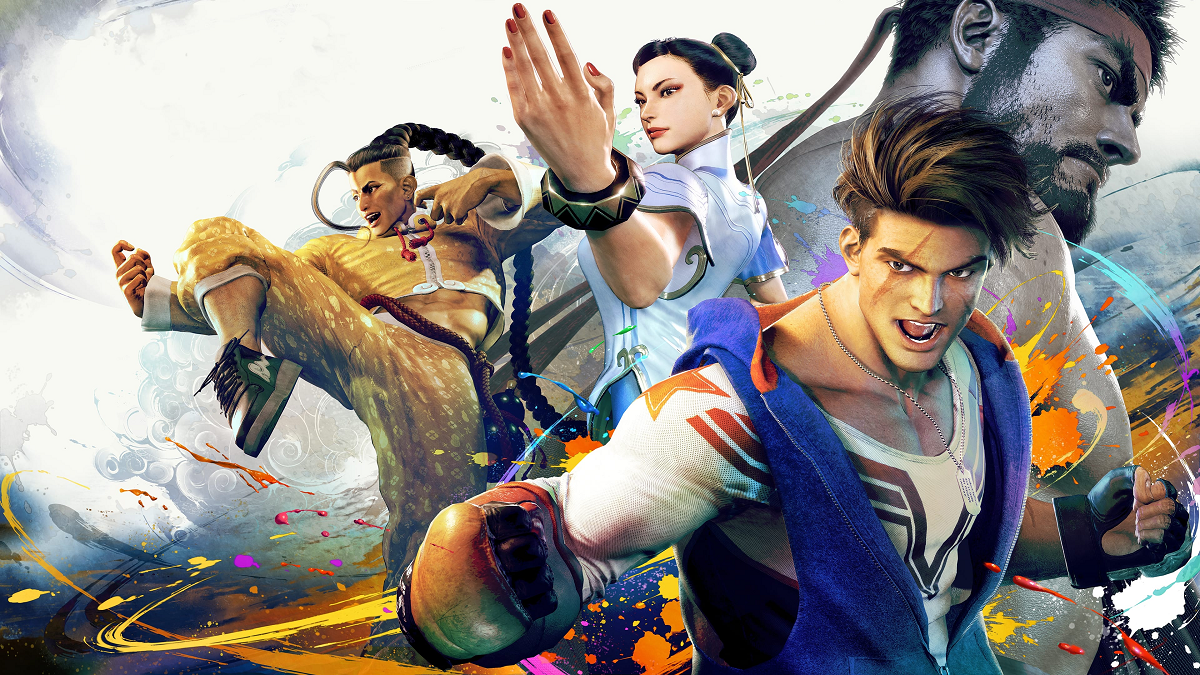
However. The new big name is on the block. Street Fighter 6 released at the end of last week, and man, what a package it is. It is, without a doubt, the next generation of fighting game. It’s beautiful, it’s loaded with features and gameplay modes most studios ignore, and it’s fully designed around one central concept. Fun. Want to learn the basics? There’s a control setup for that. Want to really play right? One for that, too. Have an 8yo at the house who wants to do cool things? Yep, got one for that, too. Want a big single player game? Yep. How about weird mini-games that teach you the concepts needed for the main course? Mmmhm. Wild modes that are there to spice regular matches up AND teach you some core mechanics? You bet. How about places to play older games, in this game? Naturally!

Out the gate, Street Fighter is very different than the games I got back into the genre with. It’s slower, more methodical, and more based around reaction to and dealing with spacing and situations. It’s difficult for my head to get around the fundamental system differences, but that isn’t turning me off. I’m invested in learning more. My typical character crisis is in full swing, of course (I never know who I want to play), but that’ll work itself out soon. I’ve spent most of my time in the game doing the single player stuff – unlocking new costumes, building my personal character, and just messing around for fun. Soon, though, comes the training arc. Am I going to end up using a tried-and-true military officer? A man framed for crimes and driven from his family, forced into hiding? A girl obsessed with 90s hip-hop who also just happens to be a ninja? Or a French runway model, actress, and Judo champion? There are fourteen others to choose from, but I’ve at least got my list narrowed a bit.

Long story short – play fighting games. They’re sick. Gear is amazing. SF6 is amazing. A new Tekken and Mortal Kombat are on the way. The new age of fighting games is here, get on the wagon. You’ll be bad, but don’t worry, everyone starts there. It’s a genre full of jargon and information needing to be absorbed, but learning is part of the fun. We’re all learning together.

If you do happen to get on, look me up. ThemeAttic in both -Strive- and SF6. Let’s spar. It’ll do us both good.


Well, it happened. I hit a wall. No Lego this week, but… I don’t really know if I can consider it a failure. It’s not that I didn’t have the time because I was out of town or that I got lazy on it, I literally couldn’t get to where I’m keeping them. I guess I technically wanted 52 done so there’s still plenty of time to catch up on a missed week (or two, depending), but it’s annoying.

I’d mentioned before that the plan was to get things organized, and the below is how that starts. You can also spot a bunch of builds in the works – oh noes, previews! This is everything in the room shoved off to one side so we have room to build cabinets and get them set up on the wall behind the camera. Should be fantastic once done!

Are you managing your energy well and using it for things that matter? Do you stop to recharge before you push yourself to critically low levels? Unplug to recharge.

Susan C. Young

I didn’t have the foresight to write something earlier in the week when there was actually time to think about things, so now it’s time to throw something together in a panic before I miss a week. Failure theater, everyone!

I am, as I write this, out on a family vacation in a log cabin. Obviously, the plan isn’t to take much time being a hermit and putting this together. Not going to be that guy. That said, I do have plans here. The foremost is to relax. I’ve said enough on how things have been lately and don’t want to rehash it, but I’ve definitely felt my creative talents are running on empty these days. By giving my brain the chance to actually, truly relax, I’m hoping that helps kickstart things.

Second is to spend a little bit of time every day – likely in the morning when people are still asleep – putting ALL of my attention on destroying the writer’s block I’ve built. I want to get back from these few days stronger, more capable, and invested. Driven. There’s too much waiting in the wings. It’s time to roll.

And, speaking of, the kiddos are asking to play a game with me, so that’s all she wrote. Quick in, quick out, I’ll see you Dwellers next week with something better and, God willing, some good news on getting back to my pursuits.


I did, however, have enough forethought to get this done/in.

Don’t let your dreams be dreams. Yesterday, you said tomorrow. So just… do it!

Shia LaBeouf

It’s amazing what one extra day can do.

May has been… a hell of a month. Personally, professionally… some other -lly’s I can’t think of right now. The details are mostly irrelevant, but suffice it to say the candle has definitely been burning on both ends and I’ve been feeling it. So, with one extra day of padding on my weekend, I thought it would be a good idea to take a quick inventory. Look back at my goals, assess things, try to come up with some plans. You know, the usual. And boy, let me tell you, it’s a mess.

Wherever you are right now, take a minute. Stop reading, close your eyes, and just try and brainstorm somethings you think I might have wanted to do. Got it? Good. Before you say anything, don’t worry – it’s not getting done. I could go back and pull up my old goals to put back in this article just to prove that to you, but for the sake of my sanity I won’t. If there’s one silver lining, it’s that I’ve at least had the wherewithal to put my focus on work which has, it seems, started to pay off in digging me out of the hole I found myself in after a co-worker left.

But, on that point, work has been draining to the point where I can’t really put my brain on anything useful when I’m done. I get back and become a vegetable, just zoning out to the modern content farm. Probably a very relatable story, but I haven’t given into it in a long time and I’m really beating myself up about it. I hate wasting time like this, especially when I know there’s so much I want to do. I’m falling victim to the idea that these things can just happen, that simply wanting them for myself is enough and life will just eventually pan out the way I want. It doesn’t work that way. I know it doesn’t. And yet, here I’ve been sitting, ignoring the effort needed.

So, I take this opportunity to ask myself – do I really want these things, or are they just daydreams? Am I just infatuated with the idea of being an author, expecting that novels are just going to find their way on a page without the needed blood, sweat, and tears on my part? Do I think I’m going to lose the weight I want while not doing anything about what I eat and giving in to my tendency to stress / boredom eating? What makes me think I or my family is going to grow deeper in our faith if I’m ignoring my prayer time and having my education on the background, barely paying attention to it? How am I going to hold my own in FGC competitions if I’m not training?

Time. Effort. Intentionality. Discipline. I’m lacking all these things, especially now. I’ve lost the plot, let it get away from me, and I need to drag it back, kicking and screaming, to where it belongs. There’s one month left to close out the first half of the year. I want the ship righted by then. Not perfect, no – it never will be – but charting the right course. I’ve had my destinations picked out for so long they started to get hazy. I assumed I was on course when I’d let it all drift.

You’ve all heard this tune before, and I’m sorry about that, but I guess I need a kick in the butt every once in a while. Only human, I suppose. I’ll be in a better mood next week. Promise. I’ll be paddling again. Closer, every day. It’s the only thing I can do.


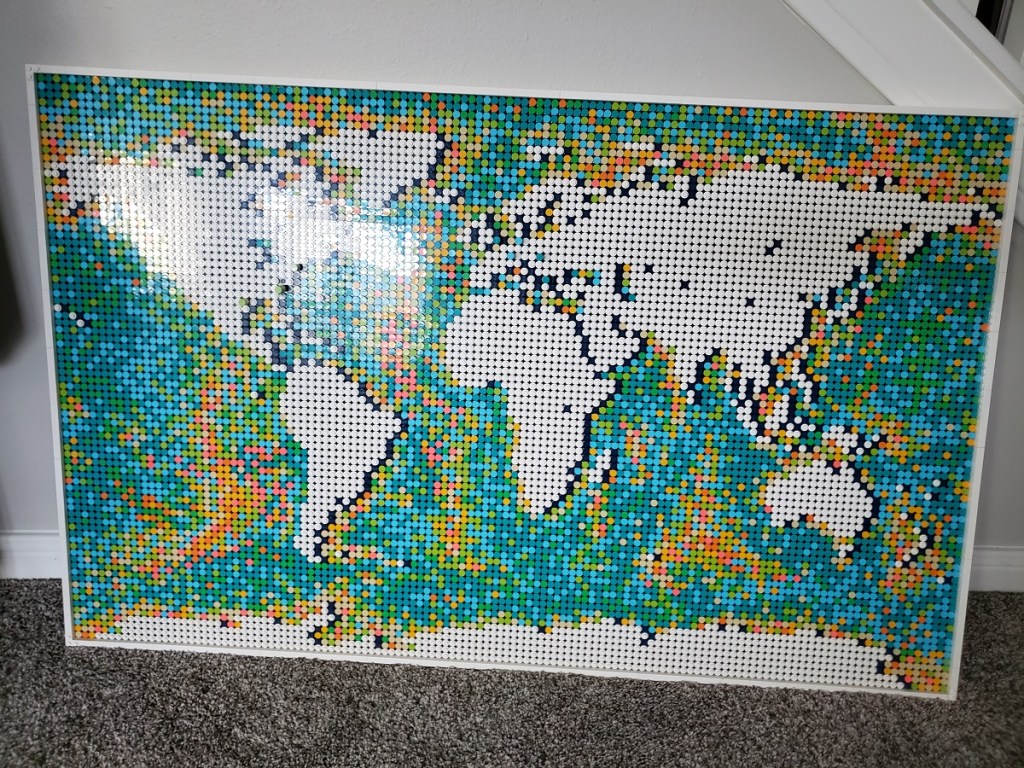
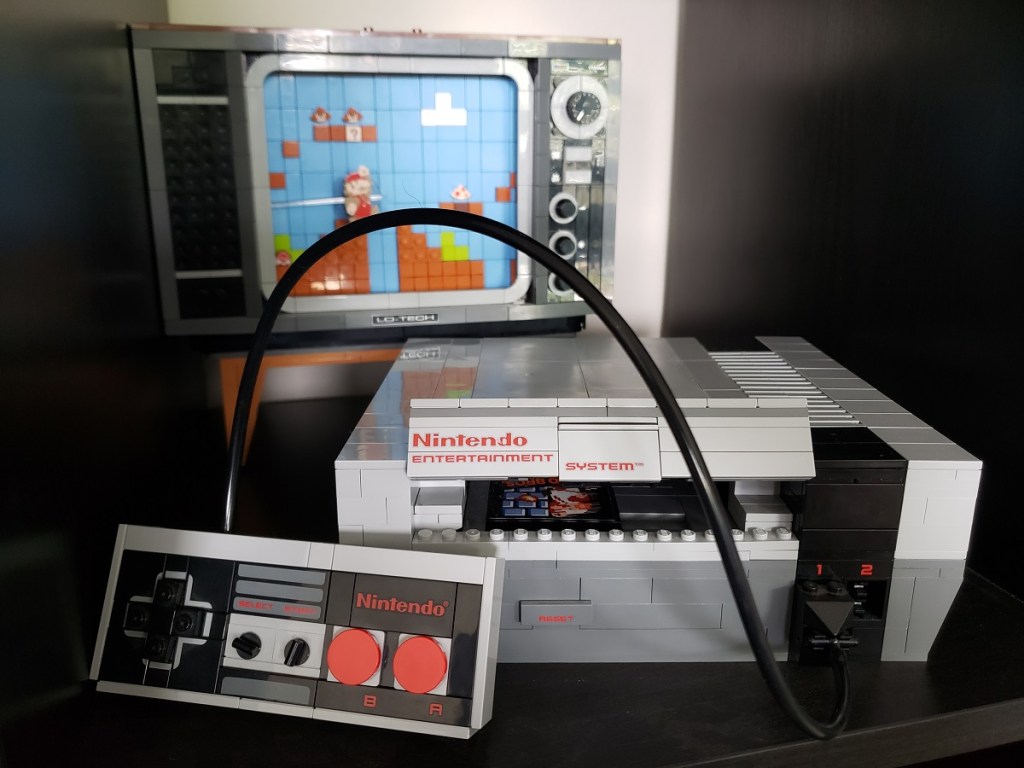
Let’s be honest. This thing is just too good. Nothing else needs to be said.