Themeattics

The Official Website of Tom Keaten

The only thing standing between you and your goal is the bullshit story you keep telling yourself as to why you can’t achieve it.

Jordan Belfort

I was recently in Las Vegas to celebrate a good friend’s wedding. It was a fun, busy time and really good to catch up with the guy in person after so many years. Vegas, it turns out – shock, horror – is an easy place to break any and all routines or disciplines you have going on. Who would have thought Sin City has a vice to pull against every virtue?

Now, me being boring, this amounted to one main thing. I’ve been watching what I eat for a while now. I’m trying to get into better shape and lose weight. Real straight forward. And let me tell you – Vegas food is great. So the missus and I took advantage of our days there and went at it. We were on vacation, after all, and everyone knows calories don’t count on vacation. I even worked out while I was there! Once. On the program I’m on, should have been three times, but at least it’s something, right? Why only that once? Well, I was tired. Went to bed pretty late every night and I couldn’t sleep in, so I got up early and… really just kind of sat around on the phone. Probably should have used that time to write, but, well, consider that another casualty.

But, hey, then the good times ended and we left for home. Back to the normal life, to the routine. Except for that box of donuts the boss brought in Monday. I’d been avoiding those the past month or so, but I’d just come back from being pretty unhealthy so what was one other thing? I got back on my exercise routine that night and hurt my foot, so I had to stop doing anything involving footwork/cardio. Naturally that meant I just took a few days off instead of focusing on upper body. To help heal, obviously. And I did start going to bed closer to my usual time. Still not as early as before, and I’m certainly needing to wake up earlier than when I was there. It’s just an hour or so less sleep than typical. As for that morning writing I had started to help utilize my time? Well, not so much this week. Other things to do, like play a mobile game or watch some YouTube.

It was fine. All of it was fine. Not ideal, but I’d fix it tomorrow. I needed the time, the distraction, the dopamine hit, the instant gratification.

Here I am, a week out, looking back at the shambles caused by letting one thing slip.

Now, before you get defensive, I get it. My experience isn’t everyone’s. I have notoriously bad discipline, which is why I try so hard not to step out of my bounds. I’m an addict at heart, so I’ve avoided a lot of things with that in mind. Your mileage may vary. Still, I couldn’t let the lesson slip. Us humans are remarkably proficient at making excuses. It’s just a donut. I’ve already broken my diet, what’s another? Yesterday I was totally off the wagon and didn’t gain any weight, why bother today? Failing that didn’t hurt yet, why am I bothering with this?

On and on, the rationalization carousel goes. There’s no stopping the ride, you just have the make the conscious decision to jump off it mid-motion. It sucks, it forces you to look back and realize you’ve been screwing up, allowing yourself to give in to base instincts, but sometimes that’s exactly what we need. A reminder of what we become when discipline fades – pleasure seeking drones that have little to no impact on the world around us and certainly get us no closer to our purpose of choosing the Good.

I’m coming off harsh in this one and I apologize, it’s mostly targeted at myself. I did a goal review yesterday and suffice it to say it wasn’t great. I have an almost insurmountable amount of work ahead of me if I plan to meet deadlines, which I do. If I’m going to be successful, I’ll need to rely on discipline and continue to pray for that strength. You sending a few prayers wouldn’t hurt either. The next few months are going to be something else.

They constantly try to escape // From the darkness outside and within // By dreaming of systems so perfect that no one will need to be good. // But the man that is will shadow // The man that pretends to be.

T.S. Eliot, The Rock

Mankind is full of idealists. We look around at the problems of the world today and imagine all sorts of solutions. Extreme poverty solved by taking wealth from the global elite. Overbearing central governments eliminated by brokering all the power to the people. Racism replaced with education, classism by compassion, ignorance by enlightenment. We have a solution for everything, with one ultimate goal in mind.

Utopia.

A world without anger, without selfishness, without hate. Where people do what they should and help those who cannot. Filled with magnanimity and camaraderie, where we love one another equally whether we know each other intimately or have never met before. The place where anarchy and communism meet, where Christ’s ideals are carried out without even the necessity of belief.

No one can deny the beauty of the ideal. Even me, as hard-in-the-paint for Capitalism as I am, understand the profound power of Utopia. The thing is, I recognize it can never happen in this world. And not only that, I recognize that it shouldn’t.

The title of this post isn’t a typo, it’s a direct translation of the Greek roots of the word. Outopos – ou “not” and topos “place” – coined by Thomas More in 1551 to describe an imaginary island which cannot exist due to its perfection. It seems we’ve forgotten this origin and replaced it with something even more idealized, somehow. We’ve taken “not place” and turned it into “good place,” as though it is something we can and should achieve.

I understand that. I really do. I even agree with the latter part, to a degree. We should strive toward perfection. That is what is asked of us throughout the Gospels, to imitate the example of Christ. That said, we also know it is impossible. We are, after all, human. That simple fact alone precludes the former part – we cannot achieve what creates Utopia, which is why that name was chosen in the first place.

Throughout history, many places have tried. None have succeeded, and in every case there are piles of bodies left in the wake. Why is that? Well, boiled down to its simplest element, it is because this sort of Utopia requires uniformity of thought. In order for everyone to achieve a level of equality where there is no envy or distrust of one another, no one can wish for anything other than what they have. There must not be a desire for bettering any individual, only for bettering the whole of society equally in the same instant. Anything else invites envy, spurred on by pride, which contaminates the whole experiment. Best exterminate the outliers lest they ruin everything.

Now, you may point to various Utopian experiments which were closer to success. I don’t doubt they exist, but scalability becomes an issue. As with all forms of government, size plays a huge factor. It’s one thing when three people up in the mountains live in a joint compound and quite another to use their same model on New York City or across the entire Midwest. The smallest form of government – one that would likely be considered the easiest and closes to Utopian – is the family, and even there you can quickly see the fractures.

So, why is it that we keep gravitating toward Utopianism in our politics? Idealism, for one. And for two, it’s easy. It’s easy to hold people to an impossible standard. It lets us chastise them for failing, lets us fall back on criticism and shouts of hypocrisy when people fail to meet their own ideals. But that’s the thing – none of us meet our own ideals. If we did, they wouldn’t be ideals. I’m beating a dead horse I know, but people are not and cannot be perfect. We can rub each others’ noses in the shit we create, but it won’t matter. Improve all we like, perfection is not in humanities cards. Often, we don’t even have the same definitions.

What hope, then, have we for the future? A great hope, so long as we turn our desire for Utopia inward. As Christ said in Matthew 7:5, “You hypocrite, first take the log out of your own eye, and then you will see clearly to take the speck out of your neighbor’s eye.” This verse is often taken charitably as more forgiving than it is, but it ties directly with so many of Christ’s other teachings. Let he who is without sin cast the first stone, judge not lest ye be judged, etc. Remember me saying no one is perfect? Well, guess what, perfection is not having sin. It’s having no plank in your own eye, it’s not casting judgment. We can’t do it. These lessons aren’t telling us that we’ll eventually get around to removing that speck from our neighbor’s eye or casting that stone or setting up that judgment. They’re telling us that the only person we can change is ourselves.

So before you go telling someone else what they have to change to bring about a better, more idealized world, take a look at yourself. Are you the kind of person who could live in it? Are you the kind of person who bears no ill will toward anyone, ever? Who would give everything you own to someone in need? Who feels no envy when someone else succeeds or has more, no animosity when they do not hold your views on the state of things, no schadenfreude when an ill fate befalls an opponent – in fact, someone with no opponents at all?

I know I’m not. I fall victim to it all. And while we have been promised just this sort of Utopia after death, I recognize I have no place in it as I am now. The way things are, not only would I lessen its greatness, I would hate being there. That’s why I’ll spend the rest of my life digging at this plank, praying I can get enough out before the end. Praying that, when the day comes, I’ll have chosen the true Utopia after all.

I hope each of you join me along the way.

“This planet is information” the Mayor says. “All the time, never-ceasing. Information it wants to give you, information it wants to take from you to share with everyone else. And I think you can respond to that in two ways. You can control how much you give it, like you and I have done… Or you can open yourself to it completely”

Patrick Ness, Monsters of Men

I think, no matter the dream, there’s always something involved in its requirements that we hate. I’ve wanted to work in major corporations, but every time I was little more than a cog that could and would be ignored or discarded. I’ve always wanted to make it into space, but it’s easy to idealize a colonist’s lifestyle when you’re so far removed from it. Plus, we didn’t move nearly as quickly on this thing as I’d hoped. And, of course, I’ve always wanted to be a published author.

Back when that dream first set upon me, I was young and naive. The industry was what it was and I honestly had no clue about it. I just had a dream and the drive. Now I’m old and naive. The industry has changed, and whether I like it or not – I don’t – social media is involved.

The “old way” of entering the industry – researching and petitioning agents, engaging in talks with them, working with industry editors, etc. – is alive and well, of course. I doubt that will every go away completely. However, the advent of self-publishing has shaken things up. People can bypass the gatekeepers and go directly to the public. The vast majority of the time this leads to nothing, just another drop of content in an endlessly expanding ocean, but every so often someone makes it big on self-published sales and the agents take a keen interest in that person.

As with everything, publishing is driven by sales. That’s only natural, don’t expect a business to spend time and money on something without the prospect of a return. That principle hasn’t changed. What has is the calculus on that prospect. Now, social media content creators have a hand on the scale. They have followers. They have engagement. They have presence and sway. Even if what they produce isn’t all that great, when they come to an agent they come with a portfolio of people already willing to buy. There is a degree of subjectivity to an author’s work. Followers and engagement numbers are all objective. It’s easy to see why this helps.

Which brings this back to me. I hate social media, or at least what it’s become. Vapid, self-indulgent navel-gazing. I know, after a sentence like that it’s a pot-kettle situation, but whatever. There’s something about the one-off casual posting of random thoughts just for the sake of engagement that drives me up a wall. I’m not a public person. I tend to keep things pretty close to the vest. But, if my goal is to be on a shelf at a book seller, I’m not sure I have much of a choice in the matter.

I gave in. For the time being you can find me on Twitter and Minds. I’ll probably be expanding over time, but I figure these were good enough for now. At least until I figure out what the hell I actually want to write about. I’ve just made a couple of progress updates, but that, again, seems incredibly self-indulgent for someone with no actual content in the wild.

This all began as a means to force myself to meet deadlines in the most public-facing way possible and to get over my fears of people judging my work. This article marks 20 weeks since I made that commitment, and I think it’s safe to say I’ve accomplished what I set out to do. As much as I hate to say this, I think it might be time to begin focusing on expanding and engagement.

I don’t expect this request to go anywhere because, well, I’ve never bothered to get people invested, but if you’ve made it this far I’ve got a question for you. What sort of content would you find engaging on places like Twitter from an aspiring author? I don’t plan on making changes to my regular weekly articles here, but eventually I’d like to add more to this site as well.

All right, I’ve started meandering. Thanks for indulging me here, and if you’ve got any ideas, give me a comment here or on one of the sites listed above. Until next week.

The problem with “everything” is that it ends up looking an awful lot like nothing: just one long haze of frantic activity, with all the meaning sheared away.

Katherine May, Wintering: How I learned to flourish when life became frozen

One of the most unfortunate things about humanity is that experience makes our best teacher. I wish that weren’t the case – imagine what we could achieve if the lessons our parents learned were passed via hereditary memory – but it’s simply fact. Even the best of us who take those parental instructions to heart are only able to do so with a sort of distant acceptance. Closer than reading history, but not by much.

Thankfully, however, experience turns out to be great at its job. Anyone touch a hot stovetop as a kid? Cut that shit out real quick, huh? It’s not always so abrupt of a lesson, and most of the time the cause and effect is much more subtle, but we make do with what we have.

As I’ve mentioned in previous articles, during the creation of the first draft of Residuum, I ran face first into a brick wall of burnout. Life gave me a cocktail of overload and I shotgunned it. I was working 11+ hour days, writing a novel, working out, trying to spend time with my family and finding time for prayer, and doing contract writing for the unannounced game that I’ll eventually be able to discuss. I didn’t want this to be true, but something had to give and it turned out to be the novel. Then the exercise. Then, somehow, also the family time. And the praying. My contract writing suffered. My life was work, then zoning out. The thought of picking up any of the things I’d dropped was daunting. It meant stacking my plate again. It meant rebuilding. Starting over in some cases. Acknowledging I’d screwed up and making steps to remedy that.

I’d like to say I manned up and did just that, but I’m not here to lie. Eventually work settled a bit and I found that I was bored with my distractions. I put more effort into the contract and things slowly – very slowly – returned to normalcy.

Well, they say life rhymes. My list of clients at work has suddenly become very active with a laundry list of Big Deal needs and tight timelines. I’m in the weeds editing Residuum and trying to figure out how to get started hunting for beta readers and critique partners. I’m outlining my next novel. I’m on a regimented exercise program and spending at least an hour a night watching a show (Currently My Hero Academia) with the kids, then reading them a book and praying with them. I’ve got my weekly articles and I’m looking to start maintaining a few other social media platforms. And as of this week, I’ve picked up a contract to come on and handle the rest of the story and lore for the first season of the aforementioned game.

The minute I accepted that contract I had a bit of a moment. The lightbulb of recognition went off and I realized what I was staring at. I knew what it meant. Or, at least, what it had meant.

That night I went home and started planning. I looked at the hours I have in the day, at how many are used by things that can’t be changed and what that left me in open time, and started allocating what was left. I’m still not done – this is going to be a work-in-progress effort for a bit to smooth out rough edges – but I have the basics of a plan. I’m not walking in blind like I did before. God willing, that will be enough. Experience will serve.

If you’re following me here or on the other socials (Which will be in the social bar on the contact page / anywhere else I end up putting it) and feel like I’m slipping, failing to meet deadlines, or getting close, give me a good prodding. Others’ expectations matter, particularly when I’ve made a commitment to them to get things done. I don’t expect it’ll come to that, but I didn’t back then either and look where it got me.

Until next week, friends. Godspeed.

I must not fear. Fear is the mind-killer. Fear is the little-death that brings total obliteration. I will face my fear. I will permit it to pass over me and through me. And when it has gone past I will turn the inner eye to see its path. Where the fear has gone there will be nothing. Only I will remain.

Frank Herbert, Dune

What are you afraid of?

It’s the kind of question we run into all the time. We read it in stories and hear it in movies, spoken by protagonist and antagonist alike. The source, the target, the situation – all made irrelevant by ubiquity. The question itself doesn’t matter; in each case the asking party is after something more. Something deeper. They want to know what controls the other party, and make no mistake – in some manner or form, we are all controlled by fear.

The idea is a cliché, but that doesn’t make it any less true. It also doesn’t mean it’s irrational. Why do we look both ways when we cross a street? Why do we ask our loved ones to call us when they get home safely? Fear of bodily harm. Of loss. Again, perfectly rational. But these examples are obvious and universal, they don’t give us any real insight into a person, do they?

Well, what about me? How has fear sculpted me, and how does it continue to bend my life’s arc? Well, I fear for my children. I fear that the world I want them to grow up into won’t be there, that cynicism and hate will turn people against one another and a period of relative peace will dissolve before they’ve known it, that my beliefs will be so maligned by society at large that it will turn them away and they’ll go down a path that will harm them. I fear the loss of values that leads to overthrowing institutions, the skin-suit of an American government that presents one thing and performs another. I fear the path we’re on, collectively, as a nation and a planet.

You know, the small stuff.

Of course that affects me. As political as I am, how can it not? But, see, that’s something we all need to realize. They know this, too. “They” being the typical “they.” The government, the media, large corporations. Fear is powerful. It sells. It motivates.

Antifa is coming to burn down your town – vote for me and I’ll stop them. Global warming will destroy the world in 12 years – vote for me and I’ll prevent it. Cops are murdering black men en masse – watch these cell phone videos. Critical Race Theory is coming to tell your kids that they’re awful – sign this petition.

So you do. You vote, you watch, you sign. You buy in, and you fuel the machine. You’re sold fear, the most potent of drugs, and you wait for someone else to make things better.

How’s that working out so far?

Like I’ve said from the beginning, these posts are stream-of-consciousness and I don’t edit, that’s part of the exercise of all this, so bear with me when I say there’s probably more than a few studies out there on this topic and I might be full of crap, but I can’t help but notice something about humans. We need fear. We need an enemy. And when we don’t have one, when we live in a society so posh and outlandishly secure, we end up inventing them in one another.

I can’t tell you how many times I get on social media and see people I know personally calling me a murderer or an imbecile or an [insert blanket attack here]. Because I believe X, I’m the enemy. I’ve never called them out for this, but I’ve always wondered what they would say if I did. Do they know I believe that, and do they think their condemnation applies to me, or am I “one of the good ones?” If so, why? Because I’m different? Or because I’m a known quantity? Because I’m real – I have a personality, I’m human, I’m not this invented amalgam of Enemy That Must Be Destroyed?

Sorry, this has become more of a rant than I wanted it to be, but I’m just sick to death of being fed anger and fear. What’s worse is that it’s working. We’re at each others throats because no one talks about anything real. We bicker over symptoms while the cancer grows and keep buying cigarettes from the people saying they’ll help with pain relief.

Stop being afraid of your neighbors. They don’t control your lives. Start being afraid of the people who say they know what’s best for you while they’re a thousand miles away. They don’t know you at all. They know what keeps them in power. They know how to sell fear. Stop buying.

Some people think they can imagine a creature which was free but had no possibility of going wrong, but I can’t. If a thing is free to be good it’s also free to be bad. (…) Of course God knew what would happen if they used their freedom the wrong way: apparently, He thought it worth the risk.

C.S. Lewis, The Case for Christianity

America is in a weird place these days. I don’t care what side of the political spectrum you’re on, you’ve noticed it. If you pay any attention, you’ve felt the strain, the steadily increasing tension that’s been threatening to snap with greater and greater force as time goes on.

Despite being very political myself, I told myself to stay out of politics here. One, it’s much too easy to crank out cynical, boisterous garbage to try and appeal to one side or another and get attention. Two, there’s already too much of that in the world clogging up people’s thought processes. Three, politics is just a symptom of greater desires, and I think those are far more important to address. There are more reasons, but those are good enough to get the point across. Now, that’s still the plan, so bear with me if this one seems to veer in that direction, but I guess it’s kind of impossible to avoid it when it seems everything in our lives has become political.

Tomorrow is the Fourth of July. This past week, every time I got on social media I saw one person or another using the approaching holiday to jab at the other side of the aisle over some aspect of America. Systemic racism, the destruction of values, perceived attacks on election integrity from both ends of the spectrum. Just a lot of attacks, always. Let’s take a step back here and understand what the day is about. What, exactly, are we meant to celebrate on the Fourth?

Is it the war against a distant ruling class that resulted in our separation? Is it the bleak history of subjugation and violence created as the country expanded? Is it the space race? The assistance in defeating a brutal, expansive regime across the pond? The fact we went to war with ourselves to start fixing internal oppression? Is it the old institutions, or maybe the new ones? The founders, the Greatest Generation, the revolutionaries, or the capitalist magnates?

Yes. No. It’s all of it yet none of it. What we’re here to celebrate is the central idea that underlies everything we’ve done: freedom.

I can hear some of you rolling your eyes, but bear with me. Freedom is lauded all over the world. It’s an understood ideal that dictators give lip service to and politicians vomit out every other line. We’re expected to love it, to appreciate it, to want it. But as I’m looking over the state of things, I’m not sure we know what it is anymore.

Humanity loves putting things in neat little boxes and slapping a label on them. We take a situation and all of its nuances and tuck it away, coating it with our patented broad brush and are convinced we don’t need to think about it anymore. America has an absolutely shit history of race relations between white and black people. Garbage country, needs to be uprooted and reformed, label applied, moving on. America helped bring about the modern age of technology and peace. Awesome country, ten of ten, label applied, moving on.

You know what actually did those things? People. Free people. You see, freedom is messy. Mankind is fallen, and given the ability to do what they want, you can never predict the outcome of each individual. Freedom is the grand social experiment, a tossed confetti of chaos into a hurricane. Bad people will do bad things. Uncertain people will be led down dark paths. There will be violence. Fear. Pain. People will get hurt. They’ll die prematurely. They’ll kill, brutalize, and exploit.

And they’ll save. They’ll uplift, give, and love. They’ll invest their lives into curing natural diseases, they’ll bring humanity to the stars, they’ll take care of the weak and needy.

That dichotomy, that singular essence of humanity, that’s what we celebrate on the Fourth. We celebrate our decision to take a chance on humanity at its most granular level, not forcing conformity to the ideals of a small few. Have we strayed from that path? I certainly think so. I expect a lot of other do as well – my generation is horribly cynical after all – but so what? That’s not what we’re here for.

Tomorrow, I’ll be taking my kids out to watch a display of unnecessary destruction crafted to show beauty. It seems like the perfect way to celebrate that dichotomy to me. And when I do, I’ll talk to them about the why. About what it means to be free, the responsibilities that come along with it, and the dangers. About what it means to be a steward of humanity. We could use a few more of those these days.

When you write a book, you spend day after day scanning and identifying the trees. When you’re done, you have to step back and look at the forest.

Stephen King, On Writing: A Memoir of the Craft

Up until roughly five minutes ago, I loathed editing. Nothing about it felt like creation – all destruction, all the time. The things I’d built had to be torn down, the ideas I had were to be put to the ax (axe? Why are both correct? English is ridiculous), and the whole thing was just miserable. Needless to say, when I dropped the last period on Residuum’s “first” draft, it was both cathartic and daunting. I knew what came next.

Or maybe I didn’t.

You see, all of my past writing experience followed a similar path. Spend a great deal of time creating a work, tweaking here and there on the fly, finish the draft, get to editing, and in the midst of the initial edit review, realize that there were such major flaws that the whole thing needed to be scrapped and rewritten. This all started with Catalyst, my first attempt at a novel. Being generous, it took me about nine years to write, including all of the scrapping, reworking, and changes that took place during the draft process. All that time, all that energy, and when I sent it off for the initial high-level review to people close to me, what I got back was a very detailed, gentle, elaborate rendition of “yeah, nah.” There was so much to fix, so many issues, that it was no longer going to be an edit, but an entirely new story.

I took a bit of a break after that, then sat down to start again. The second version certainly felt better as I wrote it, but early into the remake a new idea began to tug on my brain. An idea about people forming a new society locked away from a dead world, and what might happen if they discovered what they had been taught for generations proved untrue. I tried pushing it back, but it kept coming and morphing and challenging Catalyst for my attention, so I put the second version to the side for what I expected to be a brief detour and decided to write a chapter or two of the new idea, Residuum.

Four and a half years later, the first draft of Residuum was complete. Still much too long, but a hell of a lot better than nine, so I took that as something of a win. That time around, while it was out for its high-level review, I did my due diligence and looked around for what is expected of first-time authors in the genre. What I saw was marginally disheartening, but I went forward with things anyway in hopes that I could at least dent the mold. The review was far better than before, so being the overambitious idiot that I am I made a very fast cleanup pass and started querying agents.

Listen. If you’re a prospective author, I don’t recommend you do that. When you take the time to look up industry standards, don’t assume you’re better than them. It’s not a good look. If agents are expecting a certain range of words, don’t double that. And if you do, don’t really expect them to give you the time of day. I’ll let you in on a little secret – agents have to put up with people like me for a living. They get God knows how many submissions a week and have to be discerning of what they even decide to pick up. Personal taste and submission skill matter, of course, but bear in mind none of this is automated or streamlined. That person has to choose to invest their time reading what you’ve given them. From the onset, they have to believe it can sell, and they know the boxes that need to be checked in order for that to happen. If you’re wildly outside the standards and, like me, you’re not backed up by any kind of crazy social media following or have credentialed, published authors vouching for your work, you might as well be sending submissions into the sun. It’s all opportunity costs, their time versus the chance a submission could sell. Check as many boxes as you can.

Needless to say after that little diatribe, I got a handful of rejections, but most never even acknowledged me. It sucked, I won’t lie, but I understood. I was being ridiculous in my expectations and needed to get myself more in line. To do so, I needed to cut almost eighty-thousand words from the draft. For the uninitiated, I pretty much had to cut a book from my book.

I tried. I spent more time than I should have trying to figure out what could be removed and reorganized, how the new structure could change, what certain eliminations would mean for other plotlines. I wanted desperately to avoid doing what I knew needed to be done, but in the end, it all came back to that same answer. I tossed that manuscript into another folder and started over.

This time, however, I had a goal. A hundred and twenty-five thousand words, that’s the acceptable upper limit of Sci-Fi novels of first time authors, so I knew I had to stay under that. I took my average words per chapter and determined how many chapters that limit required, did a rough – and oh boy do I mean rough – outline of what those chapters would need to be, and got to work. That outline changed more than a few times since it wasn’t very rigid or detailed, something I’m fixing moving forward, but it served its purpose. Even with the five-month break I took, I finished this latest version in a year and a half. Finally, an acceptable timeframe.

I liked this draft. It had its flaws, of course, but the story finally felt cohesive and slim, where before I’d been prone to bloat (As I’m sure you’ve noticed in these articles). Still, I’d be lying if I said I didn’t dread sending it off for the high-level edit. I’d gone through and done a read to make a note document on what I thought needed changing, and what I got back more or less mirrored that document. A couple major points that needed to be fixed, then polish. I spent the last week or so thinking about and discussing those major points, and figured out what I can to do tie them both together, giving the necessary payoff for one part and leading it into more understanding of the second.

A proper edit. I’m not uprooting the tree and planting a new one, just topiary work. It’s a new feeling, and one I’m incredibly excited about. Residuum is starting to feel like a proper bit of work – something an agent would be willing to give the time of day. In the end, that’s all I can ask for.

There are known knowns… known unknowns… also unknown unknowns.

Donald Rumsfeld

That’s the most butchering of a quote I’ve ever done, but all the unnecessary bits between the main points were just that – unnecessary. No matter what you think of the guy, I’ve always thought this was both an obvious and fantastic point, and what better time for me to use it than on an outlining article?

Anyone who’s dabbled in writing knows those three points all too well. There’s that spark of inspiration that sets an idea brewing. The spark lights a flame that reveals the obvious details of the story. We find our characters in that light. We find the world, some core principles that govern that world and those characters, and a handful of events that will push things forward. Those are our known knowns.

Those revealed pillars cast shadows. We see the character but do not yet know how she will interact with the others, what her past is or what will change about her as she grows. We see the world but are uncertain how it arrived in its current start or what the protagonists and antagonists of our story want it to become. We see the principles but can’t quite pick out how those will be challenged as time goes on. Known unknowns.

But the light does fade. Darkness grows deeper until we can no longer distinguish the pillars’ shadows from the emptiness beyond the flame’s reach. What’s left, that place of seemingly impenetrable dark, is the unknown unknown.

Sooner or later, we have to go exploring there. The story can’t go on without doing so. Good luck finding an author who gets his initial idea, sits down and starts typing, and has a finished manuscript without any stumbling in that darkness. None of us know everything in that initial burst of inspiration. Hell, most of us don’t know everything by the time the first draft is done.

I mentioned Plotters and Pantsers in my A New Approach post. The experience with that Great Outer Darkness is vastly different for the types. For Pantsers like Stephen King, he either has a vastly brighter initial flame and less darkness, or he’s incredibly adept at taking his flame and bringing it out to find what he needs on the fly. Given his mastery, I’d say it’s a bit of both. Me, on the other hand, all it gave me were plot holes and headaches. It’s fun discovering the story as you write it, but hell does it do a number to you on the back end. It takes an incredible talent to pull it off. Unfortunately, that ain’t me.

Which is why I’ve turned toward the Plotter side and have been trying my hand there, which led me to Scrivener. I’ll get this out of the way – I love it. I figured I would, and while some of the complaints I’ve seen are perfectly valid, it’s been an exceptional resource to pull me into a new style of creation.

Turns out – shock of shocks – when you force yourself to sit down and understand something, it works. Outlining has felt like walking out into the woods to gather brush and build a series of fires around every pillar. It’s dispelled so many known unknowns and pushed back that Great Outer Darkness. I have hundred-plus question character interviews that I’m working through with each of my protagonists. It’s amazing how much you learn about a person when you take the time to ask questions, isn’t it? I have notes about the world, about the antagonists, about the faiths and kingdoms and factions. The more I ask myself questions, the more the fires I set and the more I reveal. I thought the process would be tedious and stifling, but it’s completely the opposite. It’s all discovery all the time, and it feels incredible. If only I’d started this earlier.

Now, okay, great, I like outlining. Isn’t this supposed to be about Scrivener?

What would you want in a writing software? The ability to automatically convert sections based on rules into various styles of manuscript? That’s certainly nice. Scrivener’s got that. Internalized, on-demand creation of folders to organize notes, interviews, chapters, etc.? It’s got that, too. The ability to create summaries of every file and view them as notecards on a corkboard and reorganize as you see fit? Yep. Customizable labels and tags to mark each and every location where certain characters, locations, ideas, etc., are used in the story? Mmmmhm. Bookmarks? Ingrained notes per file? Templates? Composition mode, which removes all the frills and full-screens your current file? Honestly, this thing has so many bells and whistles it’s incredible.

All of that is contained within a single “project.” My new book, for instance, is a project. Opening that project gives me a navigation panel which has all my character interviews neatly tucked away in the character file, information on the church and some nations in the places folder, and one lonely chapter hanging out in the Manuscript folder. One click here and I can see one of my character’s interviews, their picture (Which I’ve put in their summary so that it’s always viewable) and some of the uncategorized notes I’ve got for them.

I was so pleased with the way Scrivener functions I went ahead and copied everything from my current novel into it. While I’m working through my edit I’ll be making summaries for my chapter corkboard, applying tags for character and location references, making quick notes, and generally making use of everything else I’ve mentioned.

Now, what were the complaints that I mentioned? One that I don’t particularly care about is that it’s not free. My trial is ending and I have no qualms about buying it. It’s about $50, but in the modern age any time I can pay once for a thing and own it, that feels like a win. Sad commentary, but it is what it is. Otherwise, the majority of peoples’ issue with the program is that it’s complicated. I can’t deny that. Yes, you can hop on and use it as a basic word processor, but you can do that with a myriad of free software. If you’re not taking advantage of the other features it isn’t worth the cost, and being a little complicated to use sort of comes with the territory when you’re getting access to so much customization. That’s the value. If you’re an organization freak like me, you’ll love it. There’s a very good tutorial that comes with it which covers most of its features. I highly recommend you take that if you give this a shot.

Hopefully, if you’ve been needing something to help get your writing organized and streamlined, this will help. Definitely give it a try. It’s made a convert out of me.

If you know the enemy and know yourself, your victory will not stand in doubt.

Sun Tzu, The Art of War

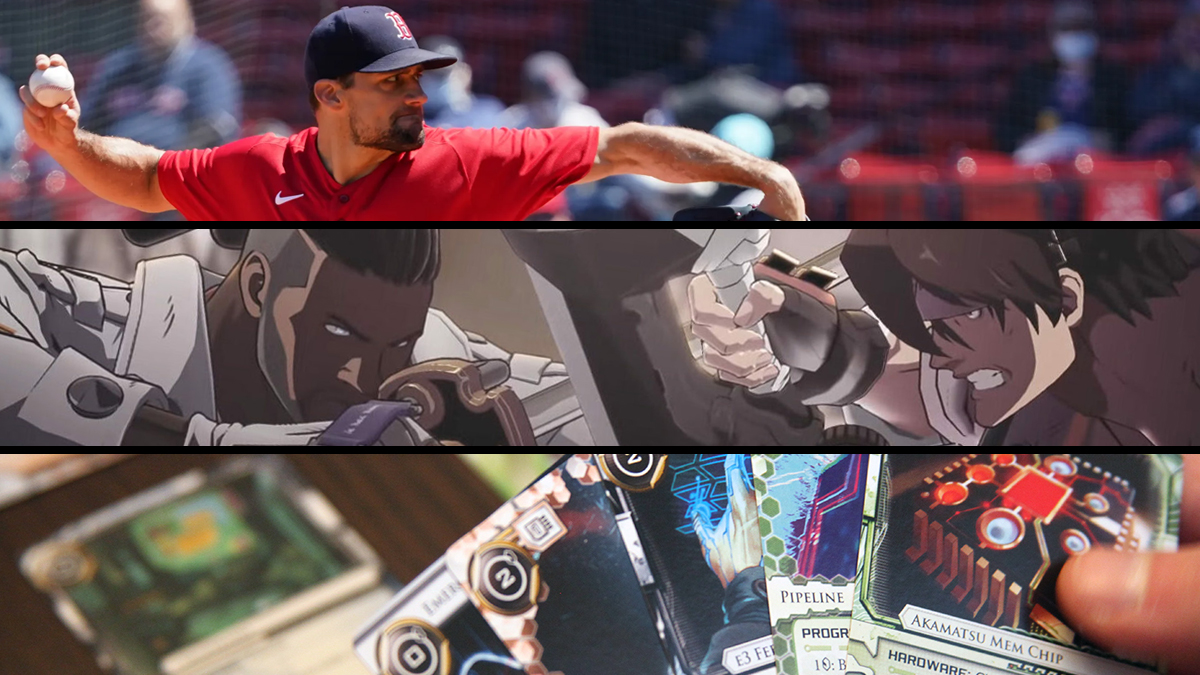
Last week I went on a tangent about my personal route into and through competitive gaming. This week, as I mentioned, I want to get into what I view are the three stages of competitive games and what makes each so wonderfully compelling. Before we get there, though, I want to make one thing clear. My own experience is tailored to mental games – tabletop, digital – but I think this holds true for sports as well. They are competitive games, after all, and it’s why I’ve been including them in the banner images. My limited experience with soccer in junior/high school brings me to the same points, for whatever that’s worth.

We start, as one of my favorite clichés goes, at the beginning. Everyone begins here, no exception. Before anything else, you need to learn what the core functions and mechanics of the game are. Baseball – what are the positions, what is the batting rotation, how many innings are there, what defines my strike zone? Netrunner – what is a click, how many do I have, what are servers, when can I play cards? -Strive- – what is are highs and lows, how do I block, what are specials, what is Roman Cancel?

I grabbed four questions off the top of my head for each, but if you know anything about any one of these topics you understand this only scratches the surface. There are dozens if not hundreds or maybe even thousands of questions that you’ll have when you get started. Things can get overwhelming right off the bat. You’ll come to understand that, whichever competitive game you’re entering, it seems to have its own language. It’s a long discover process but thankfully, we live in the age of the internet and there are endless places to help along here. Sticking to fighting games, since -Strive- is the hype of the day, Infil, a fighting game personality, spent who knows how long creating this unbelievable glossary of fighting game terms, complete with video, that can clarify all sorts of nonsense that seems to float around the genre.

Now, as I said, this is is daunting as hell. It’s like wading into a foreign country with nothing but a backpack, $5, and a dream. “Tom,” you say, “didn’t you say each of these stages is ‘wonderfully compelling?'”

I guess I did, didn’t I? So what makes this part fun? This is the stage that’s easiest to notice progression. You can feel yourself improving – learning, grasping the basics, implementing them – and since you’re so early in the process, these improvements happen rapidly. What difference does a left- vs right-handed pitcher make to me? Oh, it adds a little bit of distance to the plate based on where I’m batting – how do I take advantage of that? What does it mean when there are 2 cards face down in a remote server? Oh, there’s at least one upgrade in there so maybe I can’t get in – what could I do instead? What the hell is a Roman Cancel? Oh, it lets me act faster after an attack – how can I use that to extend a combo?

One of the greatest things about this part of the process is that there’s so much to learn you can take a small chunk, focus on it until you understand and notice that improvement, then start to expand on all the areas that touch it. It’s a vast web of improvement and it feels flippin’ great. Did I mention I like improving at things?

Sports have a bit of a different approach on this first point and probably also the second due to the fact that they remain constant for so long. The gaming end of things changes all the time – there are new mechanics or characters that are introduced to existing games which require more learning and eventually there are entirely new games released that put everyone back onto this stage. That said, those people who are steeped in the genre will spend much less time here. This is a place for newbies like myself to hang out for a long time while the experienced players hop right up to level two.

And what is level two? It’s putting that learning to use and gaining a mastery of mechanics. It’s knowing your weaknesses and training them out. It’s understanding that you get baited by sinkers all the time and putting in the time until you recognize them more often. It’s knowing that you’re playing Shaper and the opponent expects you to be so focused on R&D they might be keeping agendas in HQ. It’s reacting to an stray counter-hit to confirm into a full combo. By the time you’re here, for whatever game you’re playing, you actually understood that sentence.

To me, the compelling part here is obvious, but it’s harder to get to. This stage is the grind. It’s constant. We’re human, we can never be perfect, so it’s all practice, practice, practice. Practice isn’t always fun. Often isn’t, to be honest, but the joy of putting in the time to improve and actually seeing that improvement pay off in real time is incredible. Again, thanks to the internet, there are always people who love the hobby, no matter what it is. People who develop and update invaluable resources like Dustloop, which will show you combo paths and frame data for every character in the fighting game of your choice. People like LordKnight and RathFGC who create phenomenal video content to help you understand both the basics and complexities of those games. If you’ve got the will to improve, you can find near-limitless resources to assist.

Besides repping the hard work of fantastic content creators, there isn’t as much to talk about in level two. We all understand the grind, what it means, and what it can do. Which leaves us level three, the pinnacle of competition. What comes after mastering your games mechanics and concepts to the point where you can perform both the necessary and complex tasks routinely?

Mastering your competition.

This is where you learn the person you’re competing against. You put in the time watching videos of the next team’s play calls, the next pitcher’s corner choices. You check early servers or make risky installs to see how your opponent reacts on their next turn. You air approach a few times in a row to see if they start to anti-air.

“Tom,” you say again, as it’s the only way you seem to know how to start a point, “isn’t adjusting to your competition something that you do all the time? Why are you saying this is after everything else?”

How very astute of you, my brilliant reader! Yeah, these obviously aren’t fully separate levels. Before you’ve learned absolutely everything about a game, I’m sure you’ll be working on mastering a combo or two. Before you’ve mastered the combo routes against every matchup, you’ll be reading your opponents. All true, but the reason this is last is simple – if you haven’t put in the time to learn and master, then you won’t get much of a benefit from knowing what you’re opponent is doing. It’s all well and good that you notice the pitcher is running a curve-slider-fastball rotation, but if you can’t hit them, what does it matter? This happened to me a lot in Dragon Ball FighterZ – I’d recognize that the guy I’m playing is super-dashing too much, but I couldn’t punish it to save my life.

I did reach this point in Netrunner, though, and let me tell you, this is the most fun you can possibly have in competition. Unlike sports or fighting games, Netrunner wasn’t working on any sort of reflex timing, it was all planning and execution. The games could be fairly long and you played two, so even though they were asymmetrical rounds you got a lot of time to understand the type of player you were up against and their game plan, and you got to make all sorts of adjustments along the way. This. Feels. Incredible. Understanding something to the point where you know what your opponent will do before they do it and already being in position to deal with it, then executing on that position based on practice? Insert chef kiss .gif. I wish everyone could get here with something, it’s truly remarkable.

Anyway, I think this has gone on long enough. -Strive- is calling me from the other room. I need to figure out my character so I can get started at ground level and get back to the grind. For those of you that stuck around, if you’re not competitive by nature, I hope this helped explain those of us who are. For those that are, I hope you found something in here helpful to understand your drive. And if you just so happen to have picked up -Strive-, I’ll be on when I’ve got the spare time. Look for Venali. I’ll be playing either Ky, Giovanna, Nagoriyuki, Zato-1, or Anji in my typically long quest to find a main.

See you all next week. Have a good one.
Use that salt to season your next win.

YipeS

Competition. We hate it. We love it. We love to hate it and hate to love it. It drives our watching habits and drives us away from hobbies. I could go into why and get into the weeds on how our pride makes us averse to failure, but I’ve done that enough and think it’s time for a little break. With the release of Guilty Gear -Strive- only a few days away, let’s focus on the positive, shall we?

I didn’t used to think myself a competitive person, but looking back I think that was just the meeker part of my psyche winning out. I’ve always liked winning, and I’ve always favored games or hobbies that leaned more into the competitive side. Maybe it’s my brother’s fault. I still laugh when I think about him ribbing me about not blocking low as he trounced me over and over in Street Fighter II. I never ended up diving into the deep end on fighting games after that – I’d still pick up the occasional Dragon Ball Z Budokai or Soul Calibur, but not for anything other than playing with friends around the house or apartment. A little friendly fun between terrible players. Instead, I got caught up in the stories of Final Fantasy and achievement-focused play of World of Warcraft. The competitive edge of my hobbies dulled and I didn’t give it a single thought.

Until Android: Netrunner.

What an absolute masterpiece of a game. I was hooked from the onset with no hope of escape. It was everything I could have ever wanted in a card game, and before long I had outgrown the enthusiasm of the only other person in the area who played with me, which led me to my first effort to find a game-based community. It didn’t take long. From that point on I was in deep. I drove several cities away to play Thursday nights, went even farther for small tournaments and eventually got up the confidence to enter store championships. After moving back to Houston I trucked on up to Dallas to participate in a 200+ player regional, then kept the train going to Nationals and finally Worlds.

I was never great, but I was decent. I won a few store champs and a regional (I wish I’d recorded that finals, what an incredible game), and placed decently well at Nationals/Worlds. Then Fantasy Flight Games lost the license to the game and just like that it was gone. There’s still a group (NISEI) keeping it running by making new product and they’re doing a fantastic job, but it doesn’t feel the same to me. I can’t quite explain why, but that’s neither here nor there.

With it out of my life, I soon realized there was a hole that needed filling. It wasn’t the winning, and while Netrunner had an unbelievable community around it, it wasn’t that either. Dota2 scratched the itch, but could never satisfy it. Honestly, I had no idea what it was. And then came Dragon Ball FighterZ. Let me tell you, I figured it out real quick.

I am driven by the desire to improve. Specifically, to improve at something that expresses me. A true Johnny/Spike attitude. And, hey, guess what? I’m a 90s nerd, so could anything do that more than a Dragon Ball game that’s actually good? In the words of Bryan Regan, I submit that it cannot!

I am terrible at fighting games. Really. Just awful. It’s like watching an orangutan try to play Bach. But the desire to improve is so strong that I can get over my losses. My many, many, MANY losses. I don’t care that I’m losing, I’m seeing new things so that I can recognize them. I’m learning, and learning will help me improve.

After playing and watching the top players in the world, I’ve come to understand that there are three major stages in competitive games. Not all of us are good enough to get to the third, but it’s something to strive for. And this isn’t just for video games, this is in the sports world as well – anything competitive with a distinct rule set fits this mark.

I’d planned to go into them now, but if I’m being honest there’s enough content there to make another article and that sounds like a top notch idea. I’ll update this with a link to that when I write it next week, but in the meantime, get ready to talk learning and mastering mechanics, as well as figuring out your opponent. Oh, and one last plug. if you’ve got a PlayStation, go get Guilty Gear -Strive-. Let’s slap each other around and have a good time about it. You can be an annoying little girl and throw dolphins at me, it’s fine. Did I mention how incredible these games are at self-expression? No? Well they are. Sky pirate who throws dolphins out of thin air? You bet. Guitar witch? Check. Dimension-shifting, skin shedding lunatic doctor who puts afros on his enemies? Mmmhm. SOL BADGUY? YES SIR. Ok, I’ll stop, just… just do it. Treat yoself.