
Once exposed, a secret loses all its power.
Ann Aguirre, Grimspace
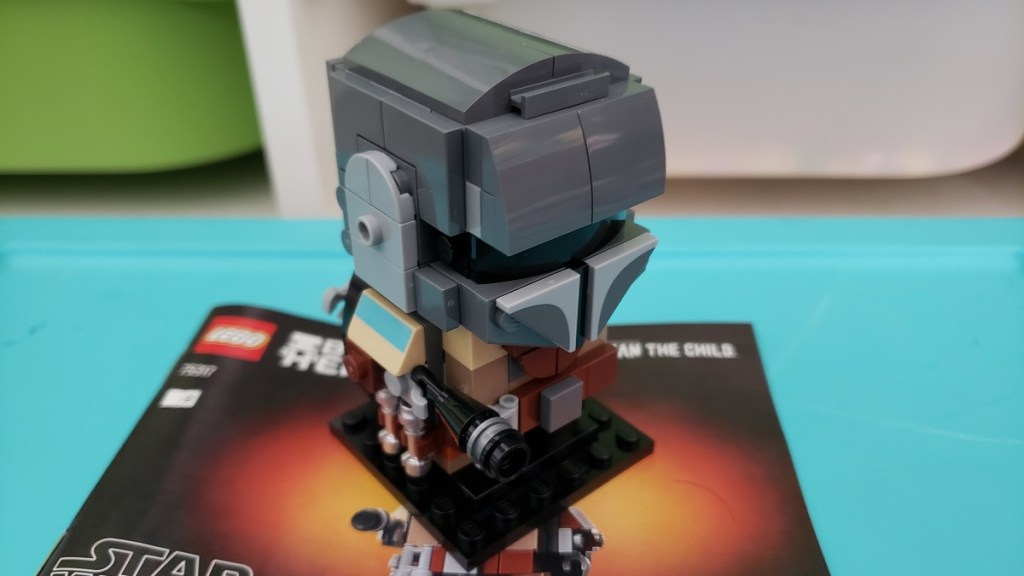
Part 2 of the Mando grouping is done. I think next week I’ll try and do a little more to get ahead of things, especially with how busy my next few weeks are going to be. In fact, I might pre-write a few articles. Not high on my list of priorities, if I’m being honest, but better ahead than scrambling, no?
I’ve gone through a bit of a doldrums in my entertainment lately. Obviously, good stories are and always will be my prime motivators, and in prodding around with a lot of recent stuff I’ve just found so much of it is simply… lacking. There’s so much talent in acting, such grand cinematography and outlandish graphic work, but it seems like the consideration of a good story is lacking these days.
The bigger the budget, the more this seems to be the case. Maybe it’s the fact that the bigger budgets are all going to a few key studios and it’s those studios that have the problem, but it’s driving me up a wall. The problems are manifold but I’d like to focus in on one that is particularly pernicious, at least to me. Subversion.
You all know what I’m talking about. Oh, we’ve gone on this precarious journey to reach our destination. The fabled hero is here, at last, and now… now he’s a bitter old man who has renounced everything about what he was. Or maybe we’re following along a murder mystery, picking up clues along the way only to find that – surprise! – none of it was actually relevant and the things which are used to solve it weren’t even shown to us.
Now, I’d like to get this said right out of the gate. There’s a level of controversy around this specific word. Politics has somehow managed to seep its way into this topic and poison it like it does most everything, but here’s the thing – subversion isn’t a positive or negative. It isn’t, as the article title states, story. It’s a tool, like any other. Subversion can be done in ways that blow your mind. No, the problem comes from why it’s used. What it’s for.
Let’s look at an example from earlier and dig into why it doesn’t work, versus one from the past that did. The subversion used to turn Luke Skywalker into a resentful hermit was done, to put it in a good light, as a way to show that even the fabled hero could fail in the end. He brought down a great evil but could not control the course of history. All fine and good, that makes perfect sense. But how did he end up like that? He trained people, had a SINGLE VISION that one of his proteges / nephew would follow the path of darkness, and then decided the kid had to die? What in the holy character redesign is this? Did the writers even watch the original trilogy? Luke wouldn’t kill the flippin’ Emperor, the lord of the Sith, the man currently enacting plan to murder everyone he cared about, because it would take him off his path of righteousness and toward the darkness. He was willing to die to bring out the buried goodness he knew was in his father’s heart. But now, a few years and a dream is enough to make him decide his blood relative has to go? It’s subversive, certainly, but it’s also trash. It ignores the growth we’ve seen in a character. It ignores the character of that character. It is, in the end, subversion for the sake of it, to catch an audience by surprise, as though that’s the biggest thing you can hope for.
What’s a subversion that works, then? One that the story is catered toward. Built around. One that isn’t done for cheap thrills but instead elucidates the truth of the story itself. There are so many good examples of this. My mind first went to the genre shift between Terminator and T2, but as I thought about that I came up with a better one. Ozymandias’ revelation of his plan in The Watchmen graphic novel.
Now, I’m cheating a bit by using the graphic novel version. The one in the movie is still good, but the movie doesn’t give you enough time with Ozy to bring the full weight of what’s been done to bear. Plus, the subversion is all the better by the fact that it is a graphic novel – a comic – and you have your expectations of what that means. Sure, the “heroes” are a collection of louts and reprobates, but there’s a “big bad” out there that’s causing trouble and now that we’ve figured out who it is, we’re on board to see how they stop him. Except, they don’t. They don’t get a villain monologue that allows them to prevent tragedy. They don’t get to play the heroes. They don’t even get to bring him to justice – in fact, the “justice” of it is them allowing the one person who intended to tell the truth of what went down to be murdered to preserve what they think will be a unifying tragedy. It’s… quite a bit more complicated than that, but that’s a passable-enough synopsis. If you haven’t read The Watchmen, well, one, I’m sorry for screwing it up for you, and two, go do it right now. That was a formative read.
Anyway, what The Watchmen does is use its subversion to do exactly what it should. It subverts a trope – an expectation that we as the reader have because of the medium and genre – by allowing its characters to do exactly what they were set up to do. How do these former heroes stop the supposedly smartest man in the world? We expect them to – they have to, right? – but the answer was there all along. They can’t, he’s always been several steps ahead, we were just along for the ride. And that, right there, is how you do subversion.
There was a point when I got this post started where I thought about comparing works from a single person – M. Night Shyamalan – to see how subversion for the sake of it can make and break a story. The Sixth Sense vs. The Village is a great comparison, if I do say so myself, but the more I thought about it the more I came to the decision that a twist is not necessarily a subversion. The twist in The Sixth Sense might qualify as one, but by the time The Village came out we all knew what Shyamalan was about so the twist was just a twist. If anything, a subversion from Shyamalan would be for him to not include a twist, which got me thinking the whole thing was a bit too meta.
What do you all think? Where are places we’ve seen great subversions, either in the past or recent storytelling? Where have people defaulted to using it in hopes of scoring cheap points? I’m wanting to get back to watching things again, but I don’t want to waste time on stories plagued by gotchas.
 Themeattics