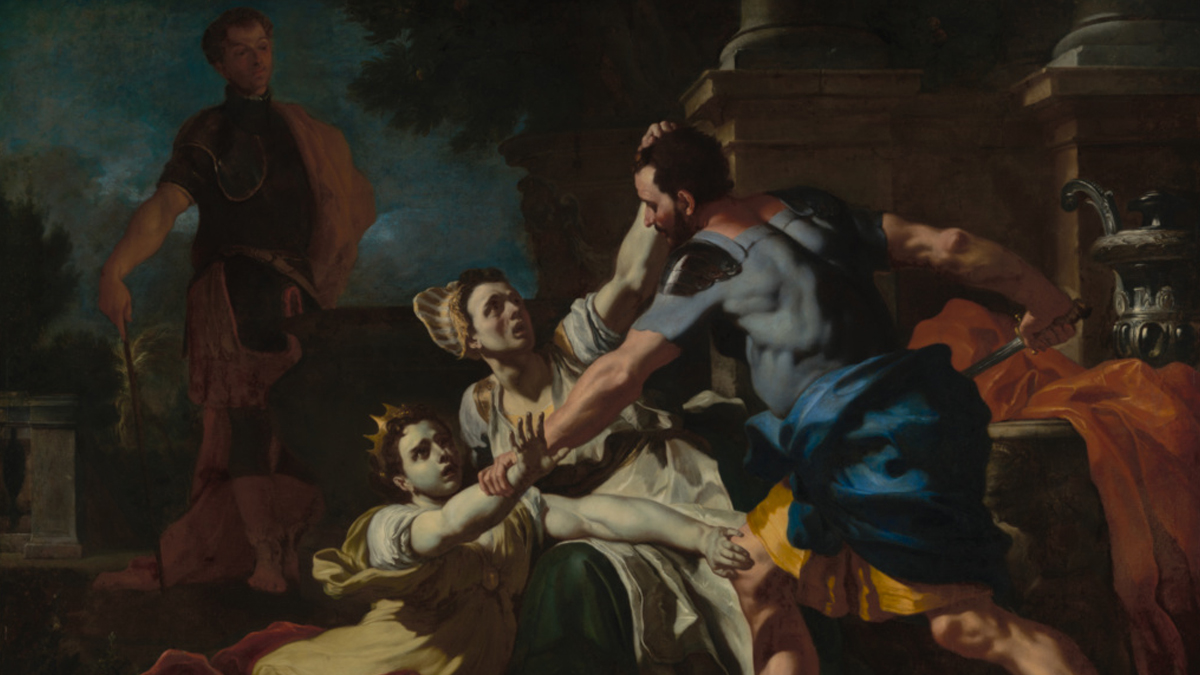
Isn’t it funny. I’m enjoying my hatred so much more than I ever enjoyed love.
Janet Fitch, White Oleander
Wrath. Unlike some of our previous expositions, everyone understands this one from the onset. We all have an image of Wrath, an anecdote or association that we can conjure at hearing the word. And, also unlike some of the earlier sins, this one is likely correct. There’s no deeper meaning at the core, no subtleties or clarifications to make in its definition. Which, frankly, is appropriate. Of any of the Deadly Sins, Wrath is the most direct. The most violent. It also happens to be one of the few not focused on the self.
The defining characteristic of Wrath is its lack of control. Anger, while not an emotion we should strive for, is perfectly human and natural. Unavoidable, really. We get angry over all sorts of ridiculous things, from getting cut off in traffic to enduring bad TV. It’s how we respond to these events that changes things. That moves that anger from an emotion to an action.
I’ll admit, again, that I’m struggling a bit on this article. Not because I’m a generally chill guy and don’t relate to this one, but because the problems of Wrath are so self-evident. It’s a bit like trying to explain why it’s bad to steal – that thing isn’t yours, so you can’t take it. Well… lashing out at people is bad, don’t do it, mmkay?
Still, I suppose this hasn’t stopped the world from wallowing in Wrath. Generational warfare still permeates the Middle East. Gang wars continue more or less everywhere around the globe. And here in our little perceived empire of Western moralism, we’ve taken our Wrath to the digital space.
Sure, there are plenty of places we can look to see Wrath in action in the physical world in the West. Riots, shootings, domestic violence – you name it, people will do it. But, again, we see the Wrath in these. We understand their repugnance. No need to beat a dead horse there.
Have you been on Twitter lately? And by lately I mean in the past, what, five year? More? Has there ever been a cesspit of more self-righteous indignation and outright hatred? Pure anonymity, exemption from real consequence, and expose to all facets of human expression and experience has proved a prime cocktail for diving headlong into Wrath. There must be something cathartic about it, something that gives the impression we’re doing the “right thing” in spewing vitriol at one another to proved points and “own” the other side of whatever excuse of an argument we think we’re in.
But arguments are gone. Debate is gone. In good part because we lack a particular virtue – Patience. Patience is the perfect foil for Wrath and gives us an interesting insight into the problems of our discourse. Enduring a slight, forgiving it, showing mercy; these are all components of the virtue of Patience. How often do we see these things on social media? Or on media in general, these days? There a lot of forgiving going around lately? Do we see a lot of mercy over mistakes or people brushing off perceived slights?
Hell, no. We can barely talk to each other without stepping on broken glass to try and avoid one word that the other person will latch onto to fuel their indignation. We’re always on edge, looking for a slight that we can feed our Wrath. Because, in the end, it’s easier not to listen, not to give our opponents the benefit of humanity. After all, if they’re monsters it’s easy to direct our Wrath at them. No, not easy – it’s just. We get to turn our vice into a virtue and trick ourselves into believing we’re in the right.
Patience, then. Take a breath. Listen to one another. Try to understand instead of casting intent. Don’t assume. Forgive. With true Patience, we can build stable communities. Give people a place to go, to feel heard and loved. I promise, it will work wonders. There will always be evil out there, but we don’t have to assume it of others. We can endure those things, come together, and mourn them.
Be kind to one another out there, my friends. Pay it forward. I know it can be difficult and it’s easy to become jaded, but we can’t expect things to change for the better around us. We have to do our part, and as always, the only thing we can truly change is us.
 Themeattics
One thought on “No King in Israel, Part 5”