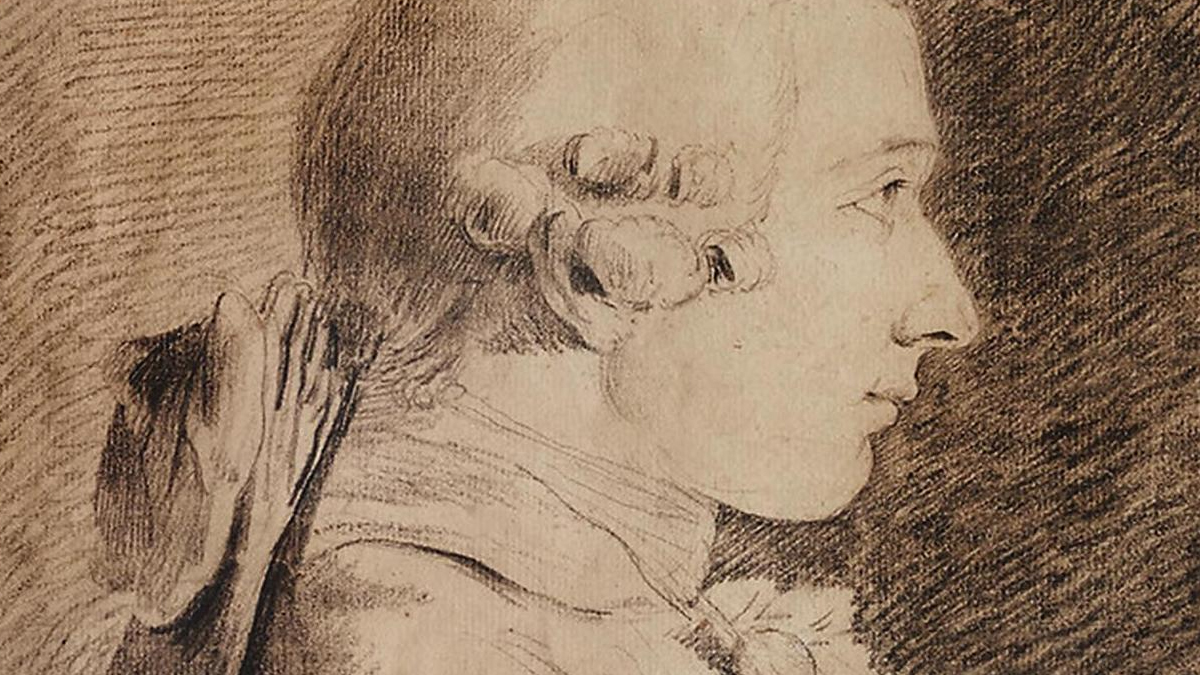
Before you were born, you were nothing more than an indistinguishable lump of unformed matter. After death, you simply will return to that nebulous state… And yet, people sacrifice pleasure on earth in the hope that pain will be avoided in an after-life. The fools don’t realize that, after death, pain and pleasure cannot exist: there is only the sensationless state of cosmic anonymity: therefore, the rule of life should be … to enjoy oneself!
Marquis de Sade
Sadism. Even reading the word evokes an immediate, visceral response in most. Polite society takes a hard line against the very idea, dismissing it as the viewpoint of monsters and sociopaths. Good. It is. That said, I can’t help but think on the man after whom the word was coined. As the progenitor, he is often labeled the same – nothing more than a monster. But really, was he? Or was he simply living out the logical result of a Godless world view?
Now, before I go on, I am obviously not in favor of anything upon which the Marquis de Sade stood. At this point I expect I’ve made my views on faith and religion quite clear. It is because of that clarity, and because of my frustration with the superficiality of modern politics, that I end up digging deeper and arriving at these places. Dark as they may be, I think we always benefit from exposing the roots of ideas and understanding them. It helps to discover more of what we are and, perhaps, leads to a healthy introspection.
There is a common underlying theme in politics today that, left to our own devices, people will err on the side of good. And not just locally, but universally, as though goodness to our neighbors and altruism are innate to our being. I’ve never understood this. History is rife with examples of humanity’s darkness. It isn’t exactly a recent trend, either. It’s not like we started treating each other poorly at the north Atlantic slave trade or native genocides in North America. Spin the globe, close your eyes, and point. If you’re not pointing in the middle of an ocean, you can dig into the history of that plot of land and find vile practices that churn the stomach. Human sacrifices, butchering children, biological experimentation – name it, people have done it.
What does this have to do with de Sade, you ask? Bear with me, I’m getting there.
As much as people seem to recoil at the idea, western society is founded on a clear Judeo-Christian set of morality. Our fundamental frameworks hinge on the principles of these faiths and, despite our flawed human nature trampling over these principles on countless instances, it is impossible to extricate this fact. It permeates our sense of justice and fairness. It colors our views on the downtrodden and meek. Whether you’re a believer or not, the fact that you were raised in a culture steeped in thousands of years of collective tradition imbues these ideas upon you.
This leads to an idea that we no longer need religion for morality. That it’s a trite, cliché thing to believe people would be worse to one another without an invisible friend in the sky threatening us with damnation. I get this a lot from the other side of the aisle, whether they’re friends of mine, random people on the internet, or famous political personalities. And, on the surface, I think this is a perfectly reasonable position. Should all belief up and disappear overnight, we would not descend into anarchy and lawlessness. We are, after all, a product of our nature. Our dies have been cast. For now.
So, we arrive at the Marquis. A man who saw fit to fully cast of the shackles of belief and break the mold of the world around him. A man who came to be reviled for rejecting the teachings of these faiths on a fundamental level – to the point he disputed the very nature of man’s relationship to man. But, to borrow a theme from the last article, let’s ask the question that matters: why? Why is his take so thoroughly rejected?
Where is the flaw?
De Sade fully rejected the idea of a god. He believed life had a definitive beginning and end, with nothing left to the imagination. He believed our time on this planet was short, and that one should make the most of it. These are all things to which, I expect, the modern atheist would agree. It then followed, to him, that one’s personal enjoyment served as the utmost driver in life. As one could not experience the joy of others, it made no sense to sacrifice one’s own pleasure for it. There was no point in worrying about the next generation, or the last, or even one’s own neighbors or kin outside of ways in which it would benefit oneself.
I can already see a show of indignation from some people over this last bit. I can see why – it’s nails on the chalkboard to a western conscience. But the next generation is humanity’s future, you say. My neighbor is every bit as human as I and as deserving of joy.
Why? If, truly, we are dust and to dust shall we return, why is de Sade wrong? If my neighbor has what I want, why should I not take it? My life is finite and fleeting, should I not derive all the pleasure from it as I can before the end? To me, there is no future. The end of the world is my passing. Nothing exists beyond that point. No preserving is worthwhile should it hinder my own fulfilment.
Again, I know my reasons against this logic. What I don’t know is how the true atheist argues against them. All people for themselves would lead to abject anarchy and lower the quality of life for everyone, perhaps? Which would imply altruism exists to better one’s own life, without any real concern for how it helps others. Most other lines of argument come back to fundamental tenets of faith – the importance of humanity as a species, things that hint at a soul, etc. This could just be a blind spot due to my faith and, again, being born in western culture, but I really struggle to understand how this breaks down.
I’d love to hear from those opposite me – or even those in my same way of life – who can argue why I’m mistaken. This has been bothering me since I first had the thought, and I find the idea truly important to understand. It is, I think, a bedrock issue to understanding modern sensibilities and ways of life. It flirts with the core fundaments of human nature, where our real ideological differences reside.
Until next time, when I (probably) go on a rant over the destruction of language and its perversion of modern discourse. Just trying to keep things light, you know?
 Themeattics
2 thoughts on “On Morals and Marquis”